Our Products
Compressed Air Solutions
  • Screw Air Compressor
  • Oil Free Compressor
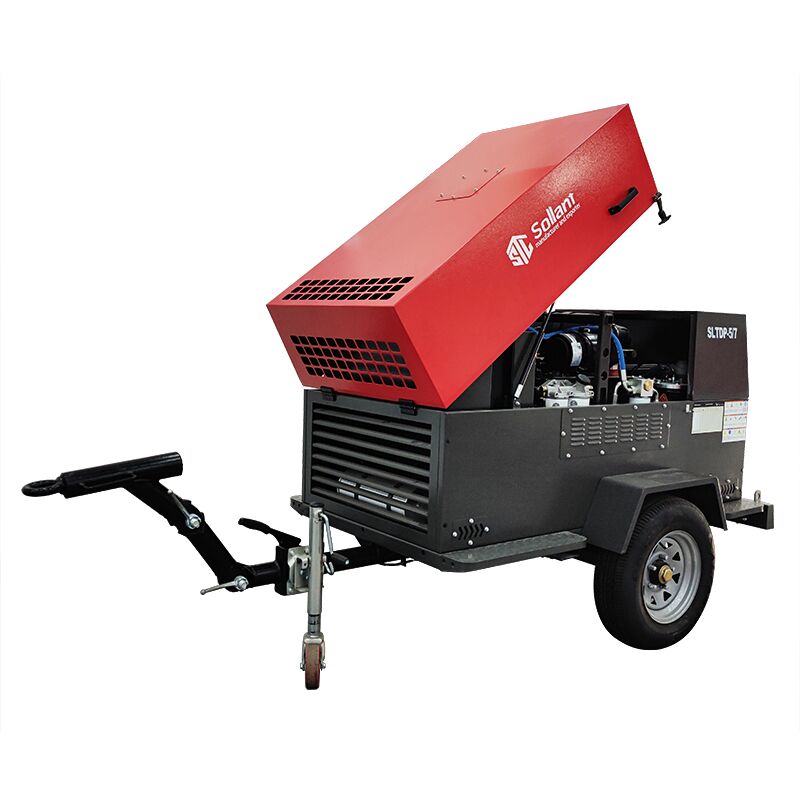
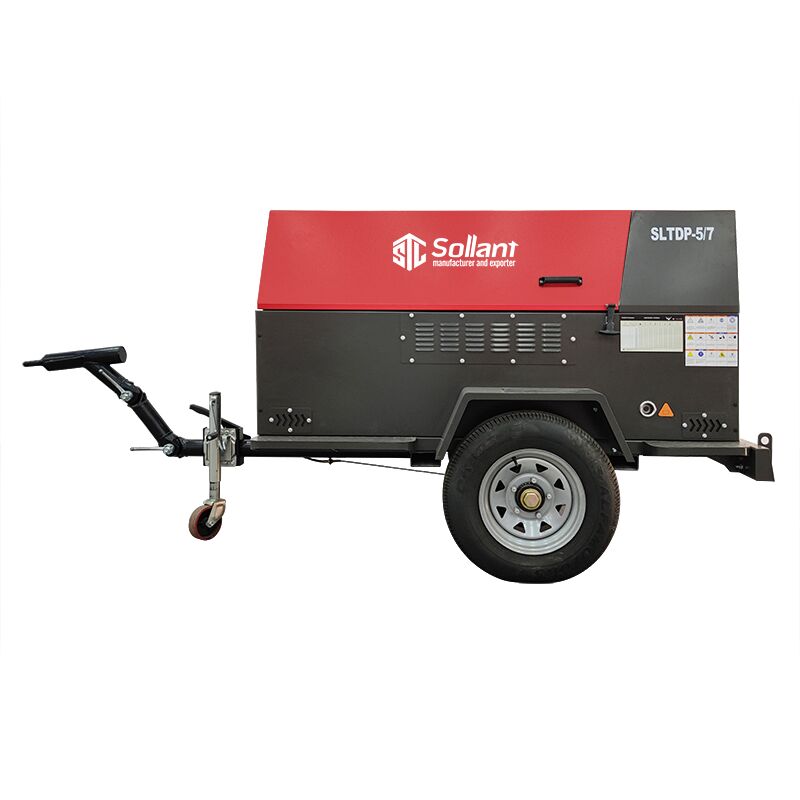
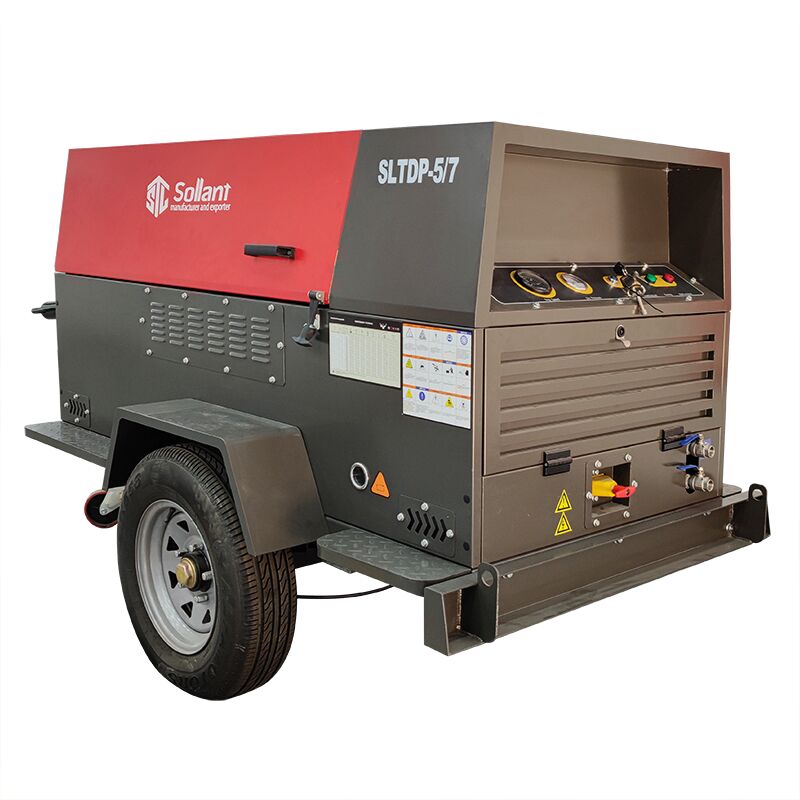
  • Diesel Portable Compressor
  • Gas Compressor
  • Specialty Compressor
  • Air Treatment
ISO 9001 Certified
24-Month Warranty
OEM & ODM Support
Factory Direct Price
All products→
Why Is My Compressed Air Wet and How to Fix Moisture Problems
SOLLANT Research

Why Is My Compressed Air Wet and How to Fix Moisture Problems

February 10, 2026
18 min read
Technical

Compressed air carrying water is dictated by Boyle's Law and the Clausius-Clapeyron equation. The equipment isn't broken, the maintenance isn't bad, it's physics. A compressor takes a large volume of air and forces it into a much smaller space. The concentration of water vapor gets pushed past the saturation limit, and the excess condenses into liquid water. A typical 37kW screw compressor running in a 30°C shop at 75% relative humidity squeezes about six to seven liters of water out of the air every hour. Over a year that adds up to more than ten thousand liters. There is no way to "eliminate" this water. What you can do is intercept it before it causes damage.

Air at 30°C can hold roughly 30.4 grams of water vapor per cubic meter. At 10°C that number drops to 9.4 grams. The relationship between temperature and moisture-holding capacity is not linear. It is steep: roughly every 11°C drop cuts the capacity in half.

When a compressor takes air from 1 bar to 8 bar, the volume shrinks to one-eighth. The total mass of water vapor hasn't changed, but the space holding it is eight times smaller, so the effective concentration is eight times higher. The air can't hold it anymore, and water condenses out.

30.4 g/m³
Moisture capacity at 30 °C
9.4 g/m³
Moisture capacity at 10 °C
Concentration increase at 8 bar

There is a concept here that most technical references gloss over. Atmospheric dew point and pressure dew point are not the same thing. The same body of air might not start condensing until 20°C at atmospheric pressure. At 8 bar, it might already be condensing at 50°C or above. The idea that "air has to cool down before water comes out" will lead to wrong conclusions in compressed air systems. At the moment compression is complete, water is already dropping out. It doesn't need to cool first.

Industrial compressed air system
Compressed Air Systems

What an aftercooler does is force a large, deliberate temperature drop so that a big portion of the water condenses in one place where it can be collected and drained. What a dryer does is push the dew point even lower. What pipe insulation does is prevent the air from cooling further during transport and condensing water all over again. Different equipment, same temperature curve they are all fighting.

There is a problem that gets overlooked in winter. Absolute humidity is lower in cold weather, so the air carries less water vapor to begin with. That sounds like it should help.

The problem is that ambient temperatures are also low, pipe temperatures sit below the pressure dew point everywhere along the run, and water doesn't condense neatly at the tank or the dryer. It condenses scattered along the entire length of the piping, all the way up to the point of use. Winter doesn't mean less water. It means water showing up in harder places to deal with.

Water vapor dissolved in the air is invisible and can only be removed by a dryer. Aerosol-state water mist, droplets between 0.1 and 5 microns in diameter, rides along with the airflow at high speed and needs coalescing filtration or centrifugal separation to catch. Liquid water film creeping along the bottom of the pipe wall can be handled with gravity and drain valves.

These three states keep converting into each other, and that matters more than any one of them individually. A few degrees of temperature drop in a pipe section turns some vapor into mist. Mist hits the pipe wall and collects into a liquid film. Liquid film in a high-velocity section gets sheared back into mist. A dryer might deliver air that meets spec at its outlet. Twenty meters downstream the pipe temperature drops a few degrees and water condenses right back out. A dryer cannot compensate for the temperature of the piping downstream of it. That has to be understood clearly.

The receiver tank is the single largest water collection point in the system. Hot compressed air enters, slows down, cools, and drops a large amount of liquid water to the bottom. Many factories have a manual ball valve at the bottom of the tank that depends on someone remembering to open it every day. Compliance rates on that are poor. The bottom of the tank accumulates liquid water mixed with emulsified oil. When the system suddenly draws a large volume of air, tank pressure swings hard, and that accumulated water gets swept up, atomized, and shoved into the downstream piping. This kind of intermittent slug of water does far more damage than a steady low level of moisture in the airflow.

Pipe layout matters. Branch lines should be taken off the top of the main header, because liquid water travels along the bottom of the pipe wall under gravity. A branch connected at the top naturally avoids that water film. Connecting at the bottom is easier during installation, which is why most shops have it backwards. All horizontal main runs need a slope of 1 to 2 centimeters per meter, pitched toward a drain point, so liquid water flows there by gravity instead of pooling in low spots and forming water traps.

Industrial piping layout Compressed air pipe installation

Then there are dead legs. Blind-ended branch stubs that rarely see airflow. Air inside them sits still, cools to ambient temperature, and water vapor condenses continuously. These dead legs accumulate standing water for weeks or months. The day that branch suddenly opens, the accumulated water gets blasted into the equipment. Intermittent "sudden water spray" faults, when traced to their source, often end at a dead leg. The fix is to design piping in a loop so every section has continuous airflow through it.

Oil-free screw or oil-free scroll compressors produce cleaner air. No lubricating oil gets into the airstream. That part is true. Calling that air "drier" is wrong. Oil-free machines run at much higher discharge temperatures than oil-injected machines. A single-stage oil-free screw can exceed 200°C at the outlet. Even two-stage designs with intercooling run far hotter than the 70 to 90°C typical of oil-injected machines. At those high temperatures the air's moisture-holding capacity is enormous, so all the water vapor stays in gas phase. It looks like there is "no water" coming out of the compressor. After the aftercooler drops the temperature, the amount of liquid water that condenses is the same as from an oil-injected machine, because the total water vapor in the intake air is identical. The difference is only in what that liquid looks like: oil-injected machines produce an oil-water emulsion that is harder to deal with, oil-free machines produce relatively clean condensate. The volume of water itself is the same.

In systems running oil-injected screw compressors, the liquid collected from piping and drains is a milky white or light brown emulsion, not water. During compression, lubricating oil enters the airstream as fine droplets and vapor. It mixes with the condensed water and forms a stable emulsified liquid. This emulsion has different surface tension than pure water and clings to pipe walls more stubbornly, forming persistent film layers. It saturates and clogs the glass fiber media in coalescing filters rapidly, causing filter pressure drop to spike. Under the regulations of most countries and jurisdictions it qualifies as hazardous waste and cannot be discharged into drains without oil-water separation treatment. This is a technical issue and a regulatory compliance issue at the same time.

Pipe corrosion in compressed air systems
Pipe Material Matters

Galvanized steel pipe works well in potable water systems. That experience gets carried into compressed air systems without questioning the difference. Residual moisture in compressed air contains carbonic acid, formed from dissolved carbon dioxide. It reacts with the zinc coating and produces zinc carbonate and zinc oxide particles, a loose white powder. These corrosion products flake off the pipe wall and enter the airstream. Their particle size falls right in the 5 to 20 micron range where coalescing filters are least efficient at capturing solid particles. Orifices in pneumatic valves and actuators clog quickly. Once the zinc layer is consumed, the bare carbon steel underneath begins rusting aggressively in the wet environment, adding iron oxide particles on top of the zinc corrosion debris. Double contamination. Aluminum alloy quick-connect piping or stainless steel pipe costs more up front. When filter replacement frequency, pneumatic equipment repair costs, and production downtime are factored in, the total lifecycle cost is lower.

When a variable speed drive (VSD) compressor runs at low load, discharge volume drops and air velocity in the piping drops with it. Lower velocity means the airflow can no longer carry liquid droplets along to the drain points. Water that should have been swept to a low-point drain starts settling in sags along the middle of the pipe run. At the same time, lower flow velocity means air spends more time in the pipe, cools more thoroughly, and condenses more water.

On top of that, many refrigerated dryers risk evaporator icing when the incoming air volume drops well below rated capacity. The refrigeration system backs off to protect itself, and the outlet dew point performance suffers. The energy savings of a VSD compressor are real. The piping drainage design downstream of it needs to account for low-velocity conditions and cannot be copied from a fixed-speed system.

A factory shuts down for the weekend. Compressed air remaining in the piping slowly cools to ambient temperature over 48 hours. If nighttime temperatures drop 10°C or more below daytime levels, condensation forms throughout the pipe network. Monday morning the compressor starts, fresh compressed air floods into piping full of standing water, and that water is instantly atomized and pushed to every point of use. The first half hour to one hour of Monday's first shift is the worst air quality window of the entire week. Painting, assembly, and inspection processes that are sensitive to moisture show repeated quality anomalies on Monday mornings. This is worth investigating as a root cause.

The fix is straightforward: before opening air to production, let the compressor run unloaded for 10 to 15 minutes and drain the receiver tank and all low-point drains on the main header. If the system has a desiccant dryer, confirm it has completed a full regeneration cycle before supplying air downstream.

Compressed air drying equipment
Drying & Filtration

Textbooks say the adsorbent eventually saturates and needs replacement. That is correct. In operating systems the more frequent cause of performance degradation is channeling. Adsorbent granules settle and compact under sustained airflow and pressure cycling. Gaps and voids develop in the bed. Air takes the path of least resistance through those channels, and most of the flow passes through only a small fraction of the adsorbent before exiting. Outlet dew point deteriorates sharply while adsorbent in other areas of the tower is still practically new.

Regularly checking bed height, topping up adsorbent to fill settlement gaps, and making sure the flow distributor at the top of the tower is not deformed or blocked should be done more often than full adsorbent replacement. The root cause sometimes goes back to the original sizing: the height-to-diameter ratio of the adsorption tower was wrong, with too large a diameter and too shallow a bed for uniform flow distribution.

One more thing about desiccant dryers. They are extremely sensitive to liquid water in the inlet air. Liquid water floods the micropore structure of the adsorbent and wipes out its effective adsorption surface area. The industry calls this "adsorbent poisoning." The coalescing pre-filter and moisture separator ahead of a desiccant dryer are not suggestions. They are mandatory. Liquid water entering the adsorption tower can destroy the entire adsorbent charge.

The "pressure dew point 3°C" printed on a refrigerated dryer's nameplate does not need questioning. The refrigeration system can do that. The number worth verifying is the one next to it: "rated capacity." Nearly every manufacturer tests under ISO 7183 standard conditions: inlet air temperature 35°C, ambient temperature 38°C for air-cooled models, operating pressure 7 bar. In Southeast Asia and southern China, shop floor ambient temperatures easily exceed 40°C in summer. If the aftercooler fins are dirty and not cooling properly, inlet air temperature to the dryer can reach 50°C or higher. Under those conditions the dryer's effective capacity might be only 50 to 60 percent of the nameplate figure.

The correct approach is to obtain the full performance correction factor table from the manufacturer and recalculate the required dryer size using the local peak ambient temperature and the actual aftercooler outlet temperature.

A large share of "brand new dryer not meeting spec" complaints trace back to this. The dryer doesn't have a quality problem. It was undersized. For every 5°C the inlet temperature exceeds the standard rating condition, effective capacity needs to be derated by roughly 20 percent. That derating compounds fast.

If there is only one instrument to install across the entire post-treatment chain, it should be a differential pressure gauge. Mounted across the inlet and outlet of every filter stage. Extremely low cost. Extremely high information value.

A new filter element shows about 0.05 to 0.1 bar of differential pressure. During normal use, as contaminants accumulate, the differential rises gradually. At 0.3 to 0.5 bar, the element needs replacing. That is the basic use.

The more valuable reading is the trend. If a new element's differential starts climbing unusually fast, something upstream has gone wrong. Maybe the refrigerated dryer has stopped working, or the moisture separator drain valve is plugged, and a large volume of liquid water or oil is pouring straight into the filter. In the opposite direction, if a long-used element's differential suddenly drops, that is not good news. It most likely means the filter media has been blown through, and contaminants are passing unimpeded.

The trend of a single differential pressure gauge reading can be used to diagnose the condition of the entire upstream chain. That diagnostic capability is worth spending a few minutes to understand.

Removing water from compressed air is not free. A refrigerated dryer runs its refrigeration compressor continuously, consuming roughly 3 to 5 percent of the main air compressor's power. A heatless regeneration desiccant dryer uses about 15 percent of the total compressed air output for purge regeneration. That air was compressed using electricity and then thrown away unused. Converted back to electricity cost, the number is significant. Every filter stage adds pressure drop. For every 0.1 bar of pressure lost, the air compressor's energy consumption increases by about 0.7 percent. Three stages of filtration plus a refrigerated dryer can add up to 0.5 to 0.8 bar of total pressure drop, corresponding to 3.5 to 5.6 percent additional energy consumption.

3–5%
Refrigerated dryer energy draw
~15%
Desiccant dryer purge loss
10–20%
Total post-treatment energy cost

All of it together, the post-treatment system can account for 10 to 20 percent of the total energy consumed by the compressed air system. The thermodynamic efficiency of the compression process itself is only around 10 to 15 percent. Stack the post-treatment energy loss on top of that already low baseline, and the true cost of each cubic meter of dry, clean compressed air is substantial. In industry, compressed air is called "the fourth utility," after water, electricity, and steam, and also "the most expensive form of energy." This is why.

Each step up in ISO 8573-1 quality class brings a non-linear increase in energy and maintenance costs. Over-specifying the air quality class creates not just a one-time equipment purchase but an ongoing operational bill.

Compressed air treatment equipment
Staged Treatment

The aftercooler and moisture separator go first. Compressor discharge temperatures run 80 to 150°C. The aftercooler brings that down to roughly 10 to 15°C above ambient, removing 60 to 70 percent of the total water entering the system. If the aftercooler fins are clogged with dust and the temperature doesn't come down far enough, the load on every downstream device increases sharply. Cleaning aftercooler fins is one of the highest-value maintenance actions available.

The receiver tank needs an automatic drain valve. An electronic level-sensing type is more reliable than a timer-based type, which either fires when there isn't enough water yet and bleeds compressed air, or waits too long and lets water accumulate past safe levels.

Piping design: loop headers, branch connections from the top, horizontal runs sloped toward drains, drain valves at every low point, no dead legs. These are structural measures that cost no additional equipment, only attention during installation.

The choice of dryer depends on what pressure dew point the point of use requires. General pneumatic tools and cylinders are fine at Class 4, pressure dew point 3°C, which a refrigerated dryer can deliver. Painting usually needs Class 2, pressure dew point -40°C, which requires a desiccant dryer. Electronics and food processing may need Class 1 or Class 0.

Between 3°C and -20°C there is a demand range where refrigerated dryers cannot reach and desiccant dryers are more than necessary. Membrane dryers have a unique fit here. Hollow fiber membranes selectively permeate water vapor molecules through the membrane wall and out. No electricity needed, no moving parts, minimal maintenance. Capacity is limited by membrane surface area, which makes them expensive for high flow rates. For low flow, distributed points of use, or remote locations without power, membrane dryers deserve serious consideration.

End-point filters are the last stage. Coalescing filters capture residual water mist and oil mist down to 0.01 microns. Activated carbon filters adsorb oil vapor. A filter element used past its service life doesn't just lose efficiency. Accumulated contaminants can be blown through the media by the airflow, producing outlet air that is dirtier than if no filter were installed at all. Replacement timing goes by differential pressure, not by the calendar.

Each point of use gets the air quality class it needs, and nothing more. Blanket-upgrading the entire system to the highest class is waste in engineering terms and even more so in economic terms.

Footer Component - SOLLANT
滚动至顶部