Our Products
Compressed Air Solutions
  • Screw Air Compressor
  • Oil Free Compressor
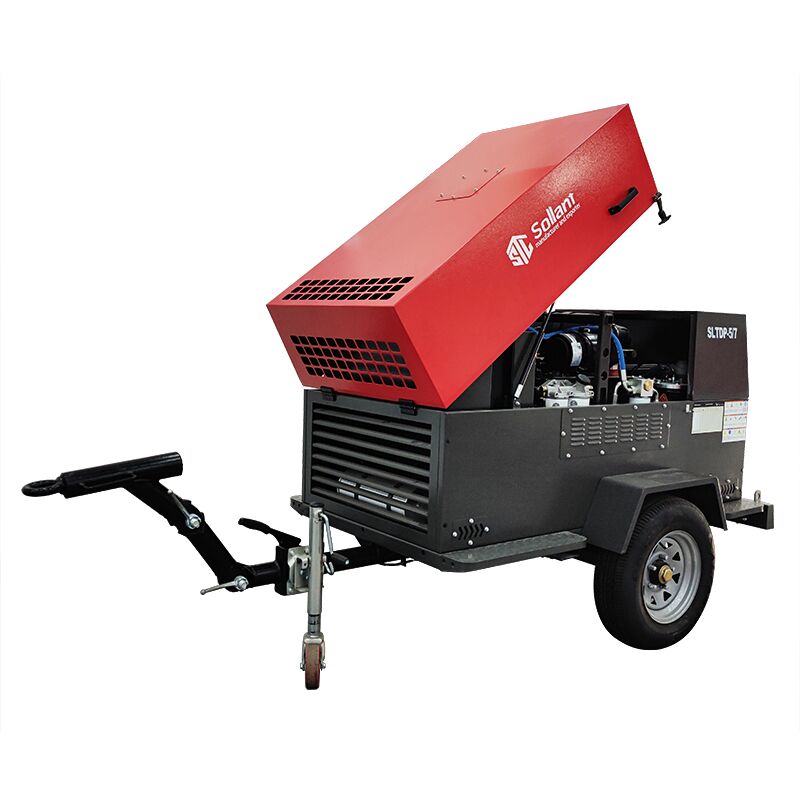
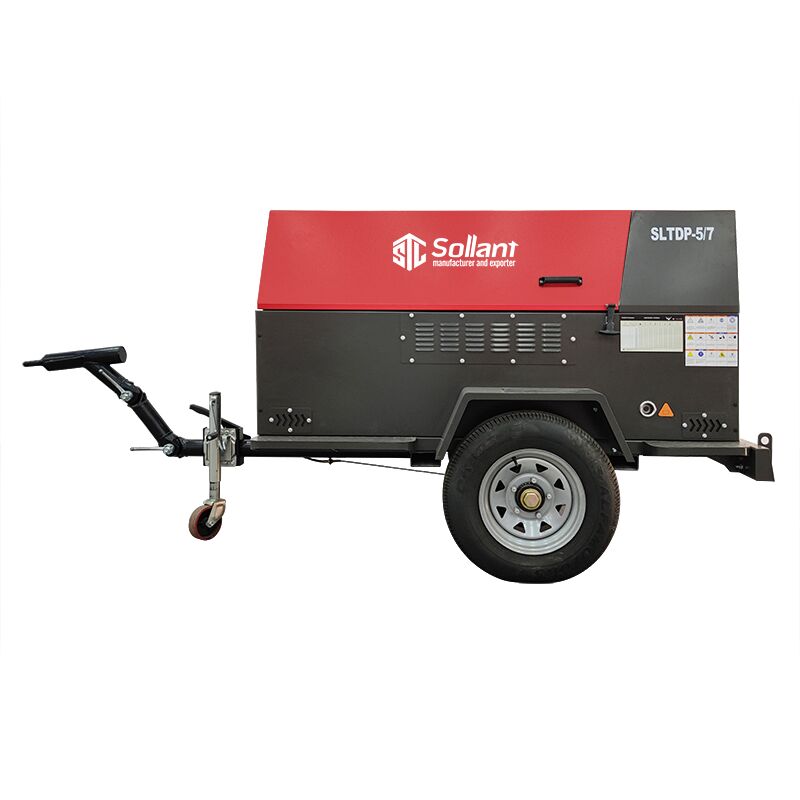
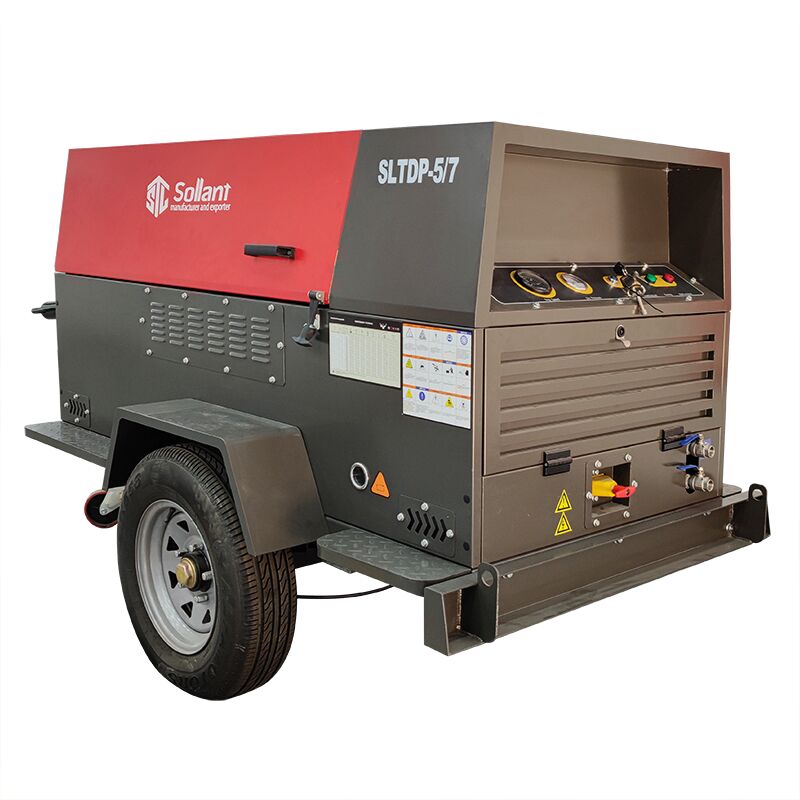
  • Diesel Portable Compressor
  • Gas Compressor
  • Specialty Compressor
  • Air Treatment
ISO 9001 Certified
24-Month Warranty
OEM & ODM Support
Factory Direct Price
All products→
Lubricated vs Non-Lubricated Reciprocating Compressors
Technical Guide

Lubricated vs Non-Lubricated Reciprocating Compressors

Technical Article
28 min read
Reciprocating Compressors

Oil goes into the crankcase of every reciprocating compressor. Bearings, crosshead pins, crosshead guides run in oil regardless of machine type. The only question is whether oil gets injected into the compression cylinder bore where it touches the process gas. A lubricated machine has a force-feed lubricator pumping metered oil into the bore. A non-lubricated machine runs PTFE rings on bare steel with nothing between them.

The non-lubricated design exists because oxygen plants cannot have hydrocarbons in the gas path, and pharmaceutical companies need compressed air with zero oil vapor. The lubricated design is better at everything a maintenance department measures: ring life, packing life, valve life, efficiency over a maintenance interval, tolerance for average maintenance work. Specifying a non-lubricated machine for a service that does not require oil-free gas is spending more money for worse performance. The industry has drifted toward non-lubricated in applications that do not need it, pushed by "oil-free" branding and by the fact that OEMs earn more aftermarket revenue from non-lubricated machines. That drift costs end users money.

Oil in the Bore

Oil between ring face and liner fills surface irregularities that PTFE leaves open. Seal is better. Volumetric efficiency runs a few percentage points higher in lubricated service at the same pressure ratio.

More importantly, that efficiency gap is not fixed. A freshly installed PTFE ring set, after break-in, seals nearly as well as lubricated rings. Over 5,000 or 6,000 hours, the PTFE thins, radial spring force drops, and efficiency degrades. Metallic rings on oil film barely change over the same period. By the time PTFE rings are due for replacement, a non-lubricated cylinder can be running 7 or 8 percent below its commissioning performance. A lubricated cylinder at the same hour count is running where it ran at hour 500. Project energy cost estimates done on commissioning-day numbers are optimistic for non-lubricated machines by a margin that accumulates over years of operation.

Oil carries heat. Near top dead center, where the piston passes through zero velocity and reverses, friction heat concentrates at the ring face instead of spreading along the stroke. PTFE is a poor heat conductor. The ring gap is both a stress concentrator and a thermal bottleneck. Non-lubricated ring failures almost always initiate at the gap: the PTFE extrudes, mushrooms, and jams. When a shop keeps seeing gap-initiated failures on the same cylinder, the compound cannot handle the thermal load at that speed and pressure ratio. Replacing with the same ring will produce the same failure at roughly the same hour.

Oil prevents asperity contact between ring and liner. Without it, the PTFE transfer film handles this. The transfer film deposits on the liner during break-in, and once established, friction drops to a sustainable level. The film is fragile. A liquid slug from an upset, construction debris left in suction piping after a turnaround, or sustained bone-dry gas will strip it. Upstream filtration and knockout on a non-lubricated cylinder is load-bearing infrastructure for ring life.

Humidity interacts with transfer film adhesion. PTFE on steel in moderate humidity produces a more durable film than in very dry conditions. Compressors at humid coastal sites consistently outlast identical machines at arid inland plants by 20 to 40 percent on ring life, same gas, same conditions. OEM projections come from climate-controlled test cells.

Oil also blocks corrosive gas from reaching the bore metal. Without the barrier, gray cast iron fails in wet sour gas, chlorine, HCl. Cylinder metallurgy goes to stainless or nickel alloy.

Ring Compounds

Non-lubricated compressor economics come down to ring compound formulation. Everything else, valves, packing, distance pieces, cooler fouling, is secondary. The rings set the maintenance interval, the maintenance cost per hour, the liner wear pattern, the efficiency trajectory between changeouts, and the probability of an abrupt failure that takes the liner with it. Getting the compound wrong is easy and slow to reveal itself because a bad compound does not fail immediately. It fails at hour 2,800 instead of hour 7,500. By the time the pattern is clear across two or three ring sets, a year has passed and a lot of money has been spent on avoidable shutdowns.

PTFE is the base. Carbon fill improves wear and thermal conductivity. Glass fiber adds stiffness at temperature. Bronze fill improves heat transfer from ring to liner. MoS₂ improves dry sliding. Filler type matters, filler percentage matters, particle size distribution matters, sintering temperature matters. Published datasheets for "carbon-filled PTFE" describe a category, not a product. The same nominal 25-percent-carbon-filled PTFE from two different compounders, processed differently, can differ in wear rate by a factor of two in the same cylinder.

OEMs develop ring compounds through multi-year testing programs and guard the formulations more closely than they guard frame designs or valve geometry. The compound generates the aftermarket revenue. A ring set for a large non-lubricated cylinder costs thousands of dollars per set, the margin is high, and replacement comes every 6,500 to 9,500 hours depending on service. Over 20 years, ring and packing revenue from a single compressor exceeds the original machine sale by multiples on some high-stage-count units. The OEM's incentive to keep the end user buying OEM rings is enormous, and the compound formulation is the moat around that business.

Aftermarket ring suppliers replicate OEM geometry. Geometry is measurable. Compound formulation is not, at least not without analytical chemistry that most aftermarket suppliers do not invest in. They buy general-purpose filled PTFE stock, machine rings to the right dimensions, and sell at 40 to 60 percent of OEM price.

Those rings last 2,200 to 3,800 hours in services where the OEM compound delivers 7,000 to 9,500. The machine goes from two changeouts a year to four or five. Each changeout is a shutdown, a piston pull, careful ring installation with gap verification, reassembly, leak test, and then 150 to 250 hours of break-in at reduced load. The second extra changeout per year consumes the parts savings. The third, fourth, and fifth are pure incremental cost plus lost production.

This keeps happening because the ring purchase order goes through procurement and the maintenance labor cost goes through operations. Different budgets, different managers. The maintenance superintendent knows the rings are wearing out too fast. The procurement analyst knows the unit price is lower. The two numbers do not appear in the same spreadsheet. The problem persists at a facility for years until a reliability review or a new maintenance manager asks the right question and someone finally runs the per-hour math.

Some aftermarket suppliers have done serious compound development. They employ polymer engineers, control their formulations, and can discuss filler specifications in technical detail. They price between OEM and commodity. Separating them from the commodity tier requires asking the vendor to state filler composition, percentage, particle morphology, and sintering parameters for the specific gas service. A vendor who can answer with specifics and explain the reasoning is a different category from one who says "carbon-filled PTFE, proprietary."

Thermal Expansion, Gap Setting, Break-In

PTFE expands roughly ten times as much as cast iron per degree of temperature rise. A ring machined to fit at room temperature will close its gap at operating temperature if the gap is undersized. When the gap closes, the ring ends meet, radial force spikes, and the liner scores. This happens within minutes once the ring locks.

Non-lubricated rings use step-cut, angle-cut, or overlapping gap geometries that maintain a seal path as the ring grows. Gap dimension depends on bore diameter, compound-specific expansion data (fillers alter bulk expansion behavior, so published values for unfilled PTFE are inaccurate for filled compounds), the temperature rise from suction to ring operating condition, and a margin. An error of 0.2 mm matters. Too tight, the ring locks. Too loose, the machine leaks from day one. The gap cannot be adjusted without pulling the piston and removing the ring. On an unfamiliar bore size or gas service, the first ring set may require iterative gap adjustment: install, run, measure, pull, adjust, reinstall. Each cycle is production days.

New PTFE rings need 100 to 300 hours at reduced load. The transfer film forms, the ring conforms to the bore, operating clearances establish. Cutting this short costs roughly a third of total ring life. Transfer film forms unevenly, hot spots develop, accelerated wear persists.

The MoS₂ bore spray: a thin coat of dry-film molybdenum disulfide on the liner bore before installing new rings provides temporary dry lubrication during the first 50 to 100 hours while the PTFE transfer film establishes. The MoS₂ breaks down and exits with the gas. The gas during this window is not oil-free. Applicable only when startup gas can be vented or recycled. No OEM manual includes it. No OEM endorses it. Common among experienced compressor shops. Reduces early ring wear and gap-zone extrusion during break-in.

Valves

Valve plate impact loads are higher without oil damping the seating event. PEEK plates handle dry impact better than metallic. Valve life in non-lubricated service runs roughly 55 to 65 percent of lubricated. Budget for this at the project stage.

PTFE debris from ring wear deposits on valve seats. Soft particles, no vibration signature. Discharge temperature rises a few degrees over weeks. Vibration monitoring does not detect this. Per-cylinder discharge temperature trending does. A steady 3 to 5 degree rise at constant throughput is the pattern. Facilities running non-lubricated machines on vibration monitoring alone carry a blind spot for this failure mode.

Distance Pieces

Oil-free applications need two or three distance piece compartments with inert gas purge. The crankcase-side oil wipers inside the distance piece wear and get less maintenance attention than any other component on the machine. They are invisible during normal rounds and classified as crankcase components, outside the scope of cylinder overhaul procedures. A machine with good rings, healthy valves, and normal temperatures can be delivering oil-contaminated gas because worn wipers let crankcase oil creep along the rod and into the gas path. Every standard diagnostic reads normal.

Weekly drain inspection, minutes of a technician's time, catches this. Most sites check distance piece drains at major overhauls and not between.

Interstage Cooler Fouling

PTFE debris in multi-stage non-lubricated machines settles on gas-side cooler tube surfaces. Insulates them. Degrades heat transfer over months and years. The temperature rise blends with seasonal variation. In lubricated service, oil in the gas flushes particulates through. Without oil, dry PTFE dust settles and stays.

Gas-side bundle cleaning should be a turnaround task on non-lubricated trains. The compressor OEM's scope does not include the cooler. The cooler vendor's scope does not include PTFE fouling. The task falls in a gap between two maintenance scopes at most facilities until someone investigates a persistent interstage temperature trend and finds the fouling layer.

Surface Finish

This is the second most consequential variable in non-lubricated compressor reliability, after ring compound formulation, and it is the one most likely to be wrong after an overhaul.

Lubricated liners get crosshatch honing at Ra 0.4 to 0.8 micrometers. The valleys hold oil. Non-lubricated liners need Ra 0.2 to 0.35 micrometers, smoother, minimal crosshatch. Crosshatch that retains oil in a lubricated bore acts as a micro-abrasive against PTFE. Wrong finish, and rings wear at two to three times the rate.

Machine shops that re-bore liners apply the same crosshatch to every job. The machinist knows one technique. Unless the purchase order specifies a non-lubricated finish and the shop has the process to hit it, the liner comes back at lubricated spec. Rings go in, ring life comes in at 2,800 hours, and the investigation spends weeks chasing ring quality, gas contamination, and operating temperature before someone thinks to check the liner with a profilometer. The surface looks fine to the eye. A slightly aggressive crosshatch is invisible at visual inspection distances. A profilometer reading disagrees.

Specifying Ra on the purchase order and verifying with a profilometer before installation. That is the entire countermeasure. Shops that have done the work before still get it wrong when a different machinist runs the job.

Cylinder Lubricant in Lubricated Machines

Lubricant selection in a lubricated machine affects valve life enough to materially change the cost comparison with a non-lubricated alternative, and most comparison articles ignore it entirely.

CO₂ and ammonia dissolve into mineral oils and thin them at the ring-liner interface. Specialty formulations for these gases resist dilution. Above 100 bar, the oil's pressure-viscosity coefficient matters more than its nominal grade. An oil that works at 30 bar can lose film integrity at 200 bar, producing metal-on-metal ring wear despite the lubricator running normally. High-pressure lubricant selection requires pressure-viscosity data from the oil supplier.

Over-lubrication is the most common chronic problem in lubricated reciprocating compressors. Excess oil on valve plates carbonizes at discharge temperatures above roughly 150 degrees Celsius. Carbon restricts plate lift, reduces flow area, raises discharge temperature. Operators see the temperature rise and increase the lubricator feed rate. The additional oil produces more carbon. More carbon, higher temperature, more oil added. This loop runs for months at many sites because the feed rate was set conservatively at commissioning and never optimized, and because the instinctive response to a hot cylinder is more oil rather than investigating why the temperature rose.

Finding the minimum effective feed rate requires weeks of methodical reduction, stepping down the feed rate and monitoring discharge temperature and valve condition at each step. The work is tedious and loses priority to more urgent tasks. The payback is large: lower oil consumption, slower carbon formation, longer valve life, fewer valve shutdowns. Lubricator optimization is available, proven, and perpetually deprioritized.

Synthetic lubricants with low vapor pressures reduce downstream oil mist and vapor carryover. In applications where gas purity matters at a moderate level, upgrading lubricant can sometimes eliminate activated carbon adsorbers. Higher per-liter cost, lower system cost.

Conversion

Lubricated to non-lubricated: liner re-honing, full ring and packing change to PTFE, lubricator blanked, possible distance piece upgrade from single to multi-compartment (new castings, longer rod, foundation changes), valve internals to polymer. Reaches 40 to 60 percent of a new machine and the result may underperform purpose-built because bore geometry, port timing, and cooling jacket were designed for lubricated conditions.

Non-lubricated to lubricated: simpler. Add force-feed lubricator, re-hone to crosshatch, metallic rings. Distance piece stays. Performance improves across the board. Trade-off is oil in the gas.

Capacity Control

Suction valve unloaders at low load leave a piston reciprocating at full stroke with no gas flow for cooling. Dry rings overheat. Extended unloaded operation halves ring life.

VFD speed reduction is gentler, with a floor. The PTFE transfer film needs minimum sliding velocity. Below 60 to 70 percent of rated speed, the film becomes patchy and per-stroke wear increases even as strokes per minute decrease. A non-lubricated compressor held at 48 percent speed wears rings faster than the same machine at 73 percent. Most sites do not correlate ring consumption data with speed range and miss this.

Cost

Twenty-year maintenance on a non-lubricated machine runs 30 to 80 percent above a comparable lubricated machine. Capital is 10 to 25 percent higher.

Non-lubricated ring failure is often abrupt. Ring locks, liner scores, gas contaminated, immediate shutdown, and the repair scope may include liner work on top of ring replacement. Lubricated ring degradation shows up in efficiency trends for thousands of hours before anything catastrophic. Mean time between forced outages is shorter for non-lubricated.

Non-lubricated machines are more sensitive to maintenance execution quality. Ring gap setting, installation procedure, break-in discipline, surface finish verification. Lubricated machines tolerate generalist mechanics. Non-lubricated machines at facilities with trained compressor specialists approach OEM life numbers. Non-lubricated machines maintained by rotating contract labor consistently fall short.

Some facilities with outsourced maintenance would have been better served by a lubricated machine even when non-lubricated was technically justified, purely because the maintenance skill was not there to get the reliability the design can deliver.

Selection

If the gas or process requires oil-free: non-lubricated, nothing to compare.

Outside that: lubricated. Lower cost, longer component life, more gradual failure modes, less sensitive to maintenance skill, humidity, surface finish specification, ring compound selection, break-in execution. Downstream oil removal adds cost. Over 20 years, still usually less than the non-lubricated maintenance premium.

OEMs make more money on non-lubricated machines over the product lifecycle. Higher capital margin. PTFE consumable aftermarket turning over at two to three times the rate of metallic parts at higher unit margins. When the application is in a gray zone, asking the OEM for a 10-year total cost of ownership comparison on both configurations, with parts, lubricant, gas treatment, and labor hours broken out, will clarify the basis for the recommendation.

Footer Component - SOLLANT
滚动至顶部