Our Products
Compressed Air Solutions
  • Screw Air Compressor
  • Oil Free Compressor
  • Diesel Portable Compressor
  • Gas Compressor
  • Specialty Compressor
  • Air Treatment
ISO 9001 Certified
24-Month Warranty
OEM & ODM Support
Factory Direct Price
All products→
Grade D Breathing Air Standards and Requirements
Technical Guide

Grade D Breathing Air Standards and Requirements

Technical Article
40 min read
Breathing Air Systems

CGA G-7.1 defines Grade D breathing air. OSHA 29 CFR 1910.134 incorporates it by reference. Four contaminant limits: oxygen between 19.5% and 23.5%, CO below 10 ppm, CO₂ below 1,000 ppm, oil mist below 5 mg/m³. An odor clause with no measurement method. A moisture expectation with no number.

Oxygen and CO₂ take care of themselves in a system drawing from a ventilated space and not cross-connected to an O₂ supply. They are not where the problems are. CO and hydrocarbons are where the problems are, and CO is where the injuries are.

Contaminant

Carbon Monoxide

The 10 ppm CO limit is five times tighter than the 50 ppm PEL for ambient workplace air because supplied-air respirators deliver compressed air to the breathing zone continuously for eight to twelve hours with no dilution from surrounding air. At 10 ppm over a long shift, carboxyhemoglobin accumulates toward 2%. At 20 ppm, 3 to 4%. Headache. Cognitive slowing. The worker blames the heat.

Particulate filters, coalescing filters, and activated carbon do not remove CO. The only removal mechanism is hopcalite, a manganese dioxide and copper oxide catalyst that oxidizes CO to CO₂ at ambient temperature. A system without hopcalite has no CO defense at all.

✦ ✦ ✦
Source Hazard

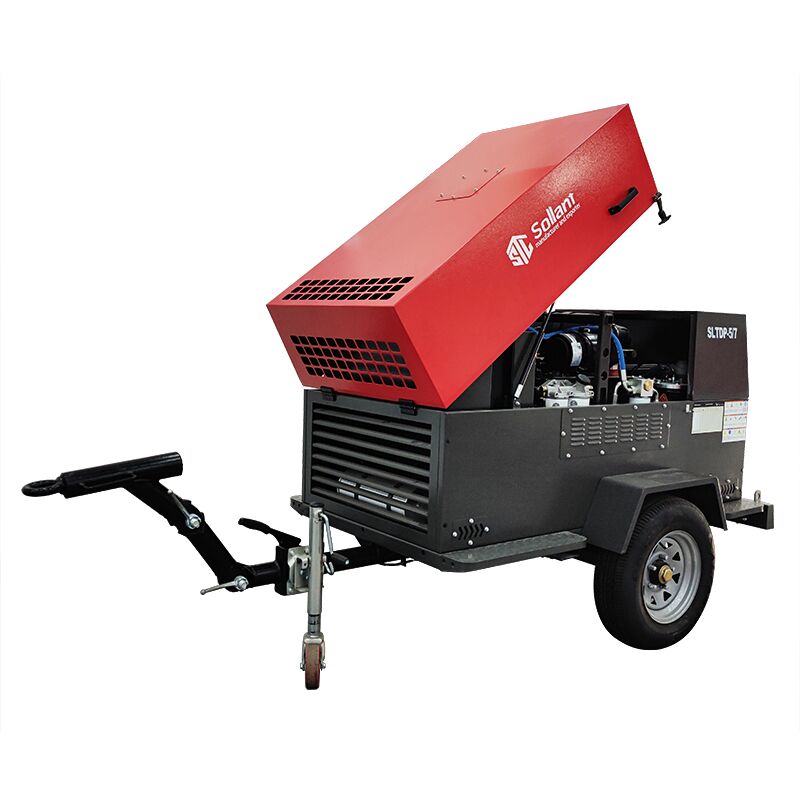
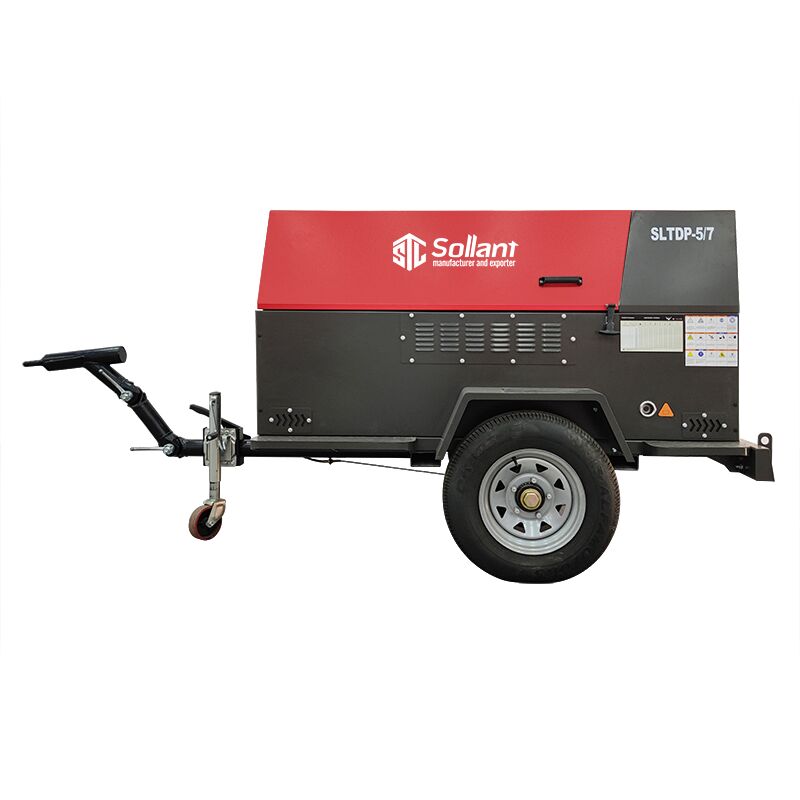
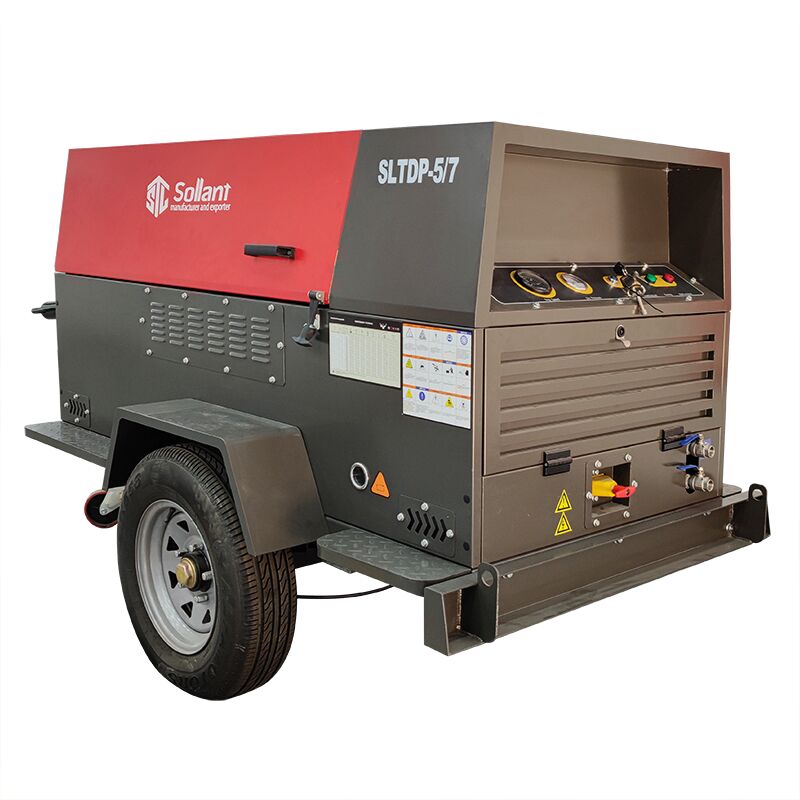
Intake contamination on portable compressors

The intake and exhaust on a portable diesel or gasoline compressor sit on the same skid, separated by a few feet of sheet metal. Exhaust gas wraps around the machine and re-enters the intake under wind conditions that change by the hour. OSHA's Technical Manual, Section VIII, Chapter 1, calls this out specifically. A compressor can run clean all morning and recirculate its own exhaust for twenty minutes when the wind drops at lunch, and nobody on the crew will know it happened unless an inline CO monitor is running. The quarterly grab sample, collected by a testing technician who scheduled the visit two weeks in advance and arrived on a Saturday morning when no trucks were running, will show 2 ppm and generate a passing certificate.

Stationary intakes fail on a different time scale. The intake location was selected during building design by someone solving for noise attenuation and weather protection. What was upwind of that intake in 2008 is not what is upwind in 2026. The building across the lot is now a truck maintenance shop. A diesel generator was installed for backup power in 2019. The intake has not moved.

Some contractors attempt to solve the portable compressor recirculation problem by running a length of pipe or hose from the intake to a point upwind or uphill of the machine. This works when the wind cooperates and fails when it does not, and it introduces a new variable: intake restriction. A compressor intake designed for a short, straight duct path has a specific pressure drop budget. Adding thirty feet of field-run pipe or a kinked hose increases intake restriction, which increases the pressure ratio across the compressor, which raises discharge temperature, which accelerates lubricant decomposition, which increases the internal CO generation described in the next section. The field fix for one CO source feeds another CO source. The correct solution is a combination of intake relocation, hopcalite in the purification train, and continuous CO monitoring, and the correct solution costs money that portable compressor operations are frequently unwilling to spend because the compressor rental contract does not include breathing air purification as a line item.

✦ ✦ ✦
Internal Generation

CO from inside the compressor

Some synthetic lubricants, polyol ester formulations in particular, produce trace CO as a thermal decomposition byproduct at high discharge temperatures in rotary screw machines. This CO originates inside the compression chamber, downstream of the intake. Coalescing filters pass it through. Carbon beds pass it through. If hopcalite exists in the system, the hopcalite handles it. If hopcalite does not exist, this CO goes to the mask.

Compressor manufacturers do not publish thermal decomposition data for their recommended lubricants in any form that a breathing air system designer could use. Safety data sheets describe what the oil is when it goes into the compressor, not what it becomes after six thousand hours at 220°F under 125 psig. The amount of CO produced through this mechanism varies with oil formulation, discharge temperature, load, and oil age.

✦ ✦ ✦
Catalyst

Hopcalite

This is the component that the entire CO protection strategy depends on, and it is the component that receives the least rigorous in-service monitoring of any element in the purification train.

Hopcalite degrades when exposed to moisture. Water vapor occupies active catalyst sites and reduces conversion efficiency. The degradation is invisible. Pressure drop across the bed does not change. Color does not change. Weight does not change. A bed converting at 30% looks identical to a bed converting at 90%.

The only way to know if a hopcalite bed is still working is a challenge test: introduce a known CO concentration upstream, measure what comes out downstream, calculate the conversion percentage. The equipment required is a calibrated CO gas cylinder, a regulator, a downstream CO analyzer, and twenty minutes, and the cost is negligible against the cost of a respirator program. The test is almost never performed.

What happens instead is calendar-based replacement. The manufacturer says replace every twelve months or every two thousand hours. The maintenance technician pulls the old bed, installs a new one, logs the date, discards the old bed without testing it. The replacement interval is a manufacturer recommendation built on assumptions about upstream air dryness. In a system with a good desiccant dryer, hopcalite lasts well past 4,000 hours. In a humid Gulf Coast installation with a marginal refrigerated dryer upstream, significant degradation has been observed at 800 hours. That is a five-to-one spread in service life, and the maintenance program treats both installations the same way.

The organizational reason this persists is that maintenance work orders are written as tasks, not as diagnostic procedures. The work order says "replace hopcalite bed." It does not say "test hopcalite bed and replace if conversion efficiency is below 80%." Writing the second kind of work order requires someone in the maintenance organization to understand what hopcalite does, to own a CO challenge gas setup, and to have the authority to defer a scheduled replacement if the test shows the bed is still performing. Most maintenance organizations do not operate this way. The reactive model, replace on schedule regardless of condition, is simpler to administer and easier to audit. It is also the model that allows a degraded bed to remain in service for months in a high-humidity installation where the calendar interval does not match the actual degradation rate.

A challenge test program would cost a facility a few hundred dollars per year in test gas and analyzer calibration. The idea has not occurred to the person writing the maintenance procedure, or has occurred and been dismissed as unnecessary because the schedule exists. The schedule is the problem, because it assumes conditions that it does not verify.

One additional wrinkle on hopcalite: the catalyst does not degrade linearly. The first 20% of moisture-induced capacity loss happens slowly, over hundreds of hours, as the most accessible catalyst sites on the granule surface become occupied by water. The next 30% happens faster, as moisture migrates into the pore structure and blocks interior active sites that were initially protected. A hopcalite bed that tested at 88% conversion six months ago may test at 55% today, and the decline is not the smooth curve that a linear interpolation between two data points would predict. A facility that decides to start challenge testing and tests once a year will get two data points twelve months apart, draw a straight line between them, and conclude that the degradation rate is manageable when in fact the bed may have spent four months of that year below 70% conversion. Quarterly challenge testing gives a better picture. Monthly is better still. The cost of each additional test is the cost of twenty minutes of technician time and a few dollars of calibration gas.

✦ ✦ ✦
Contamination

Oil and the Carbon Bed

Oil mist is capped at 5 mg/m³. The test is gravimetric. It captures liquid aerosol by weight on a filter. Gas-phase volatile organics contribute negligible weight and are not captured.

Under compression heat, synthetic compressor lubricants thermally crack. The decomposition products include aldehydes, organic acids, ketones, and various volatile organics that exist in the gas phase at downstream temperatures and pressures. Coalescing filters pass them. Activated carbon captures some of them, depending on molecular weight, polarity, and carbon type. Coconut-shell carbon and coal-based carbon have different pore size distributions and different affinities for different compound classes. When a facility changes oil brands, the decomposition product profile changes, and the carbon bed that was matched to the old oil may not be matched to the new one. The gravimetric test result improves because the new oil aerosolizes less. The air at the mask carries different gas-phase chemistry that the gravimetric method does not measure, and GC analysis on breathing air is not performed in the field because the equipment is not portable and no regulation requires it.

The oil brand change scenario is common enough that it deserves a concrete description of how it unfolds. A maintenance supervisor receives a recommendation from the compressor service company to switch from the incumbent mineral oil to a Group IV synthetic. The pitch is better oxidation stability, longer drain intervals, lower varnish formation, reduced energy consumption. All of these claims are valid in a general compressed air application. The service company does not mention breathing air because the service company does not think about breathing air; it thinks about compressor reliability and oil change frequency. The maintenance supervisor approves the switch, and the oil gets changed on a Tuesday. By Wednesday the air at the breathing air outlets smells different. A worker files a complaint. The supervisor checks the quarterly test certificate, sees a passing result, and tells the worker the air is fine. The certificate was issued three weeks before the oil change and reflects the old oil's decomposition profile. The next quarterly sample, taken ten weeks later, passes too, because the gravimetric method does not capture gas-phase decomposition products. The smell persists. Workers stop filing complaints because the complaints produce no action. The new oil's decomposition products, which may include compounds that the old oil did not produce in measurable quantities, enter the workers' lungs on every shift for the remaining life of the carbon bed and beyond, because the carbon bed was selected for the old oil's vapor profile and may not adsorb the new compounds at all.

✦ ✦ ✦
Adsorption

Carbon beds

Saturation is the failure mode that everyone knows about. Adsorption sites fill, contaminant breaks through, and the replacement interval catches it if set conservatively.

Channeling gets less attention and deserves more. Carbon granules settle from vibration, thermal cycling, gravity. Voids open at the top of the bed. Air takes the low-resistance path through the voids and bypasses packed carbon below. A channeled bed has unused capacity that the air never contacts, and it reads low on differential pressure because the air is finding shortcuts, not because the bed is in good condition. Horizontal canisters are more susceptible than vertical beds because the bed depth is shallow relative to the cross-section and the granules settle laterally. Horizontal canisters dominate small and mid-size systems because they cost less and swap faster.

The purchasing decision between a vertical tower and a horizontal canister happens on a quote sheet. Vertical towers need mounting hardware, floor space, and a repacking procedure. Canisters unbolt and bolt back on. The canister wins on labor and convenience. By the time channeling becomes a performance issue, the installed base is canisters, and nobody retrofits to vertical towers for a bed that is passing its quarterly test.

Microbial colonization of carbon beds is documented extensively in water treatment adsorption literature and has been reported sporadically in compressed air systems by field technicians who sent spent carbon out for lab analysis and received microbiological results. In warm, humid compressed air environments, carbon saturated with organic adsorbate supports bacterial growth. Biofilm blocks pore structure and reduces adsorption capacity. Weight, appearance, and pressure drop stay normal. The compressed air industry has not studied this with the rigor that the water treatment industry has, and the prevalence in breathing air carbon beds is unknown.

✦ ✦ ✦
Sensory

Odor

Grade D requires absence of "pronounced" odor. No instrument, no number, no method.

The human nose detects mercaptans at parts per trillion. No field instrument for CO or hydrocarbons operates at that sensitivity. When a worker reports that the air smells or tastes different, the cause is usually upstream: an oil brand change, channeled carbon, biofilm, or a new hose off-gassing plasticizer. The complaint arrives at the supervisor's desk as a vague report competing with schedule pressure.

Some facilities have adopted a five-minute triage for odor complaints: pull the worker, connect a different mask and hose to the same supply, ask a second worker to evaluate. If the complaint persists with different equipment, the problem is in the supply. If it disappears, the problem was in the original mask or hose. This avoids both an uninvestigated complaint and a full system shutdown.

✦ ✦ ✦
Condensation

Moisture

Grade D has no dew point number. The specification says no "pronounced" condensed moisture. OSHA says moisture must not obstruct the air supply.

In cold-weather outdoor work, compressed air depressurized at the respirator fitting drops in temperature, moisture condenses, and below 32F it freezes. Ice in a demand valve or exhalation valve blocks airflow. Refrigerated dryers produce a pressure dew point around 35 to 38F, corresponding after depressurization to an atmospheric dew point around minus 40F. That margin shrinks when the dryer runs above its rated flow or inlet temperature. A dryer rated for 35F running above design flow can deliver 45F, and the difference between 35F and 45F pressure dew point is the difference between a system that works at 10F ambient and one that ices up. Desiccant dryers achieve lower dew points and are the right technology for cold-weather breathing air.

Activated carbon beds desorb previously captured hydrocarbons when temperature rises. After a cold weekend shutdown in an unheated compressor room, Monday morning startup pushes warm air through the cold bed and releases a transient hydrocarbon slug that dissipates by mid-morning. This is well characterized in industrial adsorption literature and absent from Grade D compliance guidance. The slug size varies with the temperature swing and the adsorbate loading.

✦ ✦ ✦
Downstream

Hoses and Delivery

Breathing air hoses are rubber or PVC. PVC hose contains phthalate or adipate ester plasticizers that off-gas into the air stream, especially in heat. A fresh 300-foot PVC hose on a hot day produces air at the mask end with a chemical taste within minutes. The off-gassing rate peaks in the first hours and declines as the surface plasticizer layer depletes.

Conditioning new hoses by flowing clean air for a day or two before service is practiced in some operations and unheard of in others. No standard governs the conditioning period. Hose purchasing in construction and blasting is driven by unit cost and delivery time, and the cheapest PVC hose on the market carries the highest plasticizer loading.

Quick-disconnect couplings left uncapped between shifts accumulate floor debris. On the next connection, that debris enters the air stream. A dedicated coupling profile incompatible with plant air fittings prevents wrong-system connections. Capping prevents debris accumulation. Both measures are cheap. The obstacle is not cost but the absence of anyone on site who has thought about it.

✦ ✦ ✦
Cross-Contamination

Shared Systems and Backflow

OSHA 29 CFR 1910.134(i)(7) requires breathing air compressors to be situated to prevent contaminated air entry. Many facilities tee off the plant air header through a purification panel instead.

Plant air contains pipe scale, rust, thread sealant, oil from compressors running different lubricants, and in process facilities, chemical contaminants from leaking pneumatic actuators on process equipment. A check valve between the plant air header and the breathing air branch is the standard backflow defense. Spring-loaded check valves are the most common type in this application. The spring holds a disc or poppet against a seat, and air pressure on the breathing air side keeps the valve closed against backflow. The failure mechanism is mechanical: a particle of pipe scale, a fragment of thread sealant tape, or a grain of rust lodges on the seat and prevents the disc from sealing fully. The resulting leak path is a crescent-shaped gap between the disc and seat, sometimes less than a millimeter wide. At breathing air system pressures, a sub-millimeter gap passes enough plant air to deposit a film of contamination on the interior surfaces of the breathing air piping within weeks to months. The leak is too small to register on a pressure decay test performed at a gross level. Detecting it requires either a helium leak test, which is expensive and rarely performed on breathing air systems, or pulling the check valve and inspecting the seat, which requires taking the system out of service. Neither happens on a routine maintenance schedule. The backflow accumulates until someone opens a section of breathing air piping for other maintenance and finds the interior surfaces coated with a brownish film that is not compressor oil.

A dedicated breathing air compressor, receiver, and distribution system eliminates backflow at the design level. The capital cost is tens of thousands of dollars more than the shared approach. Facilities that make this investment tend to be those that have already experienced a backflow event or those where the safety department has enough organizational weight to win a budget fight against plant engineering. The shared approach works as long as the purification panel capacity matches the plant air contaminant loading and every check valve maintains its seal. Both conditions degrade over time without generating a warning.

✦ ✦ ✦
Compliance

Testing

OSHA does not specify a testing frequency. The quarterly grab sample is an industry convention maintained by the third-party testing companies whose business model is quarterly visits at a per-sample price.

The testing company employs technicians who drive a route, visiting multiple facilities per day. The technician arrives at the facility, locates the breathing air system sample port, connects a sample tube, collects air into a sampling bag or direct-read tube for a few seconds to a few minutes, labels the sample, fills out a chain-of-custody form, and drives to the next facility. The visit takes fifteen to thirty minutes, after which the samples go to a lab that reports oxygen, CO, CO₂, and oil mist against the Grade D limits. A certificate arrives a week or two later. The facility safety coordinator files it and does not think about breathing air again until the next quarter.

The testing company has no financial incentive to recommend continuous monitoring, point-of-use sampling, or any other practice that would reduce the facility's dependence on quarterly grab samples. The company's revenue comes from the quarterly visit. A facility that installs a continuous CO monitor and begins doing its own downstream oil vapor sampling is a facility that may decide it no longer needs the quarterly visit, or at least may question its value. These companies are not dishonest. It provides a legitimate service. It is also a business whose revenue model is aligned with the minimum compliance approach rather than with a comprehensive air quality assurance program.

The certificate represents thirty seconds of air from a system that runs 2,000 hours per quarter, sampled by appointment under conditions that favor a clean result.

The sample is taken at the purification panel outlet or compressor discharge. Between that point and the mask, the air passes through distribution piping, manifolds, hose reels, whips, quick-disconnect couplings, and the respirator itself. Zinc from galvanized pipe, copper from brass fittings, plasticizer from new hose, floor debris from uncapped couplings. The certificate describes air at one location, and the worker breathes air at a different one.

Continuous inline CO monitoring with electrochemical sensors closes the largest gap. Electrochemical CO sensors cross-react with H₂S. In refinery and wastewater environments, this cross-reactivity produces false high readings, and in some sensor designs, simultaneous CO and H₂S exposure suppresses the CO reading below the concentration of either gas alone. The cross-sensitivity data is on the manufacturer's data sheet.

✦ ✦ ✦
Records

Documentation

Most compliance files are quarterly lab reports and nothing else.

After an exposure incident, the investigation asks what happened between the last test and the event. Compressor logs, filter change records with differential pressure data, continuous monitor alarm logs, intake location assessments, hose records, and a daily operator logbook are the documents that answer that question. The daily logbook is the hardest to maintain because it requires someone to walk to the compressor room, read gauges, and write numbers every day for years. In a facility where the compressor is in a remote mechanical room, the logbook fills with identical entries or stops being filled. In a facility where an operator checks the compressor on a daily round, the logbook accumulates an operational narrative that allows reconstruction of any given day. In litigation after a breathing air exposure, that logbook carries more weight than the test certificate.

Footer Component - SOLLANT
滚动至顶部