Our Products
Compressed Air Solutions
  • Screw Air Compressor
  • Oil Free Compressor
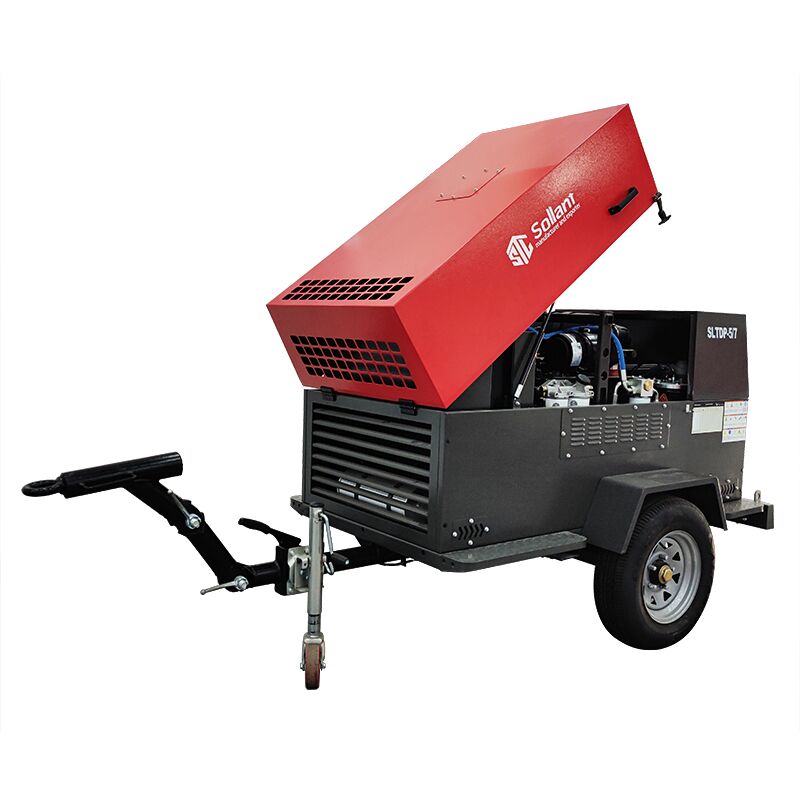
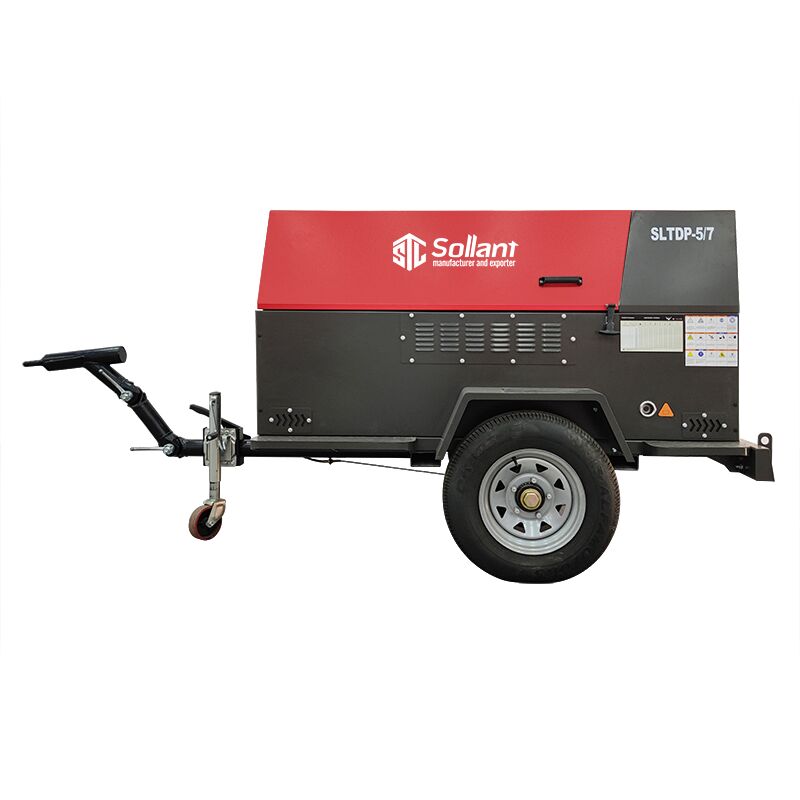
  • Diesel Portable Compressor
  • Gas Compressor
  • Specialty Compressor
  • Air Treatment
ISO 9001 Certified
24-Month Warranty
OEM & ODM Support
Factory Direct Price
All products→
Compressed Air for Semiconductor Manufacturing and Cleanroom Applications
Technical Guide

Compressed Air for Semiconductor Manufacturing and Cleanroom Applications

Technical Article
18 min read
Semiconductor CDA

In semiconductor factories, CDA falls under facility support. Process integration people do not pay much attention to it. When yield problems come up and the team is chasing root causes, CDA is at the back of the line. Recipe parameters, chamber condition, specialty gas purity, chemical batch, UPW quality, all checked, nothing found, and only then does someone think to go take a look at CDA.

ISO 8573

ISO 8573 Class 1 is the highest grade for industrial compressed air. Semiconductor fabs use it as a starting point. Class 1 limits particles in the 0.1 to 0.5μm range to 20,000 per cubic meter. Advanced node fabs control internally to less than 1 particle per cubic foot above 0.01μm. Oil content Class 1 is ≤0.01 mg/m³, fabs control to ≤0.003 mg/m³ or lower. Nothing wrong with the standard. What you cannot do is treat meeting Class 1 as equivalent to meeting semiconductor requirements.

Dew Point

Dew point requirement is below -70°C. Adsorption dryers hitting this target under steady state is routine.

The problem is in transients. Adsorption dryers alternate twin towers, one adsorbing one regenerating, then they switch. At the moment of switchover the freshly regenerated tower needs time before reaching design adsorption efficiency. When flow is steady the dew point fluctuation from switchover is small.

Adsorption dryer system
Dew Point Control

Adsorption Dryer Towers

Fab CDA flow has intraday swings. Shift changes bring large numbers of equipment starting recipes simultaneously. Group re-qualification after PM brings the same. System flow jumps up within minutes. If the flow step and dryer tower switchover land on top of each other, flow is up so residence time is down so adsorption efficiency drops, and at the same time the newly online tower has not stabilized. Two things stacked together, dew point can deteriorate to -40°C. Moisture content goes from around 2.5 ppmv to around 127 ppmv.

If those tens of seconds happen to coincide with an ALD chamber doing wafer loading, the extra water molecules get into the loadlock. Some adsorb on chamber walls and the wafer surface. Pump-down does not get them all off. They follow the wafer into the process chamber.

ALD deposits one atomic layer per cycle through self-limiting chemisorption of precursors on the wafer surface. Sites fill up and adsorption stops on its own. If the surface already has uncontrolled water molecules sitting on some sites, adsorption density of the first precursor becomes non-uniform. Per-cycle thickness difference is sub-angstrom. Over tens to hundreds of cycles it accumulates and ellipsometry picks up within-wafer non-uniformity degradation. With TMA/H₂O for Al₂O₃ it gets more complicated. Water vapor is the designed oxygen source, precisely metered and pulsed into the chamber. Moisture brought in by CDA adds on top of the metered dose, putting an uncertain extra quantity into each oxidation half-cycle. Maybe only a fraction of an angstrom per cycle, hard to separate out in film thickness measurements, shows up in EOT.

CDA falls under the facilities department. CVD/ALD falls under the process department. Facilities SCADA records CDA dew point, pressure, flow. Process FDC records chamber parameters. Time-aligning these two datasets for correlation analysis is technically simple. Getting it done within the organizational structure often stalls. Fabs that have done it found CDA transient contributions to chamber metrics were larger than previously estimated. How much larger does not have a universal number, it depends on the specific fab's pipe network condition and dryer configuration.

Three-tower or four-tower configurations eliminate the switchover issue. Downstream buffer tanks help too, volume is not a case of bigger is better, too big and Dry Down time goes up.

Oil Content

Liquid oil mist removed by coalescer filters. Mature, reliable.

Gaseous oil vapor relies on activated carbon. Higher temperature means lower adsorption capacity. Light fractions in synthetic lubricants have weaker adsorption affinity on activated carbon than mineral oil aromatics. Gearboxes and bearings in "oil-free compressors" still use oil, isolated by shaft seals. After a few years shaft seals develop micro-leakage. Fabs at 3nm and below are starting to put catalytic oxidation modules in CDA piping as supplementary purification.

Piping and Dry Down

Electropolished 316L stainless steel CDA piping
Piping

Electropolished 316L Lines

CDA piping uses electropolished 316L stainless steel, Ra 0.25 to 0.4μm. Electropolishing reduces microscopic surface area. Micro-pits, grain boundary grooves, machining marks on raw surfaces are all adsorption traps for water molecules. Electropolishing dissolves and levels these structures while forming a Cr₂O₃ passivation layer. Unpolished pipe adsorbs several times more water vapor than electropolished pipe.

Dry Down has a much bigger presence in fab construction projects than the literature and technical articles would suggest. Piping installed, gas flow started, endpoint dew point stabilizing at -70°C, three or four days minimum in a new fab, and there have been cases of ten days when the piping was long with lots of weld joints and extended exposure time during installation. Equipment move-in needs CDA at specification. CDA at specification needs Dry Down complete. When everything is being rushed in the late stages of a project, CDA Dry Down frequently gets in the way.

Connecting nitrogen for high-flow pre-drying after piping installation is done, without waiting for CDA compressors, saves a good amount of time. The nitrogen system usually commissions earlier than CDA. This needs to be planned into the construction schedule with temporary nitrogen piping arranged ahead of time. Trying to arrange it at the last minute does not work. On some projects the Dry Down timeline was only met because of the time gained through nitrogen pre-drying.

Once the passivation layer gets attacked by halogens the underlying iron substrate is exposed and that location keeps releasing particles and metal ions. Replace the pipe section. Halogen sources are fluoropolymer fragments from aging compressor seal components and acid gas backflow from ambient air. Inlet air pretreatment is protecting the piping.

On weld heat-affected zones, the HAZ near each weld joint has locally degraded surface quality. A fab's CDA piping has thousands upon thousands of weld joints. Post-weld treatment and borescope inspection on main headers and wall-penetration sections, high-cleanliness fittings on end-distribution to reduce the number of welds, this is more or less industry consensus now. Fabs that do post-weld treatment on every single weld joint exist. Not many.

Pressure Pulsation

Pressure monitoring and control systems
Precision

Pressure Stability Control

Lithography tool air bearings need CDA supply pressure stability within ±0.5 kPa. When two screw compressors run simultaneously their discharge pulsations can create beat frequency effects in the pipe network. Conventional pressure sensors do not sample fast enough to catch it. Air bearing servo systems feel it. Shows up in overlay and CDU data. Confirming it requires high-resolution dynamic pressure sensors on the piping cross-correlated in the frequency domain with equipment-side data. POU precision regulators paired with buffer tanks. Do not oversize the regulator Cv value. When flow is low the valve plug sits at a tiny opening and incremental sensitivity spikes.

EUV

EUV lithography tool optical chambers are in high vacuum. CDA does not enter the exposure path. Along the reticle transfer path from FOUP to exposure position, organic AMC concentration in the micro-environment determines how many organic molecules the reticle surface has adsorbed before entering vacuum. Under EUV photon irradiation they crack and deposit carbon. Some early EUV-adopting fabs found their existing CDA purification fell short of organic AMC requirements for the EUV reticle transfer environment. Added dedicated chemical filter modules at EUV equipment group POU locations.

Clean distribution system
Distribution

Clean Delivery

Point-of-use filtration
Filtration

POU Purification Modules

Air treatment equipment
Treatment

AMC Control

HMDS

HMDS reacts with silicon hydroxyl groups on the wafer surface to form a hydrophobic layer. When CDA moisture is high the wafer surface has already adsorbed water molecules before HMDS treatment. They compete with HMDS for reaction sites. Hydrophobic treatment comes out incomplete. Resist lifting defects appear. Without tracing back to CDA dew point data this easily gets attributed to HMDS formulation or coating parameters.

FOUP Purging

Traditionally nitrogen. Some fabs are testing CDA as a substitute. The reasoning is that nitrogen removes oxygen along with moisture, and for wafers with exposed copper interconnect layers the copper surface may actually degrade in a completely oxygen-free environment. The oxygen content in CDA provides passivation protection. Still in the experimental stage.

Microbiological Contamination, Seasonal Factors, Leakage

Condensate drain points after the compressor, tank bottoms, wet surfaces inside filter housings can harbor microorganism growth. Metabolic byproducts, MVOCs pass through particle filters in gaseous form, organic acids cause MIC. Countermeasure is basic maintenance.

Summer intake air moisture content is high, dryer loading goes up. Monsoon climate regions see elevated microorganism concentrations during the rainy season. CDA leakage in fabs that have operated for years can accumulate to a significant fraction of output. LDAR is standard practice in petrochemical. Semiconductor fabs do it less.

Online Monitoring

Traditional approach is offline sampling monthly or quarterly. Advanced fabs have online dew point analyzers and particle counters installed, data going into FDC. Online oil vapor monitoring is still a weak spot. A small number of fabs are trying to bind POU CDA parameter snapshots to each wafer's MES traceability record.

Energy Efficiency

Lowering system pressure by 1 bar saves a few percent of compressor power. Heatless regeneration dryers use finished CDA for purge and the loss is not small. HOC dryers are much better. Oil-free compressor specific power is somewhat higher than oil-injected. Energy efficiency for a fab is not about the electricity bill. The big electricity consumers are process equipment and cleanroom HVAC. Energy efficiency matters because of system capacity margin. Higher efficiency means the same installed capacity supplies more CDA. During capacity ramp that can defer compressor expansion.

Footer Component - SOLLANT
滚动至顶部