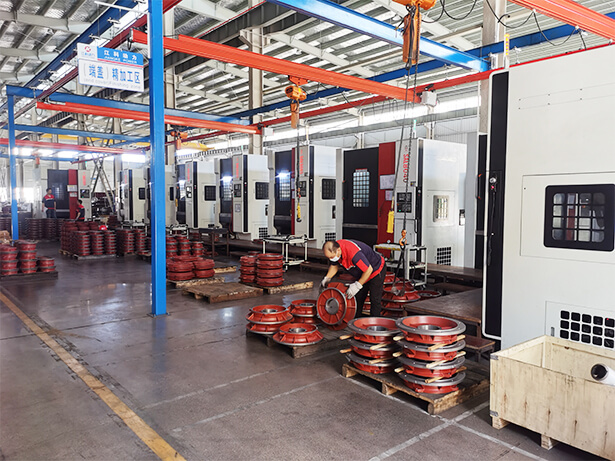
Our Products
Compressed Air Solutions
  • Screw Air Compressor
  • Oil Free Compressor
  • Diesel Portable Compressor
  • Gas Compressor
  • Specialty Compressor
  • Air Treatment
ISO 9001 Certified
24-Month Warranty
OEM & ODM Support
Factory Direct Price
All products→
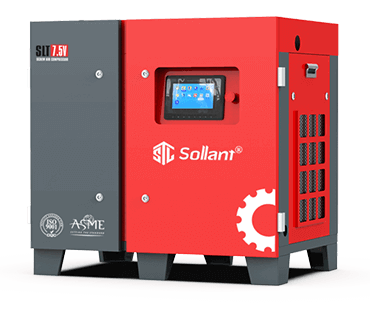
CFM vs PSI Understanding the Two Most Important Compressor Specs
Technical Reference

CFM vs PSI Understanding the Two Most Important Compressor Specs

2026.03.08
22 min read

PSI, Pounds per Square Inch, measures the pressure of compressed air. CFM, Cubic Feet per Minute, measures the volume flow rate of compressed air. One is pressure, one is flow. That's all there is to the definitions, no need to elaborate further.

What needs elaborating is something else.

01

How the CFM on spec sheets is derived

Most buyers treat CFM as a fixed property of a compressor, thinking a machine "is just 5 CFM" the same way a person "is just 175cm tall." This understanding is crooked at its root. A compressor's CFM is measured at a specific PSI. Change the PSI at the time of testing, and the CFM changes. The same machine might output 5.0 CFM at 90 PSI, drop to 40 PSI, and CFM could hit 7.5. Both numbers describe the same machine.

When it's written as "5.0 CFM @ 90 PSI," that "@" is what matters. If a spec sheet lists CFM without the corresponding PSI, the number is about as useful as no number at all.

Why does this happen? Because the drive motor's power output is fixed. Power equals pressure times flow rate, so when pressure goes up, flow rate has to come down under the same power. This isn't a design tradeoff. It's a hard constraint imposed by thermodynamics. CFM and PSI are not two independently selectable parameters. They are two coordinates on the same power curve. Choosing a compressor means choosing a working point on that curve.

In industrial selection manuals, this curve is provided as a chart. Horizontal axis PSI, vertical axis CFM, a line sloping downward to the right. With this chart in hand, the CFM corresponding to any PSI value is immediately clear. Consumer-grade compressors almost never provide this chart. What you get is a single lonely data point, like "5.0 CFM @ 90 PSI," and that's the good scenario. In the bad scenario they don't even include the number after the @.

Industrial compressor performance curve illustration
The relationship between CFM and PSI lives on a single power curve

There's another layer here. CFM itself has three different labeling methods: Displaced CFM, SCFM, and ACFM. Displaced CFM is a pure theoretical value calculated by multiplying cylinder volume by RPM, without deducting valve losses, leakage, or thermal expansion. It's the biggest number and the least honest one. SCFM is measured under standard reference conditions (68°F, 14.7 PSIA, 36% relative humidity) and can be compared across brands. ACFM is the output under specific real-world conditions. The same machine could show 8.0, 5.5, and 4.8 for these three numbers respectively. Without identifying which type of CFM a spec sheet is using, all comparisons are meaningless. Generally speaking, the more reputable the brand, the more likely they'll specify SCFM and list the test conditions. Those that label Displaced CFM either lack confidence in their numbers or are counting on buyers not knowing the difference between these concepts.

02

The horsepower thing

This section doesn't have a very direct connection to the CFM-PSI relationship, and by rights could be left out. The reason it's still here is that horsepower inflation is so severe it directly interferes with how consumers evaluate CFM and PSI. If this obstacle isn't moved out of the way first, everything that follows will be operating on a skewed foundation.

A compressor plugged into a standard household 120V/15A circuit can draw a sustained maximum of about 1800 watts, roughly 2.4 horsepower. This ceiling is determined by the wire in the wall and has nothing whatsoever to do with the compressor itself. Walk into any hardware store and you'll see 120V household compressors labeled "5 HP," "6 HP," even "7 HP" everywhere. What's labeled is Peak HP, the theoretical peak corresponding to the current spike during the startup instant, lasting a fraction of a second. This number gets printed in the most prominent position, largest font, brightest color.

What does this have to do with CFM and PSI? The connection is the physical binding between power, pressure, and flow rate. Power equals pressure times flow rate. When horsepower is inflated, using that inflated number to estimate "roughly how much CFM this machine can deliver at a given PSI" produces an equally inflated conclusion. A machine with 1.5 HP sustained power can deliver roughly 4.5 to 6 CFM at 90 PSI (depending on efficiency and number of stages), and that's the range physics permits. If a spec sheet simultaneously claims "6 HP" and "8 CFM @ 90 PSI," no specialized knowledge is needed. Multiply 1.5 by 4 and you know 8 is impossible.

There's a rough conversion for reciprocating compressors: each 1 HP of sustained power corresponds to roughly 3 to 4 CFM at 90 PSI. Remember this coefficient and that's enough. Pick up any machine's spec sheet, first check whether the horsepower listed is Peak or Running/Rated, then use this coefficient to back-calculate CFM and compare it to the claimed value. Whether the number holds up or not becomes immediately clear.

There's an interesting split in the North American market: consumer brands make a big deal out of horsepower, industrial brands barely mention it. Industrial selection is based on SCFM at a specified pressure and Specific Power (kilowatts consumed per CFM of output). The same product category, two completely different descriptive languages, aimed at two groups of buyers with completely different levels of information access. The split itself is quite telling.

03

The order of selection

PSI is a threshold by nature. Whichever tool in the lineup has the highest working pressure requirement, that number becomes the compressor's minimum PSI requirement. Fall short of it and the tool simply won't function properly, no matter how large the CFM. There's not much to expand on here. It's a hard threshold. Met is met, not met is not met.

What comes after the PSI threshold is cleared is somewhat more involved.

Insufficient CFM doesn't manifest as "completely unusable." It manifests as "intermittently usable." Tank pressure repeatedly drops below the critical point, the compressor cycles through unload-load-unload-load nonstop, paint jobs come out blotchy, sanding stutters, grinding wheel speed fluctuates. A lot of people at this stage mistakenly think the tool is broken or there's a leak in the hose, and after a full round of troubleshooting they discover the pump head's sustained output simply can't keep up with consumption.

When using multiple tools simultaneously, there's another trap: you can't just add up the CFM ratings of each tool, because the tools require different PSI levels. An impact wrench calls for 4.5 CFM @ 90 PSI, a spray gun calls for 8.0 CFM @ 40 PSI. Adding them up to get 12.5 CFM is wrong. When system pressure is set at 90 PSI to satisfy the wrench, the spray gun operating through a regulator on a 90 PSI system consumes a completely different amount than the 8.0 it's rated at under 40 PSI. The correct approach is to convert all requirements to the same PSI baseline before adding. Consumer compressors don't provide performance data at various PSI levels. They give one data point. Either write to the manufacturer requesting the full curve, or find real-world test data from same-model users on forums. There's no other shortcut.

A quick note on selection margin. Add at least 25% to 30% on top of maximum CFM demand. A compressor running at full load has its worst efficiency, fastest wear, highest temperature rise. Operating at 70% to 75% of capacity keeps it in a relatively ideal range for both efficiency and lifespan.

04

Max PSI, Cut-in, Cut-out

Every tank-mounted compressor has a pressure switch. Two values are set on it: Cut-out Pressure and Cut-in Pressure. At Cut-out the motor stops. When pressure drops to Cut-in the motor restarts. The "Max PSI" on the spec sheet is the Cut-out value.

A machine rated Max 150 PSI typically has Cut-in set around 110 to 120 PSI. During operation, tank pressure oscillates within this range. The CFM on the spec sheet is usually measured near Cut-out pressure, under the most favorable conditions. Yet the compressor spends a considerable portion of its operating time near Cut-in, when output capacity is below the rated value.

Large Differential (~40 PSI)

Large pressure swings and inconsistent airflow at the tool end through the regulator. Common on cheap machines.

Small Differential (20–25 PSI)

Smoother delivery but higher demands on the pressure switch durability and the motor's tolerance for frequent cycling. Found on good machines.

How to check this parameter: open the pressure switch cover, and inside there are two adjustment screws. One adjusts Range (Cut-in), the other adjusts Differential. The manual usually lists these too, tucked between the installation diagrams and the warranty terms, quite far back. During the pre-purchase stage, you can ask the dealer directly what the Cut-in and Cut-out values are. If they can't answer or get vague about it, draw your own conclusions.

05

Duty Cycle

A reciprocating compressor rated at 5 CFM with a 50% duty cycle has to stop for one minute of cooling for every minute of operation. Sustained effective output is 2.5 CFM. A rotary screw compressor rated at 4 CFM with 100% duty cycle delivers a sustained 4 CFM.

Duty cycle is the outward expression of thermal equilibrium capability. Reciprocating compressors generate concentrated heat during compression. Without shutdown cooling, cylinder temperature keeps climbing, oil film thins out, wear on piston rings and cylinder walls accelerates. At the same time, high-temperature discharge air carries much more moisture, which condenses into liquid water after entering the piping and contaminates downstream tools and workpieces. This moisture problem is frequently blamed on not having installed a dryer or on humid weather. In some of those cases, the root cause is actually the duty cycle being exceeded, pushing discharge temperature too high, and it has nothing to do with the weather.

Rotary screw compressors achieve 100% duty cycle through more evenly distributed heat generation from continuous rotary compression, combined with oil cooling or water cooling systems that continuously remove heat. The price tag is on an entirely different level as well. For most garage users and small workshops, screw compressors aren't within the selection range. When choosing among reciprocating compressors, the role of duty cycle becomes this: between two machines at similar price points with similar CFM ratings, the one with the higher duty cycle delivers sustained output closer to its rated value.

If a spec sheet doesn't mention duty cycle at all, it usually means the number isn't flattering.

06

The air tank

Air tanks cover peaks, not sustained demand. A 60-gallon tank paired with a low-CFM pump head buys a stretch of maybe 20 usable seconds, followed by a long wait for recovery.

Some manufacturers deliberately fit oversized tanks to mask insufficient pump head CFM. During showroom demos or short review videos, a big tank makes the machine look adequate, because the demo duration typically doesn't exceed what the stored air can sustain. After 15 or more minutes of continuous use, stored air is depleted and only the pump head's CFM is left holding things together. Between two machines in the same class, one with a big tank and small pump head, the other with a small tank and big pump head, the latter delivers a much better experience under continuous demand. Tanks can be added externally later. Pump heads can't be swapped out.

How to tell whether a machine's tank is adding value or covering up weakness: measure Recovery Time. Bleed the tank down to the Cut-in trigger point, start timing until the motor shuts off again (reaching Cut-out), with no tools connected during the test. Between two machines of the same class and price range, this single test separates them.

There is one type of scenario where the tank's role genuinely outweighs CFM, and that's intermittent use. Nail gun type tools consume an extremely brief burst of air per trigger pull, then sit idle for seconds to tens of seconds. In this pulsed usage pattern, even if the pump head's CFM isn't high, as long as the tank is big enough and recovery time catches up within the interval, the experience won't suffer. Continuous use scenarios (spray guns, grinders) are an entirely different story, where the tank's buffering effect is nearly negligible. So the answer to "how big a tank do I need" depends entirely on the usage pattern.

07

Pressure drop in piping and fittings

This topic occupies significant space in professional compressed air system design literature and is almost invisible in consumer-facing buying guides. In short: air traveling from the tank to the tool passes through piping, elbows, and fittings, all of which consume pressure along the way.

Compressed air piping and fittings system
Even the best compressor can be undermined by poor plumbing

Quick Connect Couplers are a particularly inconspicuous source of pressure drop. A standard 1/4-inch quick connect has an internal bore diameter much smaller than the bore of the matching 1/4-inch hose. The pressure drop from a single coupler can equal that of several feet of hose. String two or three quick connects in series (common in multi-tool switching scenarios) and the cumulative pressure drop becomes substantial. Measuring 15 to 20 PSI less at the tool end compared to the tank gauge reading is not unusual. Many people go through rounds of troubleshooting thinking the compressor has a problem, only to find the fittings are the culprit.

Upgrading hose inner diameter from 1/4-inch to 3/8-inch, or swapping cheap standard couplers for High Flow versions, costs a few dozen dollars. Sometimes these small investments at the piping end produce a more noticeable improvement in feel than spending hundreds more on a bigger compressor. Because in a portion of "not enough CFM" situations, the CFM itself is adequate. It's just being eaten up by the plumbing.

08

Altitude

Keeping this brief. SCFM testing baseline is sea level, 68°F, one standard atmosphere. At 5,000 feet elevation (roughly 1,500 meters), atmospheric pressure is about 83% of sea level. Intake air density drops, output CFM drops proportionally. A machine rated 10 SCFM at sea level delivers roughly 8.3 ACFM at that altitude. For every 1,000 feet of elevation gain, CFM decreases by approximately 3% to 3.5%. High temperatures have the same effect: lower air density, reduced intake efficiency. Most users in low-altitude areas don't need to worry about this. For those using compressors at high altitude and finding that "the machine clearly isn't delivering its rated output," check the altitude correction factor first. There may be nothing wrong with the machine.

A few loose notes to close with

An observation about purchasing channels: the same compressor, on a distributor website aimed at industrial users, will have a spec sheet listing SCFM, duty cycle, specific power, Cut-in/Cut-out, and noise level in decibels. The same machine (sometimes literally the same model number) listed on a consumer-facing e-commerce platform has a spec sheet trimmed down to Peak HP, Max PSI, a CFM figure with no @ condition, and tank capacity. Information is selectively presented. The channel where you can see complete specs and the channel where you can't may be selling the same machine, often at different prices.

On judging "enough or not enough": rather than looking up CFM requirement tables for various tools online and doing addition, it's better to find a user of the same compressor model and ask "what do you use it for, and is it enough." The reliability of this information far exceeds any spec-based calculation. No matter how precise the theoretical math, it doesn't match one sentence from someone who's been using the machine under similar conditions for six months saying "enough" or "not enough."

Footer Component - SOLLANT
滚动至顶部