Our Products
Compressed Air Solutions
  • Screw Air Compressor
  • Oil Free Compressor
  • Diesel Portable Compressor
  • Gas Compressor
  • Specialty Compressor
  • Air Treatment
ISO 9001 Certified
24-Month Warranty
OEM & ODM Support
Factory Direct Price
All products→
Buying Air Compressors from China
Technical Guide

Buying Air Compressors from China

18 min read
Import Guide

Eighteen to twenty weeks, the whole thing. Grab stock and air freight if there's a deadline, four to six weeks, brutal freight cost.

18wks
Standard Cycle
4-6wks
Rush Order
3-5
Suppliers to Compare
30%
Typical Deposit

Pricing

Start here because this is where every importing operation either makes its margin or gives it away, and most give it away without realizing it happened.

A 37kW fixed-speed screw compressor FOB from a Chinese port sells in a range of about $2,800 to $4,500. That range sounds academic until two quotes are sitting side by side on a desk and the $400 gap between them is making someone reach for the cheaper one. Specific deal: Supplier A at $4,200, Supplier B at $3,800. Buyer wanted B. Pull the quotes apart. A bundled two sets of oil filters, two oil separator sets, two air filter sets, export crate with fumigation cert, vibration dampeners, translated manual. B included one set of each filter, pallet wrap for packaging, no dampeners, Chinese-only manual. Extra filters: $85. Separators: $120. Crate: $150. Dampeners: $40. B's adjusted price: $4,195. The gap was $5.

Quote analysis documents

Then the airend. A had Hanbell, name cast into the iron, serial numbers traceable. B's airend was blank. No casting marks visible, no nameplate, nothing. "Our own manufacturing." Press on that and the answer becomes "designed based on German technology," a phrase used by something like two hundred compressor factories across Zhejiang and Jiangsu. It means nothing. It could be a legitimately reverse-engineered twin-screw with good tolerances, or it could be a casting from some foundry in Taizhou that supplies whoever shows up with cash that week.

Here is why the airend matters more than any other component and why this part of the article goes on longer than maybe feels necessary.

There is a cycle in Taizhou and Wenling. Someone who worked at a compressor factory for ten years saves up, rents a small workshop, buys two CNC machines and a grinding setup, and starts making airends. Quality might be decent at first because the founder knows what tolerances matter. Business comes in. Then they hire, they cut corners to compete on price, the original CNC machines wear and don't get recalibrated, tolerances drift.

Or the founder gets sick. Or raw material costs spike and they quietly switch to a cheaper bearing supplier. Or orders dry up for six months and the shop closes. Or it gets absorbed by a larger operation that guts the quality process. There are airend workshops in the Taizhou-Wenling area that have opened and closed three, four, five times under different business registrations in the last fifteen years. Same equipment, different owner, different name, no continuity of quality data.

The products from these shops are out there in machines. Running in garment factories in Bangladesh, furniture plants in Vietnam, construction sites across Nigeria, bottling operations in Egypt. When those airends reach 8,000 or 12,000 hours and the bearings need service, the buyer or end user contacts the compressor manufacturer, who contacts the airend supplier, who... doesn't answer. Phone disconnected. WeChat account inactive. The factory address on the receipt is now a tire shop. So the machine sits. If the end user is lucky, someone local can find compatible bearings by measuring the old ones and sourcing from a bearing distributor. If the rotor profiles are damaged from running on failed bearings, the airend is scrap.

This happens. Not to every machine. Not even to most machines. It's a risk factor that scales with how unknown the airend supplier is, and it's invisible at the quoting phase because every airend looks the same when it's new and installed in a painted machine.

Hanbell has been making airends since the 1990s. Baosi has been around. These companies have parts inventories and service infrastructure. A Hanbell airend at 15,000 hours can be rebuilt with parts ordered from a catalog. That's what "branded airend" means in practical terms. It doesn't mean the rotor profile is magically superior. It means the parts exist when the machine needs service.

An airend from a shop that opened in 2021 and quotes 30% below Hanbell might produce identical air quality and flow rates on day one. The question is day 3,000. And nobody at the quoting stage is thinking about day 3,000 because the purchase decision is about day zero and the price per unit and the margin calculation on the current batch.

Enough about airends. Or maybe not. One more thing. "Atlas Copco rotor profile" gets thrown around loosely. What it usually means is that the airend manufacturer copied the rotor geometry from Atlas Copco's older designs, either through reverse engineering or through former Atlas Copco employees bringing know-how to Chinese manufacturers, which happened quite a bit in the 2000s and 2010s. Copying the geometry is the easy part. Manufacturing it within tolerance on the right substrate material with the right coating is the hard part, and that's where the spread between $2,800 and $4,500 machines lives.

OK, beyond airends. Motors add about $150 to $250 to the spread between branded (TECO, Wannan, the names that show up over and over) and generic. Not the headline differentiator on any single machine, adds up on a fifty-unit order.

VFD costs 20 to 30 percent more than fixed-speed. The inverter is almost the entire gap. Domestic Chinese brands Inovance and Invt are the cheaper options, ABB and Siemens at the top.

There is a thing with ABB that burns people and keeps burning people despite being well known in the trade. Factories quote "ABB inverter." What arrives in the machine is a product made by a Chinese joint venture company that has ABB branding on the housing. These are not the same product. Not the same circuit boards, not the same capacitors, not the same thermal management, not the same firmware. The joint venture unit costs the factory about 40% less to buy. From the outside it says ABB on it. The model number is the tell. An ACS580 is a European-designed product. The joint venture products have different model numbers. Ask for the model number. Verify it independently. This has been going on for years and factories keep doing it because buyers keep not checking.

Above 75kW the whole pricing conversation changes because the number of cost variables multiplies. Airend, bearings inside the airend, shaft seal material, cooler type (aluminum plate-fin is cheaper, copper tube is better for longevity in humid or corrosive environments, and the price difference on a 75kW cooler is a few hundred dollars, which matters when margins are thin), PLC brand, contactor brand, wiring gauge, even the type of paint. Every single one of these has a budget option. A $6,800 quote for a 75kW machine means every component is the budget option. A $13,000 quote means most components are mid-range or better. Both machines will have the same numbers on the spec sheet.

One thing most people in the compressor trade know but nobody publishes: the oil cooler sizing issue. Some factories design coolers for a 35°C ambient temperature. Works great in northern China during testing, works great in Scandinavia, works great in Canada. Ship that machine to Riyadh or Dubai or anywhere in the Gulf where ambient hits 48°C to 52°C in summer and the cooler cannot reject enough heat. The machine runs fine in December. June arrives and it starts tripping on high oil temperature every afternoon. The factory's response is usually "the machine passed our factory test," which is true, because the factory test was run at 22°C ambient inside an air-conditioned test room. The fix is an aftermarket oversized cooler, which costs $300 to $500 installed, or running the machine with the doors of the compressor room open and a big ventilation fan pointed at it, which is a band-aid that sort of works. Factories that design for 45°C ambient charge more for the cooler. Factories that design for 35°C charge less. Guess which one shows up in the $6,800 quote.

Spare parts pricing. This gets its own paragraphs because the economics are sneaky and can flip a "good deal" machine into the most expensive equipment in the fleet over a five-year ownership period.

Oil separator elements need replacement every 2,000 to 4,000 operating hours depending on air quality and oil condition. Some factories use proprietary element dimensions. The element can only be sourced from that factory. Pricing: $90 to $100 per element. Other factories use standard-dimension elements that match specifications available from dozens of aftermarket suppliers in China, Europe, and the US. Pricing from aftermarket: $30 to $40 per element. On a machine running two shifts, that's roughly three changes per year. The annual cost difference per machine is about $180. Across twenty machines that's $3,600 per year. Over five years, $18,000. None of this appears in the unit price comparison at the quoting stage. Ask for element pricing during quotation. Oil separator, oil filter, air filter, air-oil separator. If the factory's element prices are double or triple what aftermarket suppliers charge for equivalent standard-dimension elements, the factory is using consumables as a profit center. The machine price is a loss leader. Some buyers are fine with this because they want the factory as a single source for everything. Some buyers are not fine with it and want aftermarket flexibility. Either way, know the situation before placing the order. Not after.

Raw material pricing affects quotes. Copper and cast iron move. A quote from January might get revised in March if copper shifted 15%. Most factories hold prices for 15 to 30 days.

Suppliers

About half the profiles on Alibaba are trading companies with rented offices and borrowed factory photos. Most of the sorting process comes down to one question: can someone visit the production facility on a specific date? Factories respond with an address and an offer to arrange transport from the nearest train station. Trading companies say something about scheduling, the factory being in a different city, timing not being ideal, let's wait.

There was a visit arranged to a facility near Kunshan. The sales contact who had been emailing for two months met the visitor at the gate and proceeded to get lost inside the building. Opened a storage closet. Then someone's private office where there were lunch containers on the desk and personal photos on the wall that clearly belonged to a stranger. Eventually a factory manager turned up wearing a polo shirt embroidered with a completely different company's name. He didn't apologize for the shirt or explain it, just sat down and started presenting from his phone. The visitor later found out through a freight forwarding contact that this same trading company had arrangements with three or four factories in the Kunshan area, using a different one depending on what product the overseas buyer was asking about. Compressors one week, diesel generators the next, water pumps the week after. Same sales contact, different factories, same pitch.

The thing about trading companies is that some of them do know their supply chain well. There's one in Ningbo, been operating for over a decade, the founder spent fifteen years at a compressor plant before starting the trading operation. Knows every workshop in Zhejiang. Gets volume pricing from factories because the combined orders across all his customers add up. The markup nets out against the volume discount. Buyers working with this company get better technical support than they'd get from some of the factories directly because the factory sales staff turnover is high and the trading company owner has been doing this since before half those sales reps were born.

For every one of those there are ten that contribute nothing except a WhatsApp number and a 12% markup.

Trade shows filter out the smallest operators. Shanghai compressor exhibition in April, Canton Fair twice a year. Canton Fair is disorienting, the venue is enormous and compressors occupy one hall out of dozens. There's a story that gets retold every year about a buyer from Morocco who spent his entire first day at Canton Fair in the wrong building, thinking the compressor section must be behind the next corner, and eventually sat down in the food court exhausted, surrounded by massage chair exhibitors.

Referrals from existing buyers change the pricing dynamic from the first email. Start with eight to ten inquiries, identical specs. Drop to three or four based on responses.

Electrical

The Jeddah story. Twelve 22kW machines. Everyone confirmed 380V 50Hz. The customer's electrical panel said 380V. The local utility's nominal supply was 380V. Four motors burned up inside a week because the actual voltage during peak hours spiked past 420V and the motors were wound tight at 380V with minimal tolerance margin. A motor rated at 380V with a proper ±10% tolerance band would have handled the spikes without issue. These didn't have that headroom.

What made the whole thing additionally maddening is that the problem was intermittent. The motors didn't burn up on day one. They ran fine during off-peak hours. The damage accumulated over peak-hour spikes across several days. So the customer would start a machine in the morning, it would run fine, and then in the afternoon it would trip. Restart it, runs for a bit, trips again. The customer assumed the machines were defective. The machines were fine. The grid was the problem.

Explaining that to a customer who just received twelve new machines and four of them aren't working is a conversation nobody wants to have. Replacing the motors, express international shipping, local electrician installation, the whole cleanup cost a few thousand dollars. Took a month to resolve because the replacement motors had to come from a different supplier with proper voltage tolerance, which meant waiting for production and testing.

One photo of a nameplate on any equipment already running at the destination site would have prevented the entire situation. The nameplate on a motor that's been operating at that facility shows what the utility delivers in practice, not what the paperwork says.

Japan is 50Hz in the east and 60Hz in the west. Osaka is 60Hz. Southern Brazil has 220V 60Hz three-phase pockets. Get the nameplate photo.

Factory Visits and Component Checking

Not worth the trip for a small first order. The flight and hotel cost more than the risk on three or four machines. Use photos, video calls, third-party inspection.

For large orders or ongoing supply relationships, go, spend a full day, maybe two.

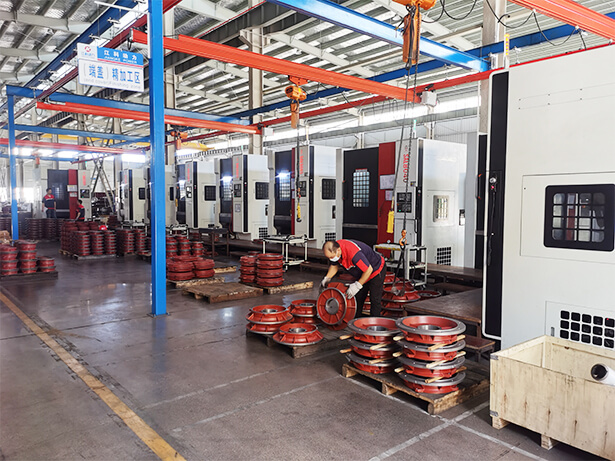
Skip the conference room presentation. Ask to go straight to the production floor. What should be visible: machines at various stages. Airends bolted to bases waiting for motors. Assembled machines lined up for the test stand. Tested machines near the packing area. An empty floor with one or two machines being assembled means either no orders or outsourced production with in-house final assembly only.

The packing area matters. Export crates with foreign shipping marks. Bills of lading copies on file. A factory claiming substantial export business that cannot produce bills of lading is exaggerating.

Component checking

Component checking. The quote says Hanbell airend. Walk to a machine on the line and look at the airend casting. Is there a Hanbell mark? Open the electrical cabinet. Is the inverter what the quote specified? There was a factory in Jiangsu, really nice place, clean floors, organized tooling, the tour was impressive. The quote said a well-known airend brand. Partway through the shop floor visit, walking past a machine in mid-assembly, the airend casting caught someone's eye. There was a sticker on it with the quoted brand name, slightly crooked. Under the sticker, barely visible at the edge, different characters were molded into the iron. Peeling the sticker corner confirmed it. The factory's own name was cast into the housing. Someone had stuck a brand-name sticker over their own casting mark. The sales rep standing there didn't speak for a long time. The factory manager came over, assessed the situation quickly, and pivoted to talking about "flexible pricing arrangements" as if a discount would make the discovery acceptable. The visit ended politely. No order. The thing that stuck was how professional and impressive the rest of the factory had looked. Clean floors, good lighting, organized workstations, testing equipment visible. Everything else about the operation suggested competence. And then the sticker. It raises an uncomfortable question about how many buyers walked through that same impressive-looking factory, took photos, nodded approvingly, and never thought to look closely at the airend casting because everything else looked so good.

Calibration stickers on test equipment. Small adhesive labels showing last calibration date and next due date. An expired calibration sticker on the flow test stand means the factory's test data is produced by unverified instruments. Might be fine. Might not.

Samples

For batches above ten units. Full unit price plus shipping for one machine. Run it unloaded for a few hours. Load it. Measure discharge volume against spec. Temperatures, current, noise.

Then leave it running loaded for three to five days straight. There is a class of problems invisible on short runs. Undersized coolers that handle heat rejection for six hours and lose ground by hour fourteen as thermal mass fully saturates. Oil carryover that increases gradually as the separator element loads up over 48 hours. Gasket joints that seal cold and open a slow weep after dozens of thermal cycles. Electrical terminals that were finger-tight instead of torqued, hold for hours, then arc after vibration works them loose over two days. A four-hour factory acceptance test catches none of these.

Failed sample ends the evaluation. A factory that can't produce one clean machine knowing it's being scrutinized is not going to produce fifty clean machines on a production run.

Contracts

Everything in the signed document. Model, power, volume, pressure, voltage, frequency, quantity, unit price. Accessories listed separately with exact quantities for each. Filter sets, separator sets, belts, tools, manual.

A buyer lost about $2,000 in filters over this. The sales rep had typed "of course two sets included" in a WeChat message. The contract listed machine and unit price. No mention of filters. The supplier's position: WeChat is not the contract. In most jurisdictions, that holds up.

FOB is standard. CIF means the seller arranges insurance, and there's a specific cautionary tale about this. Container with water damage arriving in Durban. Three machines affected, total loss around $14,000. The CIF insurance was ICC(C), cheapest tier. The damage type wasn't covered. Insurer paid about $2,200. The buyer ate $11,800. The buyer chose CIF because arranging independent freight and insurance felt like too much hassle. Arranging proper ICC(A) all-risk insurance through a marine broker on an FOB shipment takes a couple hours and a phone call. Recovering $11,800 from an uncovered loss takes forever and usually fails.

Payment: 30% deposit at confirmation, 70% before shipping, both wire. Letters of credit for orders above $100,000 or so, share a draft with the supplier before opening because banks charge $50 to $150 for every discrepancy between LC terms and shipping documents, and discrepancies come from minor wording differences that add up fast.

Warranty: duration, clock start (push for commissioning date), scope, wear parts, operator-error exclusions. Every vague term becomes a fight when something breaks at month eleven.

Delay penalties: 0.5% per week, capped at 5%.

Governing law and arbitration: CIETAC or Singapore International Arbitration Centre.

Everything After the Factory Gate

Production lead times: small machines two to three weeks, mid-range three to four, large or custom four to eight. Peak season March through June stretches everything.

Progress photos at milestones. Airend arrival, assembly, test stand. Component substitution is infrequent. Nameplate photos during assembly catch it.

Pre-shipment inspection. SGS, Bureau Veritas, TÜV, a few hundred to $1,500. Or video call inspection. Check cosmetics, run loaded, verify documents (conformity cert, test reports, manual, CE or destination certs). Missing paperwork creates customs problems.

Wooden crates, IPPC fumigation stamp on the wood, machines bolted inside, moisture barrier, desiccant. Shipping marks per instructions.

Container capacity: 20-foot fits two to four machines, 40-foot fits four to eight. Over 132kW may need open-tops or flat racks.

Ocean transit: Southeast Asia a week, Europe 25 to 30 days, US West Coast around 15, East Coast 25 to 28. LCL adds a week or more. Air freight $5 to $8 per kilo, emergency only. China-Europe rail 18 to 22 days. Book space ahead, especially August through October.

Customs: commercial invoice, packing list, bill of lading, certificate of origin, destination certs. Egypt, Nigeria, Algeria need pre-shipment import permits. No permit processed before shipping means machines sit in port on daily storage charges. Talk to the customs broker before the container ships.

At pickup check container condition, open crates against packing list, photograph damage immediately. Insurance claim window is three to five days after delivery.

Installation: anchor bolts, piping, wiring, oil, rotation check, startup per manual. Commission, record parameters, compare to factory test report, sign acceptance, warranty starts.

Nobody needs a detailed timeline breakdown here, the numbers were given above. Eighteen to twenty weeks total. Build buffer.

Footer Component - SOLLANT
滚动至顶部