Our Products
Compressed Air Solutions
  • Screw Air Compressor
  • Oil Free Compressor
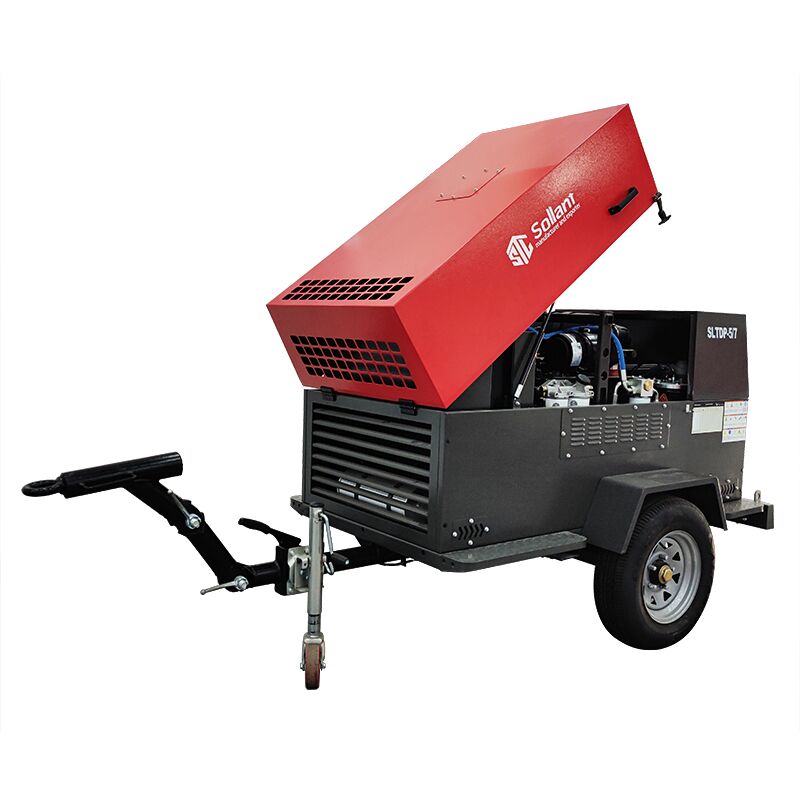
  • Diesel Portable Compressor
  • Gas Compressor
  • Specialty Compressor
  • Air Treatment
ISO 9001 Certified
24-Month Warranty
OEM & ODM Support
Factory Direct Price
All products→
Air Compressors for Cement and Concrete Plants
Industrial Applications

Air Compressors for Cement and Concrete Plants

Technical Guide
45 min read

Compressed air runs through a cement plant the way wiring runs through a building. It is everywhere, it connects systems that otherwise have nothing in common, and when it fails, the symptoms show up in places that have no obvious relationship to the air system. A kiln thermal upset traced back to a sluggish damper positioner. A raw meal conveying slowdown caused by a pressure drop nobody measured. A bag filter opacity exceedance triggered by pulse valves that were not getting enough air to clean the bags properly. These are compressed air problems, and they get diagnosed as process problems because the people dealing with the symptoms do not think about compressed air. Their training is in kilns, mills, chemistry, combustion. The air system is background infrastructure, like plumbing.

This article is about what goes into making that background infrastructure work in the specific context of cement manufacturing and concrete production, which is a harsher operating environment for compressed air equipment than almost any other industrial sector.

Section One
01

Process Air and Instrument Air

Cement plant compressed air system
Instrument air network — precision over volume

The single most consequential design decision in a cement plant compressed air system is whether to run the process air and instrument air networks independently or merge them into a shared system with branch-point treatment. Plenty of plants run shared systems. Most of them have recurring instrument air quality problems that the maintenance team manages through accelerated positioner replacements and frequent solenoid valve rebuilds, treating the symptoms as normal wear when they are actually caused by the system architecture.

Process air is volume. Pneumatic conveying, air slide fluidization, silo aeration, bag filter pulse cleaning, utility points. A mid-size cement line consumes 3,000 to 12,000 Nm³/h depending on how many silos are in the circuit, how far the conveyors run, and how many bag filters the plant has. Pressure requirements vary: 2.5 bar(g) for simple aeration pads, up to 6 bar(g) for long-distance dense-phase conveying. Quality at ISO 8573-1 Class 4 is adequate for most process consumers. Trace moisture and trace oil will not cause immediate failures in process applications, though both contribute to longer-term problems like material caking in conveying bends and accelerated wear on pulse valve diaphragms.

Instrument air is precision. Positioners, I/P converters, damper actuators, control valve actuators, instrument purge systems. Volume is modest, 500 to 2,000 Nm³/h on most lines. Quality must be Class 1.2.1 or better: particles under 0.1 mg/m³, PDP at −40°C or below, total oil under 0.01 mg/m³. These specifications exist because pneumatic positioners are extremely sensitive to contamination. A nozzle-flapper assembly with moisture in it develops stiction. A spool valve with oil film on it attracts fine dust and builds up a residue layer that changes the valve's dynamic response. The effects are subtle and progressive. A positioner does not fail outright from contaminated air; it gets slow, then unpredictable.

3,000–12,000 Nm³/h process air demand (mid-size line)
500–2,000 Nm³/h instrument air (most lines)
−40°C Pressure dew point required (Class 1.2.1)

So why does it matter so much whether the two networks are merged or separate? Consider what happens during a process air demand surge on a shared system. Three events can coincide on any given shift: a raw mill bag filter comes online after a maintenance stop, a long-distance cement conveying cycle starts, and several silo aeration valves open for a blending sequence. Total process air demand spikes. Header pressure drops 0.5 to 1 bar for 30 to 90 seconds. The instrument air branch, sharing the same upstream header, sees this pressure drop at the dryer inlet. The dryer's drying efficiency is a function of inlet pressure, contact time, and regeneration adequacy. At reduced inlet pressure, efficiency degrades. The filters downstream also see higher face velocity. For those 30 to 90 seconds, the instrument air leaving the treatment branch is wetter and dirtier than specification. This air reaches positioners on the kiln ID fan damper, the precalciner fuel valve, the raw mill separator actuator.

Nothing dramatic happens immediately. The moisture and contamination from one demand surge will not destroy a positioner. What accumulates over hundreds of such events across months of operation is a progressive degradation of positioner response that the control system compensates for by widening its tolerance bands, and that operators accommodate by accepting a level of kiln instability that they think is normal but is actually caused by the air system architecture.

Design Principle

Running separate compressors, separate dryers, separate receivers, and separate distribution headers for the two networks is the design that eliminates this failure mode. Cross-connection between the networks should exist only as an emergency backup, with its own filtration and drying sized for instrument air specifications.

Receiver sizing for the instrument air network: 10 minutes of supply at average consumption, minimum. The standard 3 to 5 minutes comes from general industrial guidelines. Cement plants face a specific scenario where the compressor trip coincides with an electrical disturbance that prevents immediate restart. Without sufficient buffer, kiln damper actuators lose air. The emergency kiln trip that follows causes thermal shock to the refractory. One such event costs more than every receiver tank on the plant combined.

Then there is the pipe between the dryer and the instruments. This subject comes up repeatedly in compressed air troubleshooting on aging cement plants, and it is consistently the last thing anyone checks. The entire air treatment chain can be perfect: compressor delivering clean, dry air, dryer achieving −40°C PDP, filters passing lab-quality air at the dryer outlet. Between that outlet and the instrument, there may be 200 meters of carbon steel pipe that has been corroding internally for 12 years. The iron oxide scale that forms inside these pipes is finer than what the dryer's outlet filter captures, because it is generated downstream of the filter. It migrates to the instrument. Stainless steel or copper for the last 15 to 20 meters of piping to each critical instrument solves this problem permanently, and costs less than a single positioner replacement on a critical kiln damper.

Section Two
02

Compressor Selection

This section will not attempt to cover every compressor type with equal depth. Oil-free screw machines and centrifugal machines are where the interesting engineering decisions happen in cement plants. Oil-injected screw machines and reciprocating machines have their applications, covered more briefly.

Oil-Free Rotary Screw

Oil-free rotary screw compressor
Two-stage intercooled oil-free screw — standard for instrument air

Two-stage, intercooled, Class 0 per ISO 8573-1. Capital premium of 40 to 60% over oil-injected machines. Standard for instrument air and high-specification process air.

The intercooling between stages condenses moisture before the second compression stage. This matters for everything downstream. The aftercooler handles less moisture. The water separator works more effectively. The desiccant dryer loads more slowly, which means it cycles less frequently, uses less purge air (on heatless types), and the adsorbent lasts longer before replacement. In tropical climates with ambient relative humidity above 80%, the effect on dryer maintenance cost is measurable over a few years. The benefit does not appear in the compressor's own performance data because it concerns the dryer, not the compressor. This means it does not appear in the bid comparison spreadsheet either.

About Class 0: the certification tests the machine under controlled intake conditions. In a cement plant, the intake air contains hydrocarbon vapors from diesel equipment, asphalt, lubricant storage, and alternative fuel areas. These hydrocarbons pass through the compressor and exit in the compressed air, unaffected by the compression process. Class 0 at the compressor discharge does not mean Class 0 at the point of use unless there is activated carbon filtration downstream. This gap exists on most cement plants that have specified Class 0 compressors. It is usually discovered when a third-party air quality test is performed for the first time, which on many plants is never.

Ambient temperature derating is straightforward engineering that gets botched during procurement more often than it should. Catalog FAD is at 35°C. At 45°C ambient, which is a normal afternoon in much of North Africa, the Middle East, and central India, FAD drops 8 to 12%. The cooling system must also reject more heat with a smaller temperature differential. If the compressor was selected on standard catalog data without site-specific derating, the shortfall shows up on the hottest days, which are also the most humid days, which is when the dryer is working hardest.

One more thing about oil-free screw machines. The timing gears that synchronize the male and female rotors run in their own oil-lubricated gearbox, separated from the compression chamber by a shaft seal. When this seal wears, gearbox oil migrates into the air stream. The machine is still labeled Class 0. The air is not Class 0 anymore.

The oil shows up as premature desiccant discoloration in the dryer bed, or as unexpectedly rapid saturation of the activated carbon filter, or as a film on the inside of the outlet pipe that gradually picks up dust and forms a sticky deposit. Diagnosing this without an oil vapor measurement at the compressor discharge is difficult because the symptom presents at the dryer or the filter, not at the compressor. The shaft seal has a defined service life shorter than the airend overhaul interval. It should be a scheduled replacement item.

Oil-Injected Rotary Screw

Fine for lower-criticality process air where the oil-free premium does not make economic sense. The machines themselves handle cement plant duty well. The problem is downstream.

Every element in the air treatment chain after an oil-injected compressor fouls faster in a cement environment than the manufacturer's maintenance schedule anticipates. Coalescing filter elements, activated carbon beds, refrigerated dryer heat exchangers, condensate drain mechanisms. The manufacturer's data is based on clean-environment performance. Cement plants are not clean environments. Element life in the field runs at half to two-thirds of published intervals. Plants that follow manufacturer schedules get oil and moisture breakthrough between change-outs.

Synthetic lubricant (PAO or diester-based) instead of mineral oil extends airend overhaul intervals by 30 to 50% through reduced varnish formation, better thermal stability, and lower oxidation rates. The lubricant costs more per liter. The overhaul costs less per event and happens less frequently.

Procurement Note

Cement plant procurement evaluates compressor bids on capital cost. Consumables (lubricant, filters, separators) are a maintenance budget item managed by different people on a different schedule. The cheapest compressor with the most expensive proprietary consumables wins the bid evaluation and loses the 10-year total cost calculation. This is a structural problem in how cement companies purchase equipment. Writing consumable pricing into the compressor purchase contract with volume-locked rates over 40,000 hours changes the incentive.

Centrifugal

The physics of centrifugal compression suit cement plant base-load duty well. A single machine delivering 5,000 to 30,000 Nm³/h at 6 to 8 bar(g), inherently oil-free, with specific energy of 5.5 to 6.5 kW per Nm³/min at rated conditions, and few wearing parts.

Managing surge is the central engineering challenge. What follows goes into more detail than the other compressor sections because surge management is where centrifugal compressor installations in cement plants succeed or fail, and because the interaction between surge behavior and cement plant demand profiles creates problems that do not exist in most other industries.

Surge occurs when flow through the impeller drops below a critical threshold, roughly 70% of rated flow depending on the impeller geometry and gas conditions. The aerodynamic flow becomes unstable, reverses, and produces pressure oscillations that can destroy bearings and impellers within seconds. In industries with stable demand, surge is easy to avoid: size the compressor so that minimum demand stays above the surge line. Cement plants do not have stable demand. The difference between "all mills running" and "kiln only" can represent 30 to 40% of total air consumption. The transitions happen within minutes when a mill trips or starts. The centrifugal compressor must survive these transitions.

Protection against surge requires either dumping excess air through a blow-off (recycle) valve or modulating the compressor's operating point using inlet guide vanes and variable diffuser geometry. Blow-off is simple and effective: the valve opens, compressed air vents to atmosphere, flow through the impeller stays above the surge limit. The energy cost is the full compression cost of the vented air, which during extended mill-off periods can amount to 20 to 30% of the compressor's rated power being wasted.

Model-predictive anti-surge control is the alternative. Instead of a fixed surge line with a generous safety margin (which is what simple PID control provides), the controller calculates the surge boundary in real time based on inlet temperature, pressure, and gas properties. It coordinates inlet guide vanes and recycle valve position simultaneously to hold the operating point as close to the surge line as safely possible while minimizing recycle flow. The annual energy savings compared to simple control justify the controller cost within a couple of years on a large machine.

Now, the fouling issue. This is specific to cement plants and other dustite-laden environments. Trace calcium dust that passes through even good intake filtration accumulates on impeller blades and diffuser vanes. The process is slow. Daily, weekly, even monthly performance measurements may not catch it. Over 6 to 12 months, the deposited layer shifts the compressor's entire operating map. The surge line moves toward higher flow rates, meaning the machine becomes more surge-prone. The efficiency peak drops and shifts. The choke line moves inward. The stable operating envelope shrinks from all sides.

What this means in practice: a centrifugal compressor commissioned with a surge margin that allowed comfortable operation at 70% flow now begins surging at 78 or 80% flow. The anti-surge controller opens the blow-off valve earlier and more often. Energy waste increases. If the controller is a simple PID type with a fixed surge line, it does not know the surge line has moved, and the machine may surge before the controller reacts.

Periodic performance testing against commissioning data reveals the shift. The test is straightforward: measure inlet conditions, discharge conditions, flow, and power at several operating points, plot them against the original performance curves. Any leftward or upward shift in the surge line, any drop in polytropic efficiency at the design point, indicates fouling. Online water wash (where the OEM design permits it) or offline cleaning during a kiln stop restores performance.

Best Configuration

The combination of centrifugal base load with VSD oil-free screw trim remains the most effective multi-compressor configuration for large cement plants. The centrifugal carries the stable demand at high efficiency. The screw machines absorb fluctuations without forcing the centrifugal toward surge. The screw machines also provide backup capacity during centrifugal outages.

Reciprocating and Dense-Phase Conveying

Reciprocating compressors are largely gone from main plant air duties. They persist in two applications: pressures above 10 bar for kiln shell cooling and AF injection, and dense-phase pneumatic conveying. Dense-phase conveying needs high peak flow at 3 to 6 bar(g) with long idle periods between conveying cycles. The reciprocating compressor's thermodynamics at intermittent duty suit this profile better than screw machines, which waste energy during unloaded idle. Small concrete batch plants also use them.

Section Three
03

Concrete Plants

Concrete batch plant compressed air
Ready-mix batch plant — short bursts, high receiver dependence

Different industry, different demand profile, different problems. Worth spending time on because the compressed air literature for concrete plants is thin compared to cement manufacturing.

A ready-mix batch plant draws compressed air in short bursts. Bin gate actuation, vibrator power, mixer drum blowout, all compressed into 10 to 15 second windows separated by minutes of near-zero demand. The receiver tank is the critical component in this application, more so than the compressor. An undersized receiver forces the compressor to cycle rapidly: loading valve slams, motor overheats, contactor arcs. The receiver must hold enough volume to sustain at least 3 minutes of compressor run time at worst-case peak demand. This is a generous sizing by general industrial standards. It is necessary in batch plant service.

VSD screw compressors track the demand curve well. IP54 enclosure on the drive electronics. Two-stage heavy-duty intake filtration because concrete plants generate a broader dust mix than cement manufacturing: cement dust, fine aggregate dust, admixture mist.

Mixer washout is the compressed air consumer that batch plant designs routinely undercount. At end of production, high-pressure air blows residual concrete from the mixer drum and discharge chute. This demand spike coincides with the end of the batching cycle when the compressor may have already unloaded.

If the washout air requirement was not in the demand profile during sizing, the last batch of every day runs slow because of a pressure sag that nobody budgeted for.

Precast factories have their own compressed air personality. Vibrating tables need high, sustained flow at steady pressure for 30 to 90 seconds per pour. This is a different demand shape than the short bursts of a batch plant. Any pressure instability during vibration shows up as surface defects in the finished product. Drawing vibrating table air from a shared header also serving intermittent consumers produces surface quality that varies from pour to pour depending on what else is drawing air at the same moment. A dedicated compressor with a large local receiver within 10 meters of the table eliminates the interaction.

Then there is the cold-weather problem that falls entirely outside the compressor manufacturer's scope and gets blamed on everything except the air system. Ready-mix plants in cold climates blow out truck mixer drums with compressed air after washout. The air carries moisture into the drum. The drum sits overnight at −10 or −15°C. Moisture freezes on the drum interior and mixing fins. The next morning's first load mixes poorly because the fins are coated in ice. Blades crack against the ice. Rejected batches accumulate through the winter. The problem gets attributed to concrete mix design, driver behavior, or "winter conditions" in general. It is a compressed air moisture problem. A point-of-use desiccant dryer at the blowout station, costing a few thousand dollars, eliminates it. The winter-season losses at a single plant without the dryer easily run ten to twenty times the cost of the dryer, spread across rejected concrete, blade replacement, and lost time. Nobody connects the losses to compressed air because the symptoms appear in the concrete quality data and the mixer maintenance log, not in the air system.

Section Four
04

Compressor Room

Will keep this shorter than the compressor selection section because the principles are simpler even though the mistakes are equally expensive.

The room goes where the civil layout puts it. The civil layout is frozen before the compressed air system reaches detailed engineering. In practice, the room ends up near the mills or clinker storage, in the worst air quality zone on site. Elevated intake duct from a cleaner location, upwind, 5 to 10 meters above ground. Longer piping runs compensated by larger headers. The filtration and airend maintenance savings over the plant's life pay for the extra piping.

Room ventilation: compressors convert electricity into compressed air and heat. All the heat stays in the room unless the ventilation removes it. Four 200 kW machines dumping 800 kW into an enclosed space with undersized louvers raises room temperature 10°C or more above ambient. FAD drops, energy per unit output rises. The penalty is invisible because nobody monitors room temperature.

Feed ambient data (temperature, humidity, pressure) from a weather station into the DCS. Use it to adjust compressor loading and dryer regeneration. Cheap hardware, meaningful energy savings from condition-responsive control instead of fixed worst-case settings.

Epoxy floor coating and stainless steel drains during construction. Condensate mixed with tracked-in cement dust forms calcium sludge that destroys bare concrete floors and blocks carbon steel drains. Trivial cost in new construction. Miserable retrofit.

Section Five
05

Energy and Demand Reduction

Going deep on bag filter pulse cleaning here because it is the largest compressed air consumer in most cement plants and the one with the most unrealized optimization potential. Covering other energy topics more briefly.

The pulse cleaning system on a kiln/raw mill bag filter consumes 15 to 25% of the entire plant's compressed air. This number surprises people who have not measured it. Kiln engineers think of the bag filter as emissions control equipment. They do not think about how much compressed air it uses. Compressed air engineers think of the bag filter as one of many consumers. They do not think about how the pulse cleaning parameters affect total demand. The pulse parameters sit in the bag filter controller, managed by nobody in particular after commissioning.

What happens over time: bags age, their permeability decreases, baseline differential pressure rises. Operators raise the dP alarm setpoint because the alarm triggers too often. The bag filter controller, seeing higher dP, increases pulse frequency. Each pulse consumes compressed air. More frequent pulses mean higher air consumption. The increase is gradual, spread across thousands of hours, invisible in daily operations.

15–25% of total plant air used by bag filter pulse cleaning
30–50% above-design air use on unoptimized plants
20–40% reduction achievable through re-optimisation

Re-optimization of pulse parameters takes a process engineer two to three days. Extend the pulse interval to the longest period that maintains acceptable dP. Reduce pulse duration from the common default of 100 to 150 ms to the minimum that effectively dislodges the dust cake for that particular bag type and dust, which is often 50 to 80 ms. Switch from time-interval cleaning (pulse every N seconds regardless of dP) to dP-triggered cleaning (pulse only when dP reaches a threshold). The combined effect is a 20 to 40% reduction in the bag filter's compressed air consumption.

Key Barrier

This is the highest-return compressed air optimization available on most cement plants. It does not require any capital expenditure. It does not require new equipment. It requires someone to look at the bag filter controller settings, understand the relationship between those settings and compressed air consumption, and make informed adjustments. The reason it goes undone is organizational: the bag filter is "owned" by the process department, the compressed air system is "owned" by the mechanical maintenance department, and neither team's KPIs include the other team's energy consumption.

Moving on from pulse cleaning.

Pressure reduction: 6 to 7% energy savings per bar of reduced header pressure. Most plants run 1 to 1.5 bar above consumer requirements. The pressure drifts upward over time because raising pressure after a complaint is easy and lowering pressure for efficiency requires accepting the risk of starving a consumer.

Parasitic loads: compressed air used for cleaning, cooling electrical panels, aspirating sample lines, powering small agitation tasks. Each individual connection draws a small flow. Added across a plant with decades of accumulated unauthorized connections, the total is 10 to 20% of demand.

Leaks: 5 to 10% in well-maintained systems, 25 to 35% in neglected systems. Pulse valve diaphragms on bag filter manifolds are a major leak source. Thermal imaging of pulse valve banks identifies stuck or leaking valves better than ultrasonic surveys for this specific failure mode because the leak is internal to a pressurized assembly.

Heat recovery: 70 to 80°C hot water from water-cooled compressors, or ducted exhaust air from air-cooled machines into raw material drying circuits. Available energy. Barrier is piping distance.

Master controllers: 12 to 20% savings over cascade pressure-band control on multi-compressor installations. DCS integration for anticipatory loading before mill starts.

Section Six
06

Piping

Compressed air piping layout
Ring main layout — halves velocity, pays back in 18 months

Pressure drop from the compressor room to the most remote consumer: commonly 0.5 to 1.5 bar across 500 to 1,500 meters of total pipe run. This frequently exceeds the pressure drop across the compressor's own aftercooler and dryer. Header velocity should stay below 6 to 8 m/s for mains. Plants that expanded capacity without resizing piping are running at 12 to 15 m/s, quadrupling friction loss.

Ring mains (closed loops feeding consumers from both directions) halve velocity. The extra pipe pays for itself in reduced compressor energy within about 18 months.

Internal scaling specific to cement plants: moisture in process air lines reacts with entrained cement dust to form calcium hydroxide paste on pipe walls. Over a decade, a 100mm bore narrows by 20 to 30%. The pressure drop increase is gradual, attributed to growing demand, and never investigated. Automatic drains at low points and periodic pigging of critical mains would catch it.

Aluminum piping with push-fit connections over carbon steel with threaded fittings: no internal corrosion, smooth bore maintained indefinitely, tighter joints, lighter. Higher material cost. Lower lifecycle cost.

Section Seven
07

Filtration

Ambient dust around a cement plant: 5 to 50 mg/m³. Standard compressor intake filters are rated for 0.5 to 1 mg/m³. The mismatch speaks for itself. Multi-stage pre-filtration (G4 coarse, F7 fine) or self-cleaning pulse-jet intake filter, drawing through an elevated duct from the cleanest location on site. A breached intake filter causes airend damage in the $50,000 to $200,000 range.

Downstream treatment: water separator, refrigerated pre-dryer, desiccant dryer for instrument air. Heatless desiccant dryers lose 15 to 18% of output as purge. Heated/blower-purge types lose 2 to 5%. The additional problem with heatless dryers in cement plants is that the exhaust purge air, carrying moisture and fine dust, is discharged near the compressor room and can re-enter the compressor intake. Heated dryers vent through a remote pipe, breaking this contamination loop.

Carbon Beds

Activated carbon filters saturate within 6 to 12 months in cement environments. After saturation, hydrocarbons pass straight through. The differential pressure gauge on the filter housing reads normal because saturated carbon has similar flow resistance to fresh carbon. Without downstream hydrocarbon measurement, the carbon bed provides paperwork compliance. The number of cement plants that regularly measure hydrocarbon content in their compressed air is vanishingly small.

Shaft seal degradation on oil-free screw compressors: when the seal between the timing gear gearbox and the compression chamber wears, lubricant enters the air stream. The machine is still labeled Class 0. The oil shows up as premature desiccant bed discoloration or accelerated carbon filter saturation. The seal's service life is shorter than the airend overhaul interval. It should be a scheduled replacement.

Section Eight
08

Altitude, Alternative Fuels, Sizing, Maintenance

Grouping these together because each needs to be covered without pretending to have equally deep things to say about all of them.

Altitude

At 2,500m, air density is 74% of sea level. Compressor FAD drops proportionally. Cooling effectiveness drops. Motor starting current relative to transformer capacity increases; soft starters become mandatory rather than optional. Desiccant dryer purge settings calibrated at sea level deliver less regeneration mass flow at altitude, leading to under-regeneration and premature moisture breakthrough. Adjust purge volume or extend regeneration time. Manufacturers do not always do this automatically.

Alternative Fuels

AF systems add 500 to 1,500 Nm³/h of demand at 4 to 7 bar(g) that was not in the original plant air balance. Plants that increased AF rates gradually tapped the existing header without adding capacity. Header pressure sags during peak AF injection. Symptoms show up as silo flow problems and conveying slowdowns that nobody connects to the AF system running at the same time.

At substitution rates above 30 to 40%, the irregular shape of solid AFs creates plug-and-slug flow in injection lines, producing pressure fluctuations that propagate into the compressed air header. These fluctuations disturb positioners on kiln dampers. The kiln control loop oscillates. A dedicated AF compressor, isolated from the instrument air and general process air networks, is the clean solution at high substitution rates.

Sizing

Nameplate summation overestimates demand. Diversity factor in cement plants: 0.60 to 0.75. In concrete batch plants: 0.40 or lower. Profile demand over a full production cycle. Growth margin of 10 to 15%, not the 30 to 50% commonly specified. Reliability through standby redundancy (three machines at 50%, two running, one spare), not through oversizing (two machines at 100%, one loafing at 50% load).

The sizing calculation is done once during engineering and never revisited. Over 10 to 15 years, demand changes as bag filters are added, AF systems installed, conveyors extended, and unauthorized utility connections accumulate. A re-audit every 5 years would catch the drift.

Maintenance

Intake filters checked daily, replaced on differential pressure threshold. Oil analysis at 1,000-hour intervals. Coalescing elements at 4,000 hours regardless of pressure gauge reading, because cement dust creates bypass channels in the filter media while the gauge reads normal. Aftercooler and intercooler fins cleaned monthly.

Vibration monitoring on airend bearings. Rising envelope acceleration in the 1 to 10 kHz band means dust is getting into the bearings. Weeks of lead time before catastrophic failure.

System KPI

Specific energy consumption (kW per Nm³/min delivered), tracked weekly at the system level, catches degradation from any cause: leaks, fouling, wear, parasitic loads. When the number drifts up without a production increase, something is wrong.

The treatment chain downstream of the compressor (dryers, filters, drains, condensate separators) needs the same maintenance attention as the compressor itself. A perfectly maintained compressor feeding a neglected dryer delivers contaminated air.

Section Nine
09

Trends

Permanent magnet motors: 8 to 12% efficiency gain at part load over induction motors.

Water-injected oil-free screw compressors: near-isothermal compression, discharge temperature 50 to 60°C instead of 180 to 220°C. Less thermal stress. Simpler aftercooling. Less moisture generated during compression. Good fit for hot climates where cooling capacity is already stretched.

Electricity price integration: pre-filling receivers during low-rate periods, coasting through high-rate periods. 8 to 15% electricity cost reduction with controls and receiver capacity as the only changes.

Longer term, decarbonization technologies (oxyfuel combustion, electric calcination, carbon capture) will change what compressed air systems need to do. Traditional pneumatic conveying and bag filter cleaning stay. CO₂ handling, oxygen supply, possibly hydrogen injection come in. The air system installed now may need to serve a different process in 15 to 20 years.

Footer Component - SOLLANT
滚动至顶部