Our Products
Compressed Air Solutions
  • Screw Air Compressor
  • Oil Free Compressor
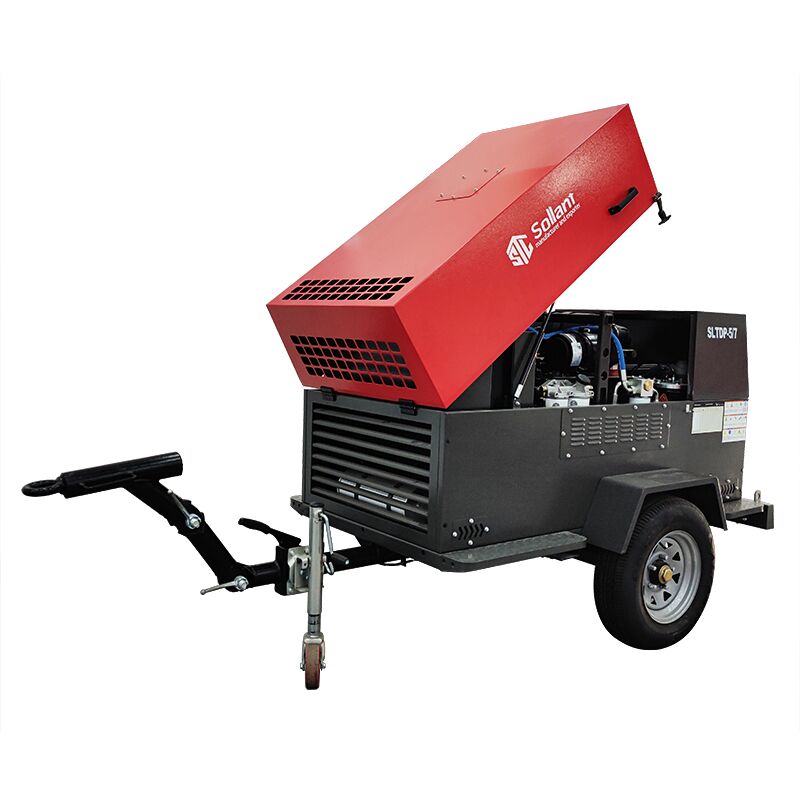
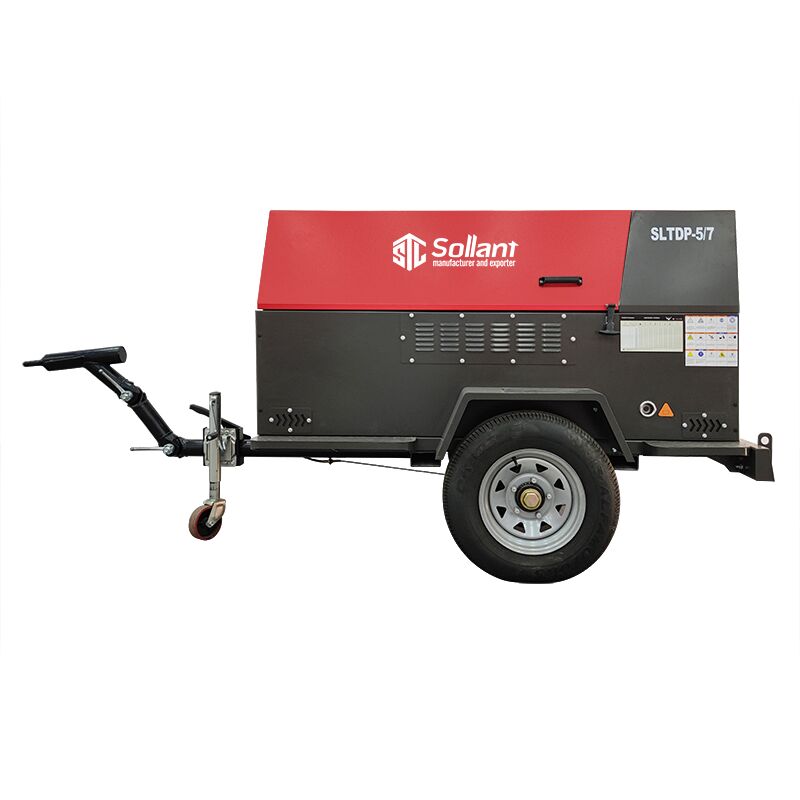
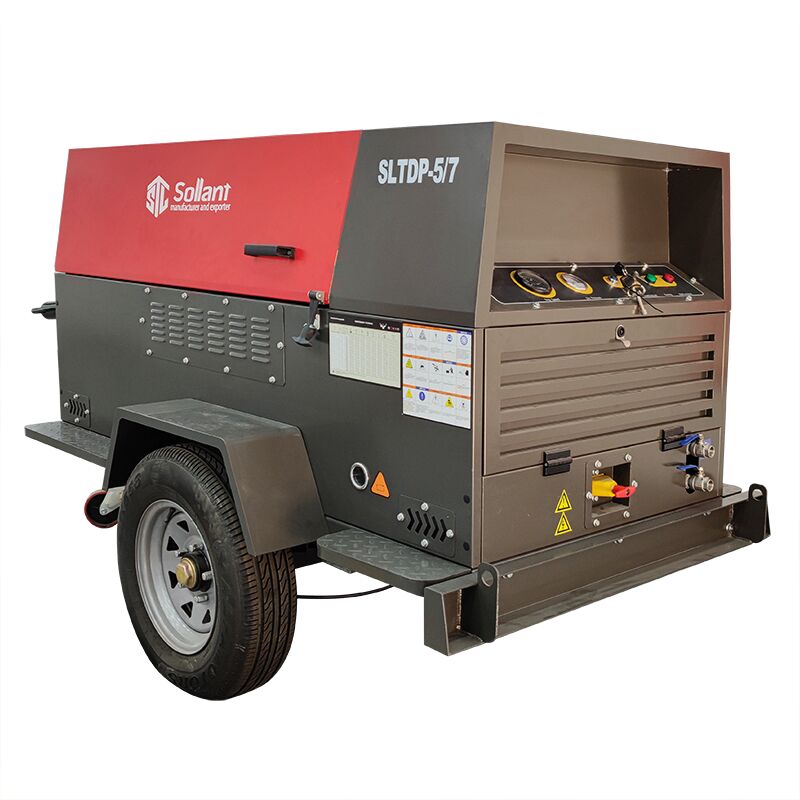
  • Diesel Portable Compressor
  • Gas Compressor
  • Specialty Compressor
  • Air Treatment
ISO 9001 Certified
24-Month Warranty
OEM & ODM Support
Factory Direct Price
All products→
Working Principles and Applications of Reciprocating Piston Air Compressors
Technical Guide

Working Principles and Applications of Reciprocating Piston Air Compressors

Technical Article
20 min read
Selection

Screw compressors cannot produce discharge pressures above about 1.3 MPa. Every production screw compressor on the market confirms this. Check the Atlas Copco GA catalog, check Kaeser, check the Ingersoll Rand R-series spec sheets. The ceiling is structural. The leakage path between the male and female rotors is a geometric feature of the profile, and internal recirculation through that path scales with pressure differential. Past 1.3 MPa the machine is recirculating too much gas to be commercially viable. This is not something that better manufacturing tolerances will fix because the clearance gap is already at the minimum that thermal expansion and rotor deflection allow.

Piston compressors have no equivalent ceiling. Ariel builds frames rated to 25 MPa and beyond. Burckhardt's process gas compressor line goes higher. A piston-cylinder arrangement can be made pressure-capable by simply making the cylinder walls thicker and using higher-strength materials. The thermodynamic challenges at high compression ratios are handled by staging, which is covered further down.

How It Works

Crankshaft rotates, connecting rod converts that to back-and-forth piston motion, piston compresses gas in the cylinder. Down stroke creates low pressure that opens the intake check valve. Up stroke compresses gas until pressure exceeds line pressure and opens the discharge check valve. Valves are passive, pressure-actuated. No timing mechanism, no cam, no electronic control. That covers it. The principle is the same as a bicycle pump with check valves on it, and spending more words on it would be padding.

Valves

A valve plate in a compressor running at 720 RPM gets hit 43,200 times per hour. The plate material is usually a precipitation-hardened stainless (17-4PH is common) or PEEK for lower-pressure stages. Springs are typically Inconel X-750. The seat is ground hardened steel.

Compressor valve components
Critical Component

Valve Plates & Springs

After tens of thousands of hours, plate seating surfaces pit. Edges mushroom from repeated impact. Springs lose preload. The machine keeps running, keeps building pressure, keeps drawing full-load current from the motor. FAD drops. Specific power goes up. Nobody notices for a long time because the compressor has no built-in efficiency monitoring. The gauges show line pressure is being maintained, which is all most operators check. Meanwhile the machine that should be delivering 8 m³/min at 95 kW input is delivering 6.8 m³/min at 93 kW input, and the difference is showing up on the electricity bill rather than on any maintenance report.

This is the single most neglected maintenance item on piston compressors and the single biggest source of wasted energy. The DOE's BestPractices compressed air assessment program (DOE/GO-102003-1822) documented this across hundreds of plant audits. Valve degradation and downstream leaks are consistently the top two sources of energy waste in compressed air systems with reciprocating equipment.

Now, the intake side and the discharge side fail differently. Intake valve wear means the cylinder has to pull a deeper vacuum before the plate lifts. Wasted crank angle, wasted motor input. Discharge valve wear means cylinder pressure has to overshoot line pressure further before gas exits. That overshoot becomes heat. Both reduce efficiency but the symptom is the same from the operator's perspective: the machine is consuming the same power and delivering less air. Maintenance crews who encounter this for the first time almost always suspect piston rings. Rings are the thing people have heard of. They pull the cylinder, find the rings in decent shape, bolt everything back together, and nothing improves because nobody opened the valve covers.

API 618 (5th Edition, 2007) gets into valve design requirements in Section 3.4. Plate lift limits, impact velocity limits (roughly 3 m/s closing velocity as a design target), spring fatigue life requirements. This is for process gas compressors in refinery and chemical duty, not shop air machines, but the failure physics are identical regardless of the application.

Hoerbiger mesh valves have big flow channels and low pressure drop. The valve chamber is large, which adds to clearance volume. Cook Compression and Dresser-Rand (now Siemens Energy) make plate and channel valves that are more compact, with smaller chambers and less clearance volume contribution. Which type goes on which stage of a multi-stage machine is an engineering tradeoff between flow capacity, clearance volume impact, and maintenance interval. Production air compressors from the big OEMs have this worked out already and there is no reason to second-guess it. On engineered process gas compressors, valve selection per stage is part of the bid engineering and should be.

Cooling

Polytropic exponent n determines how much power it takes to compress a given mass of gas. n = 1.0 is isothermal, all heat removed instantaneously, minimum work. n = 1.4 is adiabatic, no heat removed, maximum work. Piston compressors in the field run between about 1.2 and 1.35.

The difference between those two numbers at a compression ratio of 8 is about 10 percent in shaft power for the same mass flow. Whether the machine runs at n = 1.22 or n = 1.33 depends almost entirely on the cooling system. Water-cooled jackets integral to the cylinder casting, with coolant flowing through passages around the bore. Water-side heat transfer coefficient against cast iron runs 1,000 to 3,000 W/m²·K depending on flow velocity. Forced air convection over fins is 30 to 80 W/m²·K. Small single-stage shop compressors use air cooling and it works at low pressures. Everything else is water-cooled.

What goes wrong with cooling systems is not complicated. Piping scales internally and flow rate drops. Cooling tower fill collects biological growth and thermal capacity declines. Fans get dirty. Basin water levels drop. Any of these reduces the heat rejection rate, cylinder wall temperature goes up during compression, less heat leaves the gas, n increases, power consumption per unit of delivered air increases.

The seasonal version of this: cooling tower performance drops in summer as ambient wet bulb rises. ASHRAE Handbook, HVAC Systems and Equipment, Chapter 40 covers this in detail. A machine that runs at n = 1.22 in January might be at n = 1.30 in August purely from the change in cooling water supply temperature, with no mechanical change to the compressor whatsoever. The power cost difference is real. The DOE Sourcebook addresses cooling system maintenance as part of compressed air system efficiency. Most compressor maintenance programs include nothing about the cooling tower or the cooling water circuit.

Clearance Volume and Why It Forces Multi-Stage Compression

The piston cannot touch the cylinder head. There is always a dead volume at top dead center. Gas trapped in that volume at discharge pressure re-expands on the next intake stroke before the intake valve opens. Until it finishes re-expanding, the piston is moving downward and the motor is turning the crankshaft, consuming power, and zero new gas is entering the cylinder.

ηv = 1 - c[(P2/P1)^(1/n) - 1]

c = 0.05 (typical), P2/P1 = 3, n = 1.3 → ~15 percentage points loss

c = 0.05, P2/P1 = 8, n = 1.3 → ~40 points loss

At compression ratio of 15 (1.5 MPa single stage from atmospheric) → volumetric efficiency is abysmal

And that is just the clearance volume problem. The temperature problem makes it worse. Air at 20°C inlet temperature compressed adiabatically at a ratio of 8 reaches about 230°C at the discharge. At a ratio of 12 it exceeds 280°C. Oil-lubricated machines cannot tolerate those temperatures. The lubricant cokes, carbon builds up on valve seats and piston crowns, and in extreme cases the carbon deposits auto-ignite. FM Global Data Sheet 7-34 identifies this as a primary ignition mechanism for compressor fires.

Multi-stage compressor assembly
Multi-Stage

Staged Compression

Multi-stage compression fixes both problems by keeping each stage's compression ratio between 3 and 4 and intercooling between stages. Two stages for up to about 3 to 4 MPa. Three stages for 10 to 15 MPa. Four stages for CNG at 20 to 25 MPa. Each stage's clearance volume loss is modest, each stage's discharge temperature is manageable, and the intercooling between stages drives total work toward the isothermal minimum. More stages, less total energy input, more complexity, more equipment. The optimization is application-specific.

Intercooler fouling matters a lot on multi-stage machines. A dirty first-stage cooler sends hot gas into the second stage, the second stage works harder to achieve the same ratio, produces even hotter discharge gas, the problem gets worse at each stage downstream. The CAGI Compressed Air & Gas Handbook, 7th Edition, Chapter 3, discusses intercooler effectiveness and its impact on system performance. This is a standard reference that most compressor engineers have on the shelf.

Valve chamber volume contributes to clearance volume and varies by valve design. On multi-stage machines each stage has a different sensitivity to clearance ratio because each stage operates at a different compression ratio. The high-pressure stage is more sensitive. Putting a mesh valve with a big chamber on the high-pressure stage of a two-stage machine because it has good flow characteristics at the low-pressure stage is not a sound engineering decision, and it happens on aftermarket rebuilds where the mechanic uses whatever valve kit is in stock.

Oil-Lubricated and Oil-Free

Oil lubrication at the piston ring interface is the default. It handles friction, sealing, and local heat transfer. Ring life and bore life are long. Oil carryover into compressed air after the separator is a few ppm.

For food, pharma, semiconductor, and breathing air applications, you need oil-free compression. Two approaches. PTFE-composite rings running dry against the bore, ring life 2,000 to 4,000 hours versus 8,000 to 16,000 for oil-lubricated. Or labyrinth sealing where the piston does not contact the bore at all. Burckhardt's Laby-GI compressors used in LNG carrier boil-off gas compression are the most commercially prominent example of labyrinth technology.

There is a procurement trap here. "Oil-free" on a spec sheet might mean the compression chamber does not receive oil injection, while the crankcase still uses oil with a distance piece and rod packing keeping it out of the cylinder. If the packing wears, oil migrates. A machine with no oil anywhere in the system, using grease-lubricated or dry-film bearings in the crankcase, is a different and more expensive product. ISO 8573-1:2010 defines air purity classes but does not dictate compressor construction. Class 0 requires buyer-supplier agreement on limits stricter than Class 1. The purchasing department needs to ask the vendor which kind of "oil-free" they're selling, and what happens to air quality when the rod packing reaches end of life.

Where Piston Compressors Belong

High-Pressure Work

All high-pressure work. PET bottle blowing at 3 to 4 MPa. CNG refueling at 20 to 25 MPa. Hydrostatic pressure testing. High-pressure nitrogen for laser cutting assist gas. There is no competing technology at these pressures. Centrifugal compressors could theoretically achieve them through many stages, but the cost and complexity compared to a reciprocating machine are prohibitive. Nobody does it.

Intermittent Demand at Small Volumes

The piston machine stops when the tank is full and draws nothing. Starts again when tank pressure drops. No penalty for cycling. Screw machines are limited to 4 to 6 start-stop cycles per hour (Kaeser's ASD/BSD technical documentation specifies this, Atlas Copco's GA documentation is similar). Below that cycle rate they idle unloaded, motor spinning, power draw 25 to 40 percent of full load, producing no air. The CAGI performance verification datasheets, publicly available on CAGI's website, report both full-load and unloaded specific power for participating manufacturers. Those two numbers tell you the idle waste directly. The DOE BestPractices assessment data consistently shows 15 to 25 percent of total compressor energy input wasted in unloaded running at plants with intermittent demand and load/unload-controlled screw compressors.

Screw compressors: limited to 4–6 start-stop cycles per hour

Unloaded power draw: 25%–40% of full load, producing no air

DOE data: 15%–25% of total compressor energy input wasted in unloaded running

Specialty Gas

API 618 is the procurement standard for reciprocating compressors in petroleum and chemical service. GPSA Engineering Data Book, 14th Edition, Section 13 treats reciprocating machines as the standard platform for process gas compression and provides sizing procedures on that basis. The engineering reason: a reciprocating compressor allows independent material selection for each wetted component. A sour gas application might use 316L for the liner, Monel K-500 for the piston rod, Hastelloy C-276 on the valve trim, and a specific PTFE compound for the packing. Those are four separate material decisions for four different corrosion environments within one machine. Screw compressors require a single material selection for the rotor set. Centrifugal impellers must balance corrosion resistance against dynamic stress at tip speed.

Low-Volume Oil-Free

Below about 1 to 2 m³/min, oil-free piston machines cost less to buy and less to own than oil-free screw machines. PTFE ring replacement is more frequent but the rings are cheap and the labor is simple. Above 2 m³/min the maintenance burden grows with cylinder count and the economics shift toward oil-free screw machines.

Where Piston Compressors Do Not Belong

Continuous compressed air supply above about 10 m³/min. At those volumes the piston machine is physically too large, requires an inertia block foundation, needs vibration isolation from adjacent structures, and has a per-cylinder parts count (valves, rings, packing) that demands dedicated maintenance staff. Screw compressors and centrifugals are smaller and smoother. An Atlas Copco GA 160 or a Sullair LS-25 serving a plant air main is a simpler installation than the equivalent reciprocating capacity.

Noise-sensitive environments at moderate to large volumes. Reciprocating machines produce pressure pulsations in the discharge piping and mechanical impact noise from valve operation. Acoustic enclosures help with airborne noise but do not address vibration transmitted through the foundation. In environments where adjacent processes are vibration-sensitive (coordinate measuring machines, optical alignment equipment, precision grinding), piston compressors need structural isolation that adds cost and complexity. Screw machines on rubber mounts bolted to a flat slab typically do not require this.

Selection

Above 1.5 MPa: piston, no choice. Below 1 m³/min intermittent: piston, on cost. Process gas per API 618: piston. Low-volume oil-free below 2 m³/min: piston. Continuous air above 10 m³/min: screw or centrifugal. Between 1 and 10 m³/min at moderate pressure with variable demand, the selection depends on electricity rate, floor space, noise constraints, and whether there is a mechanic on staff who can do valve and ring work. No blanket answer covers that range.

Footer Component - SOLLANT
滚动至顶部