Our Products
Compressed Air Solutions
  • Screw Air Compressor
  • Oil Free Compressor
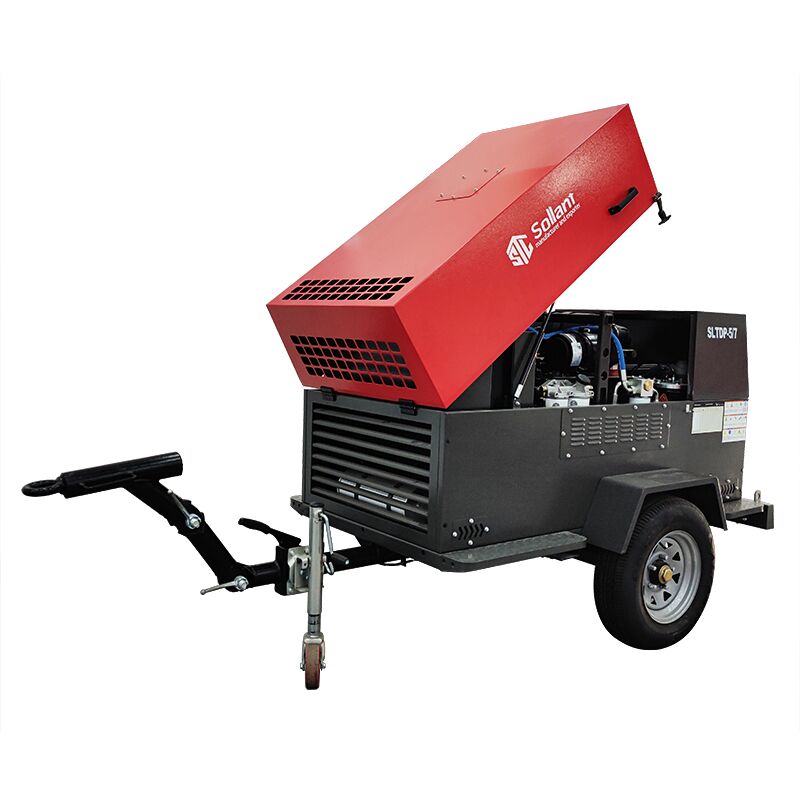
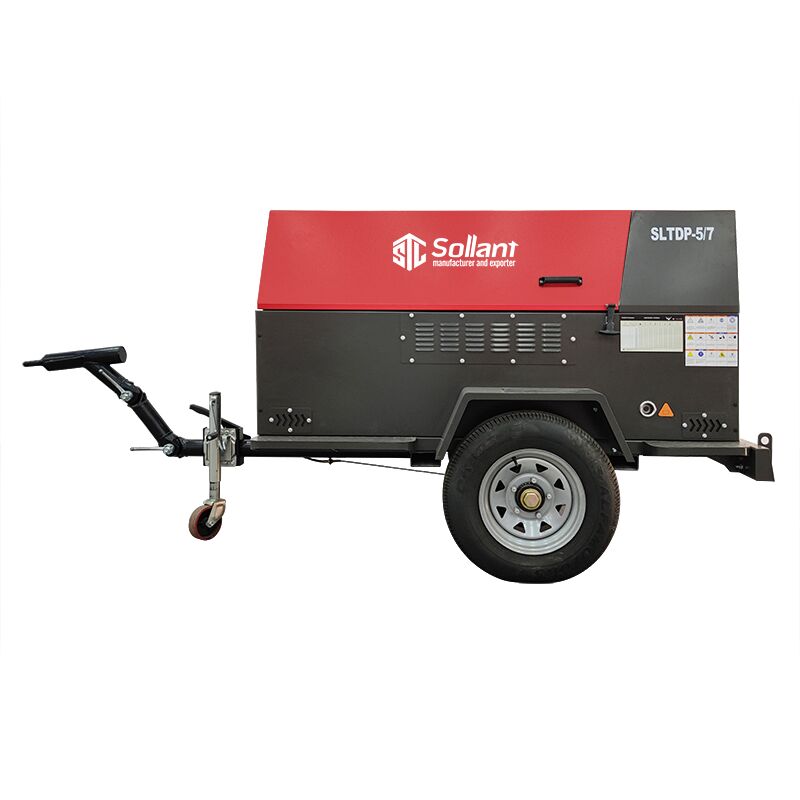
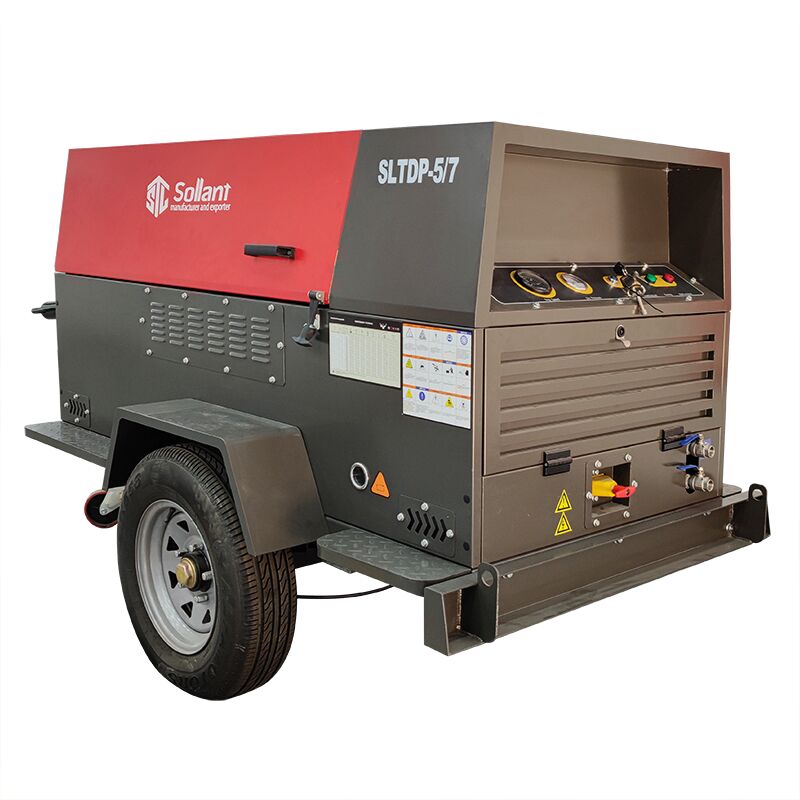
  • Diesel Portable Compressor
  • Gas Compressor
  • Specialty Compressor
  • Air Treatment
ISO 9001 Certified
24-Month Warranty
OEM & ODM Support
Factory Direct Price
All products→
Master Controllers and Compressor Sequencers for Multi-Unit Systems
Technical Guide

Master Controllers and Compressor Sequencers for Multi-Unit Systems

15 min read
Compressed Air Systems

Pipe two compressors into the same header. Give each one its own brain. They fight. Header pressure bounces around. Electricity burns for nothing. Install a sequencer or master controller to coordinate them. The fighting stops. Energy bill drops somewhere between 12 and 30 percent depending on how bad things were before.

That is the pitch and it is accurate. Where it falls apart is after the installation, during the part where the controller is supposed to be tuned to the specific plant, because that part barely happens.

Sequencer and Master Controller

A sequencer handles on/off decisions. Which machines run, which sit idle, what order. A master controller does on/off plus proportional load distribution across running machines. If every compressor in the room is the same model fixed-speed unit, a sequencer covers it. The moment a VFD enters the fleet the system needs proportional control and a plain sequencer will not provide it.

The Kaeser SAM is where most of the direct experience behind this article comes from. The SAM talks to Sigma Control 2 boards on every Kaeser compressor through an internal bus that carries full modulation authority. Speed commands to VSDs, capacity setpoints to fixed-speed units, diagnostic data back from all of them. Within a Kaeser-only fleet, it works cleanly.

Atlas Copco's Optimizer 4.0 does the equivalent within Atlas Copco fleets through the Elektronikon. Other OEMs have their own versions. The capabilities are broadly similar. The differences show up in edge cases around mixed fleets, which come up later.

Staging Defaults

The SAM ships with staging delay defaults that assume a worst-case scenario. Small receiver, high demand variability, compressors that cannot tolerate rapid cycling. These defaults are conservative by maybe 10 to 15 seconds per staging event compared to what a well-characterized plant could handle. On a system that stages up and down forty times per shift, that conservatism accumulates.

The rate-of-change feature in the SAM, which triggers staging based on pressure slope rather than absolute pressure, can cut response time roughly in half. Getting it to work requires a week of pressure data at one-second resolution, analysis of the system's pneumatic time constant, and a return visit to enter the derivative parameters. The standard commissioning package does not include a return visit.

Kaeser offers an Air Demand Analysis service that covers this ground. A data logger goes on the system for a week or two, the data goes back to Kaeser engineering, and a report comes back with recommended settings. It should be included in every SAM purchase. It usually is not because it adds cost to the proposal and the sales process is competitive.

VFD Trim

This gets more space than anything else in this article because it is where the most money is at stake and where the least thinking is being done at the system level.

Take a fleet. Three Kaeser BSD 75 fixed-speed units, each putting out around 440 cfm. One Kaeser CSD 125 VSD for trim, range roughly 150 to 700 cfm. The SAM coordinates. Demand during steady production: 1,050 cfm. Two BSDs loaded, 880 cfm. VSD picks up the remaining 170.

At 170 cfm the CSD 125 VSD is running at something like 25% speed. The Sigma Profile airend at that speed has journals turning slowly enough that the oil film between rotor shaft and bearing surface gets thin. Not catastrophically thin. Not thin enough to trigger any alarm or diagnostic. Thin enough that over thousands of hours the bearing wear rate is elevated compared to running the same airend at 50 or 60% speed.

Kaeser publishes minimum speed limits for the CSD VSD line. The drive will physically go lower than those limits. The limits exist because below them, bearing life projections start to shorten. But the SAM does not track cumulative hours at low speed. It does not have a bearing wear model. It looks at instantaneous system demand and sets the VSD speed to match it. Right now 25% speed is the correct answer for energy. Whether it is the correct answer for the next airend overhaul at $18,000 to $25,000, the controller has no opinion.

This matters because of how many hours a typical plant spends in this zone. Morning startup, the VSD ramps alone for the first 20 minutes before demand reaches the point where a fixed-speed unit kicks in. Lunch break, demand drops and the VSD falls back to low speed for 30 to 45 minutes. Shift change, similar. Weekend skeleton crew, the VSD may run at or near minimum speed for entire 8-hour stretches. Add it up across a year and some plants accumulate 1,500 to 2,000 hours of operation in the bottom quarter of the VSD's speed range.

On the CSD 125 a full airend rebuild at a Kaeser authorized service center runs around $22,000 for parts and labor in the Northeast US market. Expected interval at normal operating speeds is about 40,000 to 50,000 hours. Sustained low-speed operation plausibly shortens that to 30,000 to 35,000 hours. Over a 15-year compressor life that is the difference between two rebuilds and three. One extra rebuild at $22,000 spread over 15 years is about $1,500 a year.

Meanwhile the energy savings from letting the VSD run at 25% speed instead of forcing it to 40% minimum by shedding a base load unit earlier: maybe $800 to $1,200 a year on a system this size at Northeast electricity rates.

The energy savings from running the VSD lower are smaller than the incremental rebuild cost. On this specific plant, with these specific numbers, the correct strategy is to set the SAM's VSD minimum higher and shed a base load unit sooner. The VSD runs faster, bearings last longer, total cost of ownership goes down even though instantaneous kW goes up slightly.

Change the assumptions and the answer flips. A plant in the Gulf Coast paying half the electricity rate with an in-house maintenance shop doing rebuilds for $14,000 because they buy aftermarket rotors, the energy savings shrink and the rebuild cost shrinks but not proportionally, and the break-even shifts. A plant where the VSD only hits low speed for 20 minutes a day at lunch, the accumulated bearing impact is negligible and there is no reason to constrain the speed range.

The point is not that one answer is right for every plant. The point is that the calculation takes maybe two hours with a spreadsheet and the actual operating data from the SAM's onboard logger, and it changes a parameter setting that affects thousands of dollars a year in one direction or another, and it is not part of the commissioning process or the ADA service or anything else that happens as standard practice. The information exists inside the controller. The maintenance records exist in the maintenance system. They live in separate databases owned by separate departments and nobody puts them together.

This is the single largest missed optimization in the installed base of master-controlled compressed air systems. Not because the products are incapable. Because the analysis falls between organizational silos.

Mixed Fleets and Protocol Walls

A plant that bought Kaeser compressors in 2012 and Atlas Copco units in 2019 because the rep changed or the price was better has a fleet that no single OEM controller can fully manage. The SAM can start and stop the Atlas Copcos over basic Modbus. It cannot send them a speed command. The Optimizer can start and stop the Kaesers. Same limitation the other direction.

Third-party controllers from Case Controls, Air Logic Power, Automation Products Group face the same Modbus ceiling on both brands. Some have done reverse engineering on the proprietary registers. This is fragile.

The contractual fix is to require full register documentation in the compressor purchase spec. Every time. Regardless of whether you plan to use a third-party controller today, because you might need to in five years when the fleet is mixed.

This is a three-sentence topic that deserves three sentences. The technical reality is simple. The reason it does not get solved is commercial, not engineering.

Transducer Placement

Downstream of all treatment equipment. Top or side of the pipe. If the transducer is between the compressors and the dryer, the controller is regulating at a pressure 3 to 8 psi higher than what the plant receives. If the sensing line is mounted on the bottom of the header, condensate collects and biases the reading over months.

Dryer Purge

Regen desiccant dryers consume about 15% of rated flow during tower purge every few minutes. The SAM reads this as a demand increase and may stage up a compressor unnecessarily. Wiring the dryer's regen contact into the SAM eliminates this. It requires the dryer installer and the controls installer to coordinate. On a multi-vendor project with separate subcontracts for air treatment and compression, this coordination does not happen by default. Somebody has to specify it in the scope of work.

Cascade Setpoints

When the SAM goes down, every compressor reverts to its Sigma Control 2 local setpoint. If those setpoints all match, every machine loads simultaneously. Electrical demand spikes. Stagger local setpoints by 3 psi per unit. The machines self-sort into a rough cascade without the SAM. Five-minute programming task. Prevents a plant-wide trip.

Receiver Sizing

Big receiver means the controller can take a full minute to evaluate conditions and bring the next unit online. Small receiver means it has 15 seconds before pressure collapses. The SAM's staging delays assume some minimum pneumatic capacitance that the system needs to actually have. On installations where the receiver was sized by whoever had a tank in stock rather than by engineering calculation, the SAM is trying to stage gracefully into a system that does not have enough stored air to support graceful staging.

Count piping volume. 200 feet of 4-inch header is about 35 gallons of additional storage that nobody accounted for in the receiver sizing calculation. On an undersized system that 35 gallons might be the difference between smooth operation and oscillation.

Centrifugal Machines

Centrifugals are a different animal and the sequencing rules are harsher. Below about 65% capacity a centrifugal hits its surge line and the controller opens a blow-off or recirculation valve. Compressed air goes in a circle. The machine is drawing close to full power and a large fraction of its output is being thrown away to keep the impeller out of surge. A master controller managing centrifugals has one rule: fully loaded or off. The modulation range that exists between 65% and 100% is usable. Below 65% the machine is a liability.

Facilities that mix centrifugals with rotary screws need the master controller to treat them as fundamentally different machine types with different rules, not as interchangeable capacity blocks with different nameplate ratings. The SAM and Optimizer are both primarily screw compressor controllers. Neither is the ideal platform for managing a mixed centrifugal-screw fleet, though both can be configured to handle it with appropriate staging rules. Dedicated centrifugal plant controllers from the centrifugal OEMs (Ingersoll Rand, Hanwha Power Systems, FS-Elliott) handle the surge management natively.

Chiller Plants

Chiller sequencing adds condenser water temperature as a second variable. Colder condenser water reduces chiller compressor lift and improves efficiency. Producing colder condenser water costs tower fan energy. The plant-level optimum shifts with ambient wet-bulb and load. Optimum Energy has published case data from large campus installations showing 10 to 20% total plant savings from co-optimizing chiller staging and tower fan speed together versus optimizing chiller staging alone. Standard chiller controllers from Trane or Carrier do not do this co-optimization. They manage their own machines and leave the towers to the BMS, which manages tower fans on a fixed condenser water setpoint that may or may not be anywhere near the moving optimum.

Refrigeration racks in supermarkets have the defrost coordination issue. When evaporator coils go into defrost the suction load drops. When defrost ends, the load surges as coils pull back down to temperature. Feeding the defrost schedule into the rack sequencer lets it pre-stage. Without this feed, the sequencer chases the defrost transients blindly.

Demand Response

A compressed air system with adequate storage can pre-charge receivers and then coast through a utility demand-response curtailment event with compressors off. How long depends on receiver volume and the pressure cushion available. Large systems can ride through 4 to 6 minutes. The SAM supports a demand-response input. Configuring the pre-charge and coast logic is part of commissioning that requires understanding the specific plant's storage capacity and acceptable pressure excursion limits.

Commissioning

The factory defaults on any master controller are calibrated for safety, not performance. Getting from safe to optimized requires measuring actual delivery from each compressor (not nameplate, which is wrong on anything with 20,000+ hours), measuring pressure drop through the treatment train at several flow rates, logging system pressure at high resolution through a full production cycle, and then tuning staging delays, derivative gains, VFD speed limits, and dryer purge compensation against that data.

Kaeser's Air Demand Analysis does the logging and analysis. It is good. It should be a mandatory line item on every SAM installation rather than an option that gets cut during value engineering. Other OEMs offer equivalent services. The economic case for including them is straightforward: the analysis costs a few thousand dollars and the efficiency gains it enables are typically ten to twenty times that annually.

Footer Component - SOLLANT
滚动至顶部