Our Products
Compressed Air Solutions
  • Screw Air Compressor
  • Oil Free Compressor
  • Diesel Portable Compressor
  • Gas Compressor
  • Specialty Compressor
  • Air Treatment
ISO 9001 Certified
24-Month Warranty
OEM & ODM Support
Factory Direct Price
All products→
Atlas Copco vs Kaeser Kompressoren
Technical Guide

Atlas Copco vs Kaeser Kompressoren

Technical Article
30 min read
Rotary Screw Compressors

Kaeser Kompressoren builds a better compressor than Atlas Copco for most oil-injected single-site industrial applications. Atlas Copco dominates oil-free compression, leads in controls sophistication for complex multi-unit installations, and offers the only credible option for global multi-site standardization. Outside those three scenarios, the Kaeser machine costs less to own over a decade, tolerates variable loads more gracefully, and does not channel the buyer into a proprietary consumables supply chain.

§ 01 — Aftermarket Economics

What Happens After the Purchase Order Ships

The purchase price of a compressor covers roughly the first 18 months of total expenditure. The next 13 years are dominated by electricity, consumables, and service labor. Electricity dwarfs everything else and is discussed separately below. Consumables are where the two companies diverge most and where Atlas Copco's corporate structure exerts its strongest gravitational pull on the buyer's wallet.

Atlas Copco — Public Company

Atlas Copco is publicly traded on the Nasdaq Stockholm. The 2023 annual report discloses aftermarket operating margins that exceed equipment sales margins. Aftermarket revenue per installed unit is tracked in investor presentations as a key performance indicator. Over 90 acquisitions in the Compressor Technique segment in the preceding decade, many of them distribution and service companies, have been structured to capture the long-tail revenue stream that follows each installed machine. These are public disclosures available to anyone with a web browser and an interest in reading Swedish corporate filings. They describe a business model where the compressor is the razor and the consumables are the blades.

Kaeser — Family Owned

Kaeser's separator elements, oil filters, and air intake filters use standard dimensions. Mann+Hummel, Donaldson, Filtration Group, and other third-party manufacturers produce compatible elements. This is a design choice that costs Kaeser aftermarket revenue and benefits the machine owner. A family-owned company headquartered in Coburg, Bavaria, with no institutional shareholders and no quarterly earnings call, can make that choice without defending it against an aftermarket margin expansion target.

The product design has been reshaped to serve this model. Separator cartridge housings on recent GA models use geometries that no third-party filter manufacturer has been able to replicate. The dimensional changes between older and newer separator housings serve no filtration function. They prevent substitution. Oil filter housings have followed the same trajectory. Lubricant specifications have been tightened to favor Atlas Copco's branded fluids. Each change, examined in isolation, can be presented as quality assurance. Examined as a pattern across a product generation, the pattern is market closure.

01

Atlas Copco's Total Responsibility service contracts bundle parts, labor, and monitoring into periodic payments. The contracts contain automatic renewal clauses, minimum annual spend requirements, and coverage exclusions triggered when non-OEM parts are detected. SMARTLINK telemetry, which transmits operating data from the compressor to Atlas Copco's servers, monitors pressure differential signatures across the separator element and can identify deviations from OEM cartridge behavior. The contract terms are in the document. They are not the focus of the sales presentation.

Kaeser's service agreements are shorter, simpler, and easier to exit.

The consumables question is the most important economic question in compressor ownership and the one that receives the least attention during the procurement process because the procurement process is structured around purchase price. A buyer who reads Atlas Copco's investor presentations before reading their compressor quotation will approach the quotation differently.

§ 02 — Engineering

Airends and Partial-Load Efficiency

Both companies design and manufacture their own airends. Most of the global compressor market does not. GHH Rand and Hanbell supply airends to OEMs who repackage them under proprietary names. The fact that Atlas Copco and Kaeser both design their own rotor profiles and machine their own rotors separates them from a large share of the competition.

Atlas Copco's rotor profiles optimize for peak volumetric efficiency at the ISO 1217 Annex C test point: full load, rated pressure, 20°C inlet. Kaeser's Sigma Profile accepts a small disadvantage at peak and holds its efficiency better as load drops below rated capacity.

ISO 1217 Annex C was designed to enable fair comparison under controlled conditions. It measures at a single operating point that most factories never sustain. A compressor serving a mixed-manufacturing facility spends most of its operating hours between 40% and 85% of rated capacity, at ambient temperatures that wander with the seasons and the HVAC system, responding to demand patterns that shift with production schedules and the accumulated cycling of dozens of independent pneumatic end-use devices. The Sigma Profile's flatter efficiency curve means less energy waste across that operating band. The advantage is too small to see in a single month's electricity bill. It is large enough to matter across a decade.

The lower rotor tip speed of the Sigma Profile also produces lower discharge temperatures. Lower discharge temperature means slower lubricant oxidation, less varnish on the separator element, and longer intervals between consumable changes. This chain of consequences starts with a rotor geometry decision made in Coburg and ends in a maintenance cost line item years later. The Kaeser engineering team deliberately oversizes oil coolers beyond the thermal calculation requirement, adding factory cost to extend field consumable life. A product design decision that increases manufacturing cost while reducing future aftermarket consumable sales is easier to approve inside a company where nobody tracks aftermarket margin per installed unit as a KPI.

Atlas Copco has acquired Quincy Compressor, Worthington Creyssensac, Crepelle, and Pneumatech. Several acquired product lines have migrated onto Atlas Copco airend platforms. Brands independent of Atlas Copco Group: Kaeser, Sullair (Hitachi), CompAir (Ingersoll Rand), Boge. Under the Atlas Copco umbrella: Quincy, Worthington, Pneumatech, Crepelle. A buyer soliciting competitive bids in a territory where both Atlas Copco and Quincy have distribution may receive two proposals built around the same compression technology in different enclosures and at different price points. Kaeser has one brand, one airend, one factory.

§ 03 — Drive Technology

VSD

Atlas Copco's VSD+ uses an interior permanent magnet motor with direct drive. Kaeser's SFC uses a standard induction motor with an inverter. The IPM motor is more efficient at partial speeds. It is also a single-source component. It cannot be rewound. No aftermarket equivalent exists. Failure outside warranty means a proprietary replacement from Atlas Copco. A standard induction motor can be rebuilt by any motor shop or replaced with a catalog part from ABB, Siemens, or WEG.

VSD marketing from both companies cites energy savings exceeding 50% versus fixed-speed load/unload compressors. The comparison baseline is an oversized fixed-speed machine at low demand, chosen to maximize the percentage. VSD+ versus SFC at the same operating point: the gap is small. Piping diameter, dryer pressure drop, receiver sizing, and pressure band calibration affect the annual energy bill more than the brand on the VSD compressor.

§ 04 — Intelligence

Controls

Atlas Copco's Elektronikon Touch, Optimizer 4.0, and SMARTLINK form the strongest controls ecosystem from any compressor OEM. For installations with five or more compressors, centralized pressure management, and cloud energy reporting, Atlas Copco leads decisively and Kaeser's Sigma Control 2 and SAM 4.0 do not come close. Most single-compressor installations never use more than a fraction of the Elektronikon's capability.

Note

SMARTLINK transmits data to Atlas Copco's servers. Organizations subject to data sovereignty regulations or defense procurement restrictions have flagged this in tender evaluations. Kaeser's controls operate more independently.

Note
§ 05 — Purity

Oil-Free

Atlas Copco's Z series dominates oil-free compressed air globally. Deepest product range, largest installed base, strongest reference list for Class 0 applications in semiconductor, pharmaceutical, and food-grade manufacturing. Kaeser does not seriously compete. Where ISO 8573-1 Class 0 is specified and audited, Atlas Copco owns the category.

Some Class 0 specifications are copied from templates rather than derived from process-specific contamination risk analysis. Atlas Copco benefits when the spec stays at Class 0 because the oil-free machine carries higher margins. Kaeser's application engineers challenge the spec because oil-injected territory is Kaeser's strongest ground.

§ 06 — Quality Assurance

Factory Testing

02

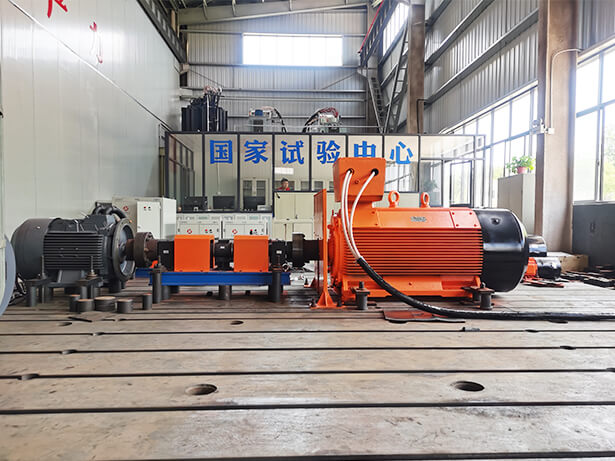
Every compressor leaving Kaeser's Coburg factory runs on a test stand at full load and full pressure. Individual serial number, individual test report. Vibration signature, discharge temperature, specific energy, oil carryover, all documented for that specific machine and shipped with the unit. This per-unit testing creates a condition monitoring baseline that is difficult to replicate after installation, because installation introduces foundation, piping, and electrical supply variables that shift readings away from the machine's inherent characteristics. When a vibration measurement in year six looks elevated, the Kaeser factory test report answers the diagnostic question that matters: what did this exact machine measure when it was new?

§ 07 — Channel

Distribution

Atlas Copco has been acquiring independent distributors for over twenty years. In many territories the local "dealer" is a wholly-owned Atlas Copco subsidiary operating under a legacy name with sales targets set by regional management. Branch managers rotate on corporate career tracks. Technicians get reassigned. Institutional knowledge of the local installed base erodes with each personnel change.

Kaeser works through independent distributors. The brand does not sell on name recognition the way Atlas Copco does, which filters for distributors who carry the line because they know compressed air rather than because they want the highest-volume brand.

The strongest due diligence a compressor buyer can perform costs nothing: visit three or four sites served by the specific local dealer and ask the maintenance staff about weekend breakdown response.

§ 08 — Serviceability

Inside the Machine

Open both enclosures.

Kaeser's internal layout is designed around a technician with a standard tool set working alone. Separator element, oil filter, air filter, cooler, minimum pressure valve: reachable without removing unrelated components. Internal piping uses hard-piped steel. Atlas Copco's GA VSD+ is more tightly packaged because the IPM motor is physically smaller and Atlas Copco used the space to shrink the enclosure footprint. Smaller footprint is helpful in constrained rooms. Reaching some service points requires removing components that are not the maintenance target.

§ 09 — Comparative

Noise, Footprint, Resale

Kaeser Advantages

Kaeser is quieter across comparable models. Lower rotor tip speeds and larger cooling fans. Kaeser runs longer before airend overhaul because of lower thermal stress.

Atlas Copco Advantages

Atlas Copco VSD+ takes less floor space. Atlas Copco holds resale value better because of brand recognition.

§ 10 — Due Diligence

Energy Audits

Advisory

Atlas Copco's AIRScan and Kaeser's KESS both use good instrumentation to collect accurate data and then recommend the equipment made by the company that deployed the instruments. The duty cycle assumption in the savings projection is the variable that moves the payback calculation most. An independent audit from a firm with no equipment dealership removes the bias.

Advisory
§ 11 — Corporate Structure

The Acquisition Map

A competitive tender should include verification of corporate parentage for every bidder. Three quotations from three brand names may represent fewer than three independent engineering alternatives. Atlas Copco Group includes Quincy, Worthington Creyssensac, Pneumatech, and Crepelle among other brands. Kaeser is one brand, one factory, one engineering team in Coburg.

Footer Component - SOLLANT
滚动至顶部