Our Products
Compressed Air Solutions
  • Screw Air Compressor
  • Oil Free Compressor
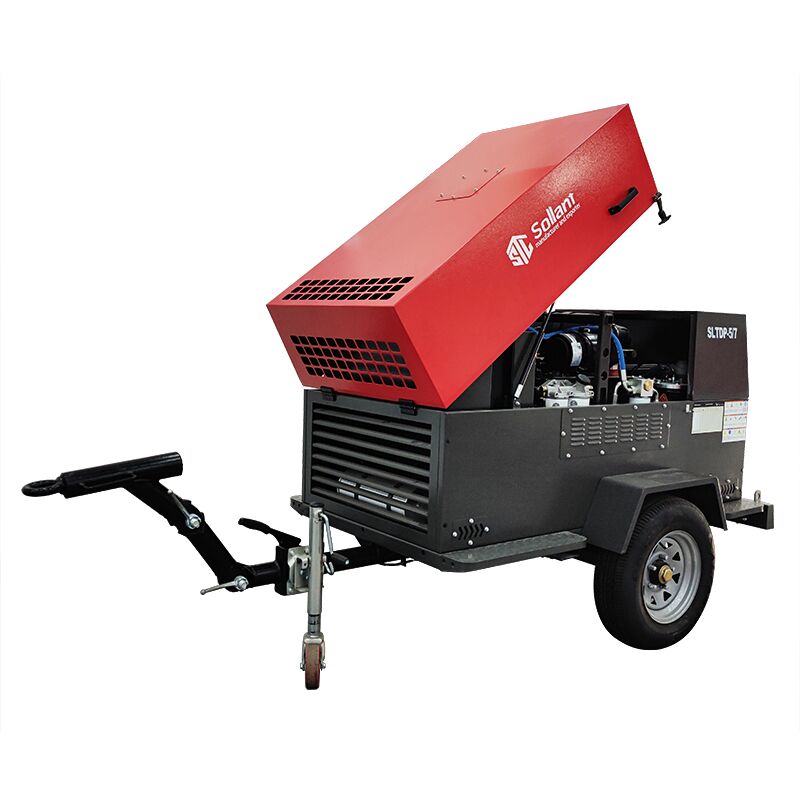
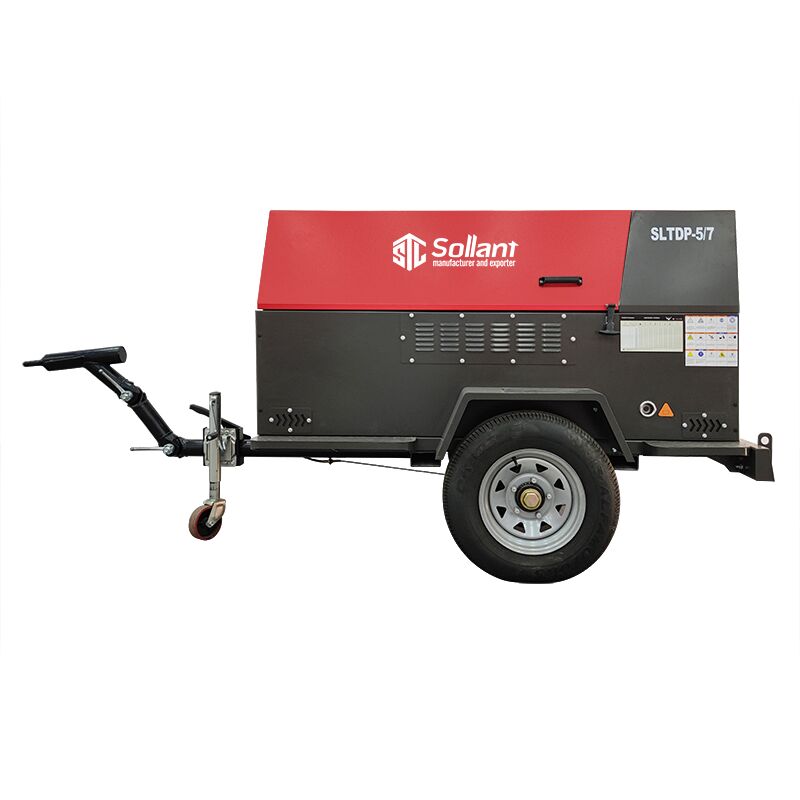
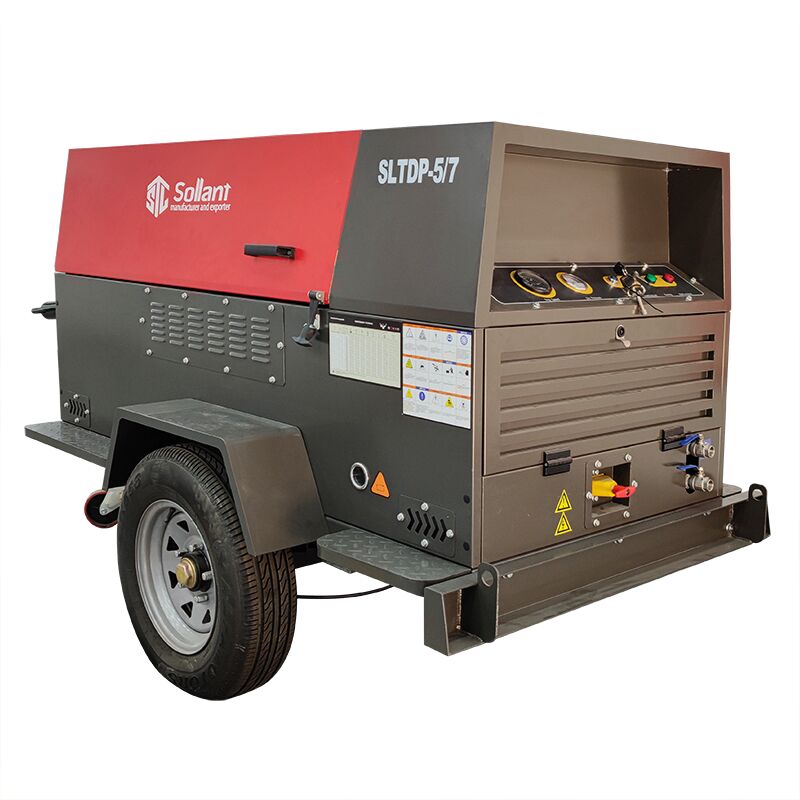
  • Diesel Portable Compressor
  • Gas Compressor
  • Specialty Compressor
  • Air Treatment
ISO 9001 Certified
24-Month Warranty
OEM & ODM Support
Factory Direct Price
All products→
Kaeser vs Sullair Air Compressors
Technical Guide

Kaeser vs Sullair Air Compressors

Technical Article
35 min read
Rotary Screw Compressors

Kaeser Kompressoren, Coburg, Bavaria, founded 1919, family-owned, still private. Sullair, Michigan City, Indiana, founded 1965, acquired by Hitachi 2017, now operating as Hitachi Global Air Power. Both companies grind their own rotors in-house, which already separates them from the compressor brands that buy airends from third-party OEMs and wrap them in a branded enclosure.

The Hitachi acquisition is the single most important thing that has happened to either company in the last decade, and most articles comparing these two brands treat it as background trivia. Hitachi has been manufacturing oil-free screw compressors since 1980. When Hitachi bought Sullair, engineering personnel relocated from Japan to Michigan City. The VP of Engineering at Hitachi Global Air Power told Compressed Air Best Practices Magazine he spent over 20 years as an oil-free screw compressor engineer in Japan before moving to Indiana, and personally designed the full mechanical package for the Hitachi-branded DSP oil-free compressor. Michigan City has since added over 80,000 square feet of manufacturing space and more than 100 operations staff, per John Randall in a separate interview with the same publication. That is not an investment holding company sprinkling some capital on an acquisition. That is a technology transplant.

Kaeser's recent history is quieter. Organic growth. No acquisitions. No mergers. An approximately 80,000 square foot expansion at Fredericksburg, Virginia for custom-engineered systems, announced 2025. Close to 8,000 employees worldwide. The lack of dramatic corporate events is itself informative: Kaeser does not need external technology infusions because its core technology platform, the Sigma Profile airend and the system management ecosystem around it, has been developed internally over decades without interruption.

The Efficiency Argument

Electricity is 70 to 80 percent of what a compressor costs over its lifetime. Kaeser publishes this number. Sullair's marketing agrees with it. Industry auditors agree with it.

Kaeser's Sigma Profile rotor is an asymmetric design that Kaeser claims saves up to 15 percent versus conventional symmetric profiles. Nitin Yadwad, then General Manager at Kaeser Compressors India, stated this figure in an OEM Update interview. The newest SM series with the SIGMA 06 airend claims up to 13 percent reduced energy versus the prior SM generation, per Kaeser's own product page. The DSD 175 and DSD 250 brochures claim "up to 30% more efficient than the competition."

That 30 percent is a peak number under favorable test conditions. In a running plant with real piping, real ambient temperatures, and partial loads, the field advantage over a decent competitor at the same horsepower is smaller. Still substantial. Enough to recover a large purchase price premium within the first couple of years of three-shift operation.

The efficiency does not come from the rotor profile alone. Kaeser oversizes the airend relative to the motor and runs it at low RPM. Larger displacement per revolution at lower speed. The DSD, ESD, and FSD series use 1:1 direct-drive coupling between motor and airend. The AS series uses a ribbed belt with automatic tensioning. IE4 motors are standard across most current models. The oil-free CSG series runs IE5 synchronous reluctance motors.

Kaeser's Sigma Air Manager 4.0 master controller is where the efficiency argument becomes most compelling and most specific to Kaeser. SAM 4.0 connects compressors, blowers, dryers, and filters through the Kaeser Sigma Network and manages them as a coordinated system. The 3Dadvanced Control algorithm selects the operating combination that minimizes total station energy consumption. Kaeser's literature states 10 to 30 percent savings versus machines on independent local controllers.

Atlas Copco has the Optimizer 4.0. Ingersoll Rand has the Xe-Series controller. Sullair uses built-in cascading logic or third-party sequencing. The SAM 4.0 has deeper integration with the Kaeser equipment ecosystem because the compressors, dryers, blowers, and controller are all designed as components of the same system. When a third-party sequencer coordinates machines from mixed manufacturers, it typically sees pressure and run/stop status. It does not see each machine's fluid temperature, separator differential pressure, or airend hours. SAM 4.0 sees all of that from native Kaeser machines.

For a single compressor, SAM 4.0 is irrelevant. For four or more machines with dryers and blowers, it is the single strongest reason to specify Kaeser over anything else on the market.

Kaeser also sells compressed air as a utility through the Sigma Air Utility program. Kaeser owns the equipment, maintains everything, and the customer pays per cubic meter at guaranteed pressure and quality. If Kaeser installs an oversized machine, Kaeser eats the excess electricity cost. If maintenance lapses and the airend fails, Kaeser pays for the rebuild.

Sullair Airend Longevity

Sullair has been grinding rotors in Michigan City since 1973. Over fifty years of in-house rotor manufacturing at the same site.

The bearing layout is the most revealing design decision in the Sullair airend: tapered roller bearings on the discharge end, cylindrical roller bearings on the inlet, all-steel construction, no plastic cages, no yellow-metal cages. The LS Series moved all porting internal to the casting, eliminating external tubing, fittings, and gaskets between airend and separator vessel.

The forum record on Sullair airend longevity is large and remarkably consistent.

"It was bigger than 7.5 hp, maybe 15? Definitely Chinese made. It was not quiet but that was the only complaint I can come up with. That thing ran in an environment you wouldn't put Pol Pot in. Over 100 in summer with 200% humidity, below freezing in winter, two and three shifts a day, six days a week and sometimes seven, crappy maintenance and still never gave us a problem. Not one minute of downtime."

Practical Machinist, 2019 — "Kaeser and their pricing, or Sullair?"

On Yesterday's Tractors, someone reported 30 years, over 60,000 hours, two oil-flooded screw compressors, "with no repairs other than annual filters and oil."

On Garage Journal (2013), a dissenting report: a user replaced Sullairs with Kaesers because the Sullairs were "constantly breaking down even tho the were only a few years old." Another user in the same thread questioned whether those machines were sized correctly or maintained at all.

Sullair's own trade-in programs have taken in machines with six-figure hour counts still on original bearings.

These are forum posts, not lab data. They become interesting because the same theme, Sullair airends lasting absurdly long under rough conditions, repeats across different forums, different users, different years, different models. The dissenting reports almost always involve sizing or maintenance problems rather than airend defects.

The TS Series

Sullair launched the TS Series in 2024. Nine models, 250 to 350 HP, 984 to 2033 cfm, 100 to 200 psi. Over/under two-stage airend with patent-pending interstage cooling. John Randall called it a "clean-sheet development" in Compressed Air Best Practices. Weight on elevated platforms was a specific customer concern they designed around. The over/under layout is shorter and lighter than traditional tandem two-stage machines.

Two-stage compression with intercooling reduces specific power by 12 to 15 percent at the same discharge pressure versus single-stage. Sullair has historically not competed on efficiency. The TS changes that in the 250 to 350 HP range, where the annual electricity savings per machine reach five figures at commercial rates. Below 100 HP, Kaeser's single-stage Sigma Profile optimization is the efficiency benchmark.

What Breaks

The Kaeser SM-10 with integrated dryer and receiver is one of Kaeser's most popular small-frame machines. On Practical Machinist (August 2021, thread "Kaeser compressor venting issue"), a user with a 2015 SM-10 at about 10,000 hours described intermittent back-pressure alarms occurring every one to three days. They had replaced the solenoid and vent valve assembly per Kaeser dealer recommendation. Temporary improvement, then the problem returned. Their symptom description: pressure drops from 125 psi to 107-110 psi within a fraction of a second during the load-to-unload transition. They called Kaeser phone support. The response blamed shop air demand. The user's reply: "I explained to him several times that it would do it with no machines turned on and no air being used. Even if all my machines are on, there's no way that it would drop 15+psi in less than a second from a system with a 250+ gallon capacity." Another user in the thread confirmed their SM-10 drops about 2 psi during unloading, establishing that 15+ psi is abnormal. A new pressure transducer reduced alarm frequency for the original poster without solving the underlying pressure drop.

"One thing I'm really disappointed in with Kaeser is the tubing they use between the air/oil separator tank and the cooler. It's just regular steel tube that is all rusted on the inside due to hot, moist air flowing through it. They know it causes problems as well because they put mesh screens at the end of the tube to catch little pieces of rust from the tube. Would it have been so hard to make it from stainless instead."

Practical Machinist, August 2021 — SM-10 owner, ~10,000 hours

This matters because of the price bracket. Kaeser AirCenter SX7.5 units have been quoted between $7,700 and $10,600 on Practical Machinist. At that price, a buyer expects the wet-service internal passages to be something better than plain carbon steel with a rust-catching screen at each end.

On Garage Journal (2013), another user reported a cooling fan motor failure on a 25 HP Kaeser at two years old. Kaeser declined to cover it. The user got it rewound. It lasted eight months. They bolted a barn fan to the top of the compressor. One machine, one user, one incident. It appears in a thread where several other users praise Kaeser. The significance is not reliability statistics; it is that Kaeser's warranty support, when it declines a claim, can produce a bitter customer experience at a price point where the buyer expected more.

On the Sullair side, the consequential failure mode is not mechanical. It is procedural.

Every Sullair air/oil separator element has metal staples in the flange gasket. The LS-20 service manual is explicit: "DO NOT remove grounding staples from the gaskets. DO NOT use any type of gasket eliminator." The staples provide an electrical ground path for static charge generated by air moving through oil mist at high velocity inside the separator tank. Remove the staple, charge accumulates on the separator element, arcs, ignites oil vapor.

"I have seen one that caught fire from static elect build up. It was a mess to clean up."

Heavy Equipment Forums — "Sullair blowing oil" — user Kshansen

"DO NOT take the staples out of the separator gaskets, the staple provide a ground path for discharging internal static electricity."

Yesterday's Tractors — independent report

Air Compressor Services, one of the larger aftermarket parts suppliers, states on their Sullair separator page that their replacements include "grounding staples to prevent static static-electric fires." Not all aftermarket suppliers do this.

The LS-20 and TS-20 service manuals also contain a piping warning that gets overlooked: "Sullube 32 should not be used with PVC piping systems. It may affect the bond at cemented joints." The manual cites the Plastic Pipe Institute: "The Plastic Pipe Institute recommends against the use of thermoplastic pipe to transport compressed air or other compressed gases in exposed above ground locations." PVC under compressed air does not leak when it fails. It fragments into shrapnel. A lot of shops install PVC distribution piping because it is cheap and familiar.

Compressor Fluid and Parts Pricing

Kaeser's Sigma S460 full synthetic has an 8,000-hour change interval. The M460 semi-synthetic goes 4,000 hours.

"You've got yourself a potentially great compressor and you want to cheap out on the oil??? Taken care of, those things run forever! We've got a 50hp Kaeser with 30,000 hours on the clock still running great. I use only OEM oils and parts."

Practical Machinist, November 2019 — generic oil substitution thread

Another user in the thread noted that generic AW46 hydraulic oil would work for short-term testing without causing damage if fully drained afterward, and that ATF contains friction modifiers not found in compressor fluids.

The concern with sustained use of generic oil at airend operating temperatures is accelerated oxidation. Oxidized oil produces varnish that clogs the separator element. A clogged separator increases differential pressure across the element (energy wasted as backpressure) and allows more oil into the compressed air stream (contaminating everything downstream).

Kaeser's optional five-year extended warranty on airend, motor, and Sigma Control requires annual purchase of Kaeser Warranty Maintenance Kits with Kaeser-branded filters and S460 or FG460 fluid. After the factory fill is drained, only S460 or FG460 is permitted. Participation in Kaeser's Lubricant Analysis Program is mandatory. The program's recommendations override the instruction manual. All parts must be genuine Kaeser. Aftermarket anything voids coverage.

Sullair's Sullube 32 is the factory-specified fluid. Sullair's manuals state that mixing other fluids voids all warranties.

Sullair's Optimizer separator is rated at 1 to 2 ppm oil carryover per Sullair's product page, pleated micro glass media, guaranteed one year or 8,000 hours. Kaeser's three-stage separation specifies 1 to 3 ppm per AirCenter documentation. For general machining the difference is marginal. For paint spray, food, pharma, and electronics, the lower Sullair number matters.

The aftermarket parts ecosystem around both brands is large. Quality ranges from well-made separators with borosilicate glass fiber media, proper steel construction, and grounding staples included, down to cheap elements that can collapse under differential pressure or catch fire if the gasket lacks a ground path. Kaeser's OEM parts pricing pushes buyers toward aftermarket. The responsibility for quality verification falls on the buyer.

Oil-Free

Hitachi oil-free screw compressor manufacturing goes back to 1980. The technology portfolio transferred to Michigan City via the acquisition includes patented non-PTFE rotor coatings applied robotically, tapered rotor airend designs for oil-free applications, stainless steel high pre-coolers to prevent aftercooler thermal fatigue, motorized isolation valves that seal the discharge when the compressor stops (preventing moisture migration into the compression chamber), and inlet-valve-free VFD designs.

Sullair's DSP Series has stainless steel rotors in both stages, internally coated housings, ISO 8573-1 Class 0 certification. The engineering team behind this product transferred from decades of exclusive oil-free screw compressor work in Japan.

Kaeser's CSG Series pairs the Sigma Profile with IE5 synchronous reluctance motors and SAM 4.0 integration. Kaeser does not hold a comparable oil-free-specific patent portfolio and does not have a comparable oil-free design iteration history.

For pharmaceutical, food and beverage, electronics, and medical gas applications needing Class 0 air, the Sullair DSP should be evaluated first. The depth of oil-free-specific engineering behind it, measured in decades of dedicated R&D and a portfolio of patented technologies addressing failure modes unique to oil-free compression, is not matched by Kaeser or by most other manufacturers.

Electronic Spiral Valve

The ESV is unique to Sullair among major compressor brands and deserves its own discussion because it represents a fundamentally different approach to part-load control than VSD.

The motor runs at full RPM on clean sinusoidal power. The spiral valve bypasses partially compressed air back to suction to reduce output. No inverter electronics, no harmonics on the electrical bus, no special motor insulation requirements. Hitachi Global Air Power's engineering leadership confirmed to Compressed Air Best Practices that ESV sales in the US market nearly equal or exceed VSD sales for Sullair products, while Japan is VSD-dominated.

The American preference for ESV comes from several overlapping factors. US electrical infrastructure quality varies. VFDs produce harmonic distortion that can interfere with CNC machines, measurement instruments, and other sensitive equipment sharing the same bus. US manufacturing plants outside of the largest operations often have maintenance teams that are more comfortable with mechanical systems than with inverter electronics. And the ESV costs less than a VFD package.

The trade-off: below about 50 percent load, the motor is spinning at full speed while the compressor produces reduced output, and energy waste grows steeply. A VSD at 50 percent load has slowed the motor proportionally.

A shop fluctuating between 65 and 95 percent capacity gets similar energy performance from ESV and VSD. A facility swinging between 20 and 95 percent pays a measurable penalty with ESV at the low end of the range. Most shops are closer to the first scenario than the second.

Kaeser offers VSD through the SFC series with Siemens drives. Kaeser does not offer a spiral valve option.

Thermal Management

Kaeser's Electronic Thermal Management system adjusts compressor fluid temperature continuously instead of using a fixed-setpoint thermostatic bypass valve. Cold fluid is viscous, wastes pumping energy, and does not seal well at the rotor clearances. Hot fluid oxidizes faster, loses sealing effectiveness, and promotes condensation when the machine cools down. The ETM targets the narrow range where both concerns are minimized. Over years of operation, the cumulative effect shows up as longer fluid life, longer separator life, and less internal corrosion compared to machines with fixed thermostatic valves.

Sullair's thermal management focus in the TS Series is the interstage cooler. In the DSP oil-free series, the stainless steel high pre-cooler and motorized isolation valve address thermal problems specific to oil-free machines.

Maintenance

A Kaeser that misses a service interval will fault out. The Sigma Control 2 monitors temperatures, pressures, differential pressures, and hours. It will shut the machine down on a safety trip when parameters exceed limits. The package layout puts every major component within reach without removing other components first. On belt-driven models, belt tension can be checked through a window.

A Sullair that misses a service interval will keep making air. The cast iron casings, oversized bearings, and generous thermal margins absorb the consequences. Less efficiently. With faster wear accumulation. And the machine stays running.

The question a plant maintenance manager should answer before talking to either sales team: when did the compressor room last receive a complete scheduled service on time? Not when was it scheduled. When did it happen.

Plants where that question gets a confident, specific answer should look at Kaeser. Plants where that question gets a vague answer or an uncomfortable pause should look at Sullair.

Pricing and Sales

In the 2019 Practical Machinist thread, the original poster compared a Kaeser AirCenter SX7.5 against a Sullair ShopTek 7.5. The Kaeser salesman quoted $7,700 as an anniversary special. The poster asked for a small concession. The salesman refused. From the post: "His response is more or less, 'We're the best. You get what you pay for.' I even told the guy directly to just throw me a little bone, it wouldn't take much. No." Another user in the thread had been quoted $10,600 for the same unit in a different region. A third user recommended a specific Kaeser rep by name and phone number.

The poster had written at the start of the thread: "I would really prefer the Kaeser." They ended up leaning toward Sullair because they knew and trusted the local Sullair technician, and the Kaeser salesman had alienated them over what amounted to a few hundred dollars.

Sullair ShopTek compressors price below the Kaeser AirCenter range at comparable horsepower. Sullair dealers tend to negotiate with more flexibility per multiple forum accounts.

Specific power at actual operating pressure and typical load percentage controls the electricity bill for the next decade. A compressor that costs $3,000 more and uses 10 percent less electricity at 60 percent average load recovers the premium within about a year and a half of three-shift operation at commercial rates.

Where These Machines Belong

The strongest case for Kaeser is a multi-compressor station above 50 HP with SAM 4.0. The savings from system-level sequencing and optimization compound across every machine. The Sigma Air Utility program is available for facilities that want compressed air as an operating expense. Below 25 HP in a single-compressor shop, the Kaeser AirCenter packages are efficient and well-packaged machines with the carbon steel tubing and back-pressure alarm quirks documented above as known irritants.

The strongest case for Sullair is oil-free compression at any horsepower, the 250 to 350 HP range where the TS Series two-stage airend delivers a thermodynamic advantage over any single-stage competitor, and any facility where honest assessment of maintenance practices suggests the compressor will go through extended periods without scheduled service.

In the 5 to 25 HP single-compressor range, the deciding factor is usually local: which brand has the better dealer and service technician in your area. The Practical Machinist poster who preferred Kaeser, got an inflexible salesman, and leaned toward Sullair because the local Sullair tech was someone they trusted, is a scenario that plays out constantly.

Footer Component - SOLLANT
滚动至顶部