Our Products
Compressed Air Solutions
  • Screw Air Compressor
  • Oil Free Compressor
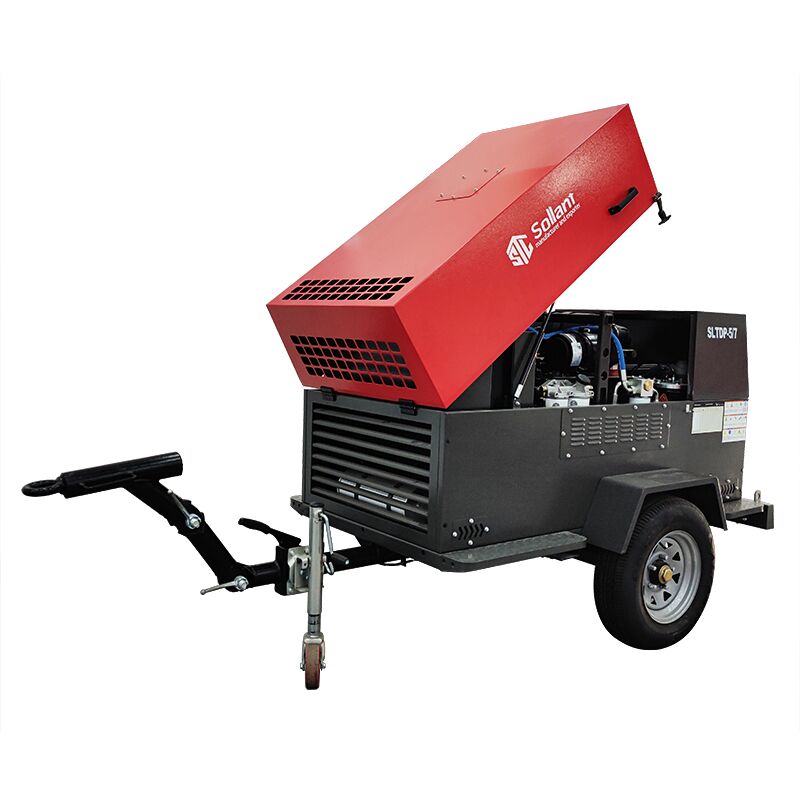
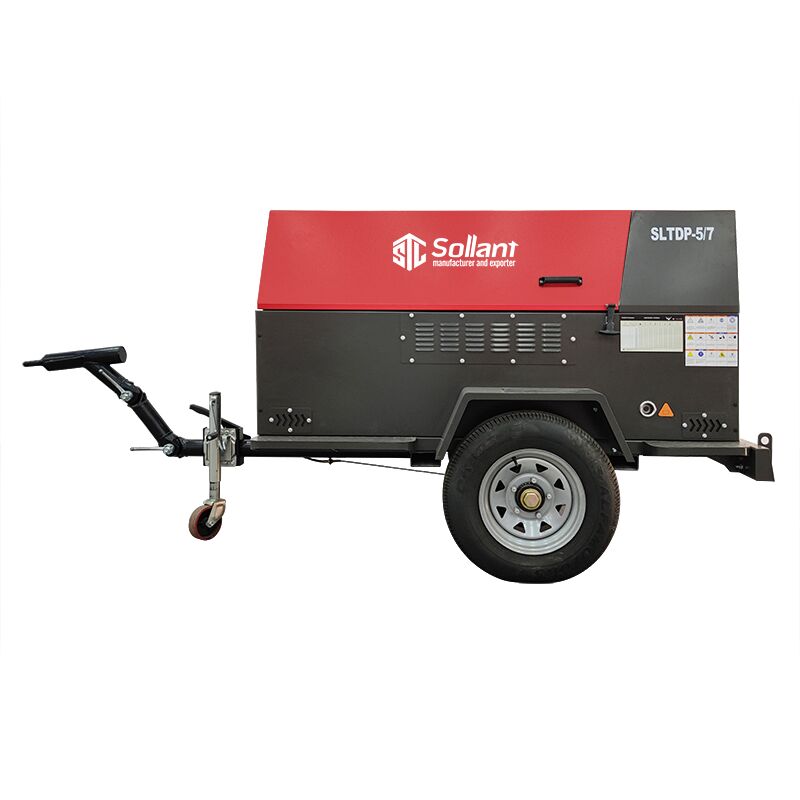
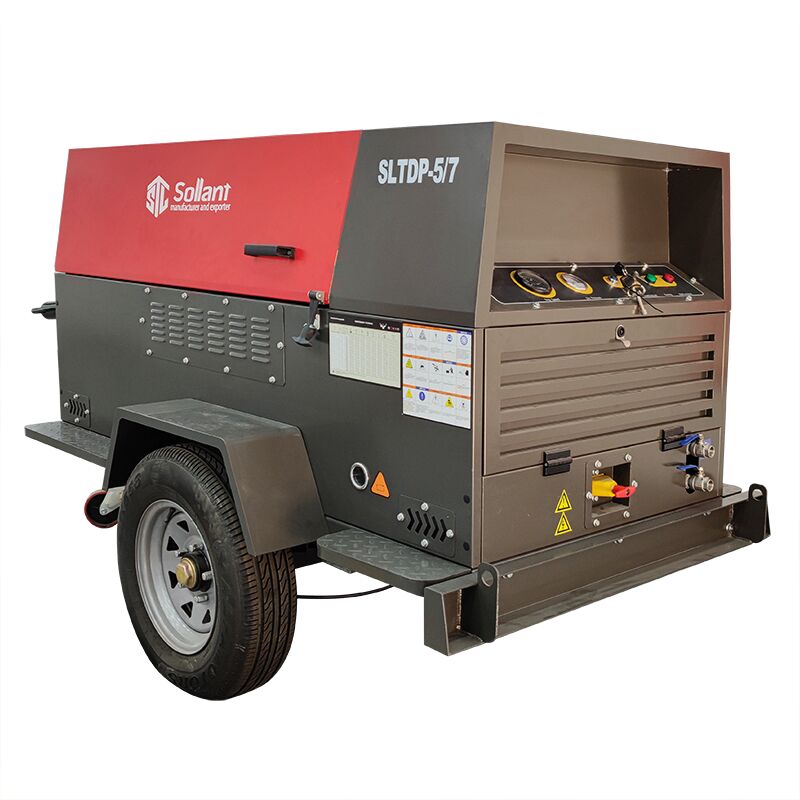
  • Diesel Portable Compressor
  • Gas Compressor
  • Specialty Compressor
  • Air Treatment
ISO 9001 Certified
24-Month Warranty
OEM & ODM Support
Factory Direct Price
All products→
Compressed Air for EV Battery Manufacturing
Technical Guide

Compressed Air for EV Battery Manufacturing

Technical Article
22 min read
Piping & Air Quality

Galvanized pipe. Let's start with galvanized pipe. A large number of battery factories to this day are still using galvanized carbon steel pipe for compressed air mains, because the construction habits that EPC contractors carried over from auto plants, food plants, and injection molding plants are impossible to shake. In those industries galvanized pipe has been used for thirty years without incident, and compressor room people can say with a straight face that "galvanized pipe is a proven solution." In a battery factory, galvanized pipe is a ticking time bomb.

The problem is shutdown. Automotive stamping lines run around the clock year-round. The pipe interior is always in contact with dry compressed air flowing above dew point temperature, and the galvanized coating suffers no attack. Battery production lines shut down a lot. Weekend maintenance, statutory holidays, Chinese New Year breaks, night shifts at reduced load. When the compressor stops, the residual air temperature in the network drops, and the dew point of that residual air is much higher than during normal operation. Why? Because after shutdown the pressure differential across network sections disappears, and the dry air from the dryer outlet side mixes with the wet air that was sitting in the pipe section between the aftercooler and the receiver tank, air that never went through the dryer. After mixing, the overall dew point rises. Nighttime temperatures in the Yangtze Delta in December run about 3°C to 8°C. The factory has no heating. Pipe wall temperature follows quickly. Once pipe wall temperature drops below the dew point of the mixed air inside, a thin water film condenses on the pipe's inner surface.

The galvanized layer starts an electrochemical reaction when it encounters this water film. The products are a mixture of ZnO and Zn(OH)₂, known in the industry as white rust. White powdery substance, nowhere near as conspicuous as iron rust, completely invisible from outside the pipe. The particle size of white rust is in the 1 to 20 μm range (this size data comes from SEM analysis literature on galvanized test coupons after ASTM B117 salt spray testing, not direct measurement from compressed air piping, but the order of magnitude should be correct). This particle size range happens to fall near the MPPS (Most Penetrating Particle Size) zone of standard coalescing filter efficiency curves. ISO 12500-1 specifies that coalescing filter testing uses 0.1 to 0.5 μm DOP aerosol, and efficiency at that size can reach 99.99%. But for solid particles in the 1 to 5 μm range, the coalescing filter's capture mechanism transitions from diffusion-dominated to inertial impaction-dominated, with an efficiency valley in between. The exact numbers depend on filter element construction and flow velocity and can't be generalized, but if the endpoint has only a single coalescing filter and no dry particulate filter, some zinc particles will penetrate.

Once they penetrate, then what. Zinc behaves similarly to copper on the cathode side: it oxidizes and dissolves at high potential, crosses the electrolyte, reduces and deposits at the anode at low potential, and gradually grows into metallic dendrites. Zinc's standard reduction potential (−0.76 V vs. SHE) is much lower than copper's (+0.34 V vs. SHE), so the onset potential for zinc dissolution at the cathode is different, and the dendrite growth kinetics are different too. In practice, zinc dendrites grow more slowly than copper. Cells test normal at end of line. Months later, in the vehicle, problems emerge. Delayed failure. By the time the root cause investigation happens, the time gap is so long and so many production variables have intervened that root cause analysis is extremely difficult. A lot of the time the final attribution is "sporadic internal short circuit" and the case gets closed. Pipe corrosion as the root cause gets missed.

Why Copper Pipe Is Also Not Acceptable

Copper's standard reduction potential is +0.34 V vs. SHE, and at NMC cathode working potentials (3.0 to 4.3 V vs. Li/Li⁺) copper dissolves extremely readily. Copper ion solubility in electrolyte is higher than zinc's, and the deposition rate after migration to the anode is also faster, so internal short circuits from copper contamination happen sooner than from zinc. Copper is a first-tier controlled metal. In the battery industry's magnetically controlled PPB-level particle detection, copper is ranked at the highest priority level alongside iron, chromium, and nickel. Installing copper pipe in a compressed air network is deliberately engineering a copper contamination source into the system.

Aluminum Alloy Pipe

Transair is the most widely used. Teseo (Italian brand) is also used, priced about 15% to 20% lower than Transair, but the product range for large diameters above DN100 isn't as complete as Transair's. Transair quick-connect fittings come in two types: push-in clamp style (for DN25 to DN63) and flange clamp style (DN80 to DN168). The installation key for push-in type is to apply silicone lubricant to the O-ring before insertion. Without silicone lubricant, the O-ring can roll during insertion. Once rolled, even if pushed all the way in, the seal won't hold. During pressure testing you'll find a leak but when you pull it apart the O-ring surface shows no damage, it was just in the wrong position. This problem is especially common in cold winter conditions when the O-ring material stiffens and loses elasticity, making it more prone to rolling during insertion. Some installers skip the silicone lubricant to save time, or use grease instead of silicone lubricant (grease attacks EPDM rubber O-rings), both of which cause problems.

The 168mm large-diameter fittings require two people working together to push home, especially when the fittings are fresh from the factory and the O-ring to pipe wall fit is very tight. On job sites I've seen people use a sledgehammer, which deforms the pipe wall. The correct method is to use the Transair installation wrench and apply even force, or use a ratchet strap to slowly pull the pipe into the fitting. These are all very mundane construction details, but when the pipe leak test fails and you're searching for the cause, most of the time it comes down to something in this category.

The Al₂O₃ passivation layer on Transair aluminum pipe is chemically stable in the pH 4 to 9 range. The pH of compressed air condensate is generally between 5 and 7 (depending on CO₂ content in the air and whether there are acidic gases in the factory environment), right within the stable range, so aluminum pipe doesn't corrode in compressed air service. However, if the factory environment contains chloride gases (for example near a hydrochloric acid tank or a chlor-alkali workshop), aluminum alloys suffer pitting corrosion in the presence of chloride ions. In that case, the aluminum pipe's exterior needs protection or a different material should be used. Battery factories typically don't have chloride sources, so this issue is uncommon. But if a battery factory shares an industrial park with other chemical facilities, it needs attention.

316L Stainless Steel Pipe for the Filling Station Supply Branch

Orbital welding. No room for compromise on this section.

The difference between orbital welding and manual TIG welding is not about external appearance. From outside the pipe, a good manual welder can produce a weld bead that looks as clean as an orbital weld. The difference is inside the pipe. In orbital welding, the torch travels around the pipe joint at constant speed through a full 360°, with all welding parameters (current, voltage, wire feed speed, rotation speed) controlled by program, and the pipe interior is continuously argon-purged. The resulting weld inner surface is bright white, with the chromium oxide passivation layer intact. The problem with manual TIG is that when the welder is working on the bottom of the pipe (the 6 o'clock position), the posture is awkward, heat input control is unstable, and the interior argon protection can't match orbital welding quality (during manual welding, a wad of cloth or a simple plug is stuffed inside the pipe to hold argon, but actual argon concentration is very uneven). The inner surface easily develops yellow to blue to purple heat tint. The deeper the color, the more severe the chromium depletion.

AWS D18.1 (sanitary pipe welding standard) classifies heat tint into seven levels, from No.1 (silver white, fully acceptable) to No.7 (gray/black, completely unacceptable). ASME BPE (bioprocessing equipment standard) references a similar color chart system in its stainless steel high-purity pipe welding acceptance clauses. These standards were developed by the pharmaceutical and semiconductor industries. The battery industry doesn't have its own welding acceptance standard yet (at least as of 2024 none has come to my attention), but the technical requirements are fully applicable by reference. Acceptance criteria should be explicitly written into the tender technical specification, not left for post-weld arguments about whether the weld color is acceptable or not. Many battery factories' stainless steel pipe welding acceptance looks only at the external appearance without borescope inspection of the interior. That's the same as no acceptance.

A Few More Words on Fire Wall Penetrations

The fire stopping solution for aluminum pipe passing through fire walls needs to pass EN 1366-3 (pipe penetration fire test standard) or the Chinese equivalent GB 23864 (fire stopping materials technical specification) certification. The issue with aluminum pipe is that it melts at 660°C, more than half below steel pipe's 1,400°C. Under fire conditions, aluminum pipe melts well before steel pipe would, leaving the wall opening exposed. If the fire stop system isn't designed correctly, it can't block flames and smoke. Intumescent fire collars expand when they detect high temperature and plug the wall opening. Hilti CFS-SL, Promat Unicollar, and 3M Fire Barrier all have certified products. Which one to use depends on the local fire authority's approved brand list. During installation, the gap between the fire collar and the wall must be filled with fire sealant, and there must be no gap between the pipe and the fire collar. These practices are clearly described in fire acceptance codes, but compressed air pipe installation crews are typically mechanical and electrical contractors, not fire protection specialists. Their experience with fire stopping is insufficient. Fire stopping should be done by the fire protection subcontractor, or at minimum under on-site guidance from a fire consultant.

That covers piping.

Desiccant Dryer Summer Derating

The reason this problem keeps recurring is not that it's hard to prevent, but that the engineering step that prevents it is so simple that everyone assumes it doesn't need to be done.

ISO 7183:2007 Clause 6.3.2 explicitly requires that the performance rating conditions of desiccant dryers (inlet temperature, inlet pressure, ambient temperature, load factor) shall be stated in the product technical documentation, and that when actual operating conditions deviate from rating conditions, the manufacturer shall provide performance correction curves or correction factors. The problem is that this requirement applies to the manufacturer, not to the engineering design firm. Manufacturers do provide performance correction curves, usually in an appendix of the product manual. A chart with inlet temperature from 20°C to 50°C on the horizontal axis, achievable dew point on the vertical axis, and several curves corresponding to different pressures and load factors. This chart sits quietly in the manual appendix. The engineer doing the selection opens the manual, flips to the selection table, looks up the model number by rated flow, closes the manual, and the selection is done. The correction curve in the appendix was never even turned to.

The effect of inlet temperature on dew point has two layers stacked on top of each other. The first layer is that inlet moisture content increases with temperature. Saturated air at 35°C contains about 36 g/m³ of water, at 45°C about 65 g/m³, at 50°C about 83 g/m³. After compression to 7 bar, because total pressure increases, water vapor partial pressure also increases, and more condensate drops out, but after passing through the aftercooler and water separator, the residual water vapor concentration still rises with inlet temperature. The second layer is that the adsorbent's equilibrium adsorption capacity decreases with rising temperature. Molecular sieve adsorption isotherms (Langmuir or BET type) show that at the same water vapor partial pressure, when temperature rises from 25°C to 50°C, adsorption capacity can drop by 30% to 50% (exact values depend on the molecular sieve type; 4A and 13X have different temperature response curves). Wetter inlet air plus weaker adsorbent capacity, the combined result is a dramatic deterioration in outlet dew point.

36 g/m³Saturated air moisture at 35°C
65 g/m³Saturated air moisture at 45°C
83 g/m³Saturated air moisture at 50°C

Zander's technical manual (KE/KEN series, 2020 edition) provides a correction factor table in Appendix B. For a model rated at PDP −40°C at 35°C inlet conditions, when inlet temperature rises to 45°C, the corrected outlet PDP is approximately −30°C to −32°C. At 50°C, approximately −25°C to −28°C. Parker's DAS/DAP series manual has a similar correction curve with roughly the same trend. Atlas Copco's CD/BD series manual presents it in a different format: instead of a correction factor table, it's a two-dimensional chart of inlet temperature versus achievable dew point, but the conclusion is the same.

The moisture content difference between PDP −40°C and PDP −28°C. Following the water vapor partial pressure calculation method in ISO 8573-1:2010 Annex B, at 7 barg (8 bar absolute), PDP −40°C corresponds to a mass concentration of approximately 0.12 g/m³, and PDP −28°C corresponds to approximately 0.35 g/m³. Three times the difference. When 0.35 g/m³ air is fed into the coating drying oven as makeup air, the mass transfer driving force for NMP evaporation (the difference between solvent partial pressure in the gas phase and saturation vapor pressure) is disrupted by the increased water vapor partial pressure. Evaporation rate drops, coating solidification time extends, but the electrode's residence time in the oven doesn't change (line speed is unchanged), resulting in the coating exiting the oven without being fully dried. Residual NMP is too high, affecting downstream calendering roll-sticking behavior and electrode flexibility. When 0.35 g/m³ air is fed into the dry room as makeup air, the dehumidifier's load increases. If the dehumidifier is also operating under summer conditions (regeneration side temperature is high, regeneration efficiency also drops), the combined effect can push the dry room dew point more than 10°C above the design target.

0.12 g/m³
PDP −40°C at 7 barg
0.35 g/m³
PDP −28°C at 7 barg

The solution is too simple: obtain TMY weather data for the factory's location (available for purchase from the China Meteorological Administration, or the design weather parameters for major cities can be looked up in the appendix of the ASHRAE Handbook), look up the July 1% wet bulb temperature design value (this value means only about 88 hours per year will have a wet bulb temperature exceeding it), use this to calculate the cooling tower outlet water temperature (typical approach is 3°C to 5°C depending on cooling tower model), then calculate the aftercooler outlet air temperature (aftercooler approach is typically 8°C to 12°C), and this is the design inlet condition for the dryer. Use this temperature to look up the correction curve in the dryer manufacturer's manual appendix and check whether the required outlet PDP can be achieved at this temperature. If not, go up one model size. Maybe from a KEN 2800 to a KEN 3600, costing an extra hundred-something thousand RMB, but much cheaper than discovering after commissioning that the dew point doesn't meet spec and having to swap the machine (a project costing at least 500K to 800K plus weeks of lost capacity).

The PDP Versus ADP Issue

The original text of ISO 8573-1:2010 Clause 3.4 reads: "The pressure dew point shall be expressed in degrees Celsius and the reference pressure shall be stated." It's a short sentence. The requirement is perfectly clear. But a considerable portion of URS documents (User Requirement Specifications) in the battery industry are written by the manufacturing engineering department, and their process background means they habitually express moisture requirements in ADP (because the dry room's moisture specification is defined in g/m³ or ppm at atmospheric pressure). The URS says "dew point ≤ −40°C," and what the manufacturing engineer has in mind is ADP −40°C (meaning the air at atmospheric pressure has to be cooled to −40°C before water condenses out). This URS reaches the facilities department. The facilities department writes the tender document, which still says "dew point ≤ −40°C." The compressed air vendor sees this number and by industry convention defaults to PDP, quoting PDP −40°C equipment. PDP −40°C at 7 bar corresponds to an ADP of approximately −52°C, which is 12°C below the manufacturing engineer's intended ADP −40°C. This actually over-satisfies the requirement. This situation, although it doesn't cause quality problems (the air is drier than needed), results in oversized equipment, excessive energy consumption, and inflated procurement costs.

The reverse situation is more dangerous. Some manufacturing engineers, when writing the URS, have done some reading, learned about PDP as a concept, and written "PDP ≤ −40°C." But their actual process requirement is based on the moisture level at the atmospheric-pressure outlet, which would correspond to a PDP requirement of roughly −26°C to −28°C at 7 bar. Writing PDP −40°C makes the spec excessively stringent, causing the dryer selection to be one to two sizes larger than necessary. The extra equipment cost and operating electricity expense may continue for over ten years.

Bottom line: regardless of who writes the URS, every instance where a dew point value appears must be annotated with "PDP at X barg" or "ADP at atmospheric pressure." Not annotating is a latent hazard.

Dry Room Door Zones

The processing capacity of desiccant rotor dehumidifiers is calculated based on steady-state conditions: supply air volume, supply air temperature and humidity, rotor speed, regeneration temperature. Once these parameters are set, the outlet moisture content is a calculable steady-state value. Maintaining 1% RH in the dry room under steady-state conditions is not a problem. The problem is transient disturbances.

Doors. Every door opening is a step disturbance. The magnitude of the disturbance depends on door opening area, opening duration, and the temperature and humidity difference between inside and outside. For a rough estimate, you can use a natural convection air exchange model (the ASHRAE Fundamentals Handbook Chapter 16 has a simplified formula based on the Bernoulli equation). For a side-hinged door 1.2 m wide and 2.4 m tall, with a temperature difference of 5°C (dry room at 24°C, corridor at 29°C summer conditions), open for 10 seconds, the air exchange volume is roughly 3 to 6 m³. The precision of this number is not high, because actual air exchange is influenced by the door-area airflow field, turbulence from personnel walking through, the piston effect of material carts (a large cart passing through a doorway pushes air ahead of it like a piston), and other factors far more complex than the simplified formula accounts for. But the order of magnitude is correct.

Corridor air moisture content under summer conditions (28°C, 65% RH) is approximately 17 g/m³. Taking an exchange volume of 4 m³, the moisture carried in is 68 g. A 300 m³ dry room at −35°C dew point has a total moisture content of approximately 90 g. One door opening dumps in an amount equivalent to 75% of the room's total moisture inventory.

This number may look exaggerated. Indeed, under positive pressure protection, the actual influx will be far smaller, because the positive pressure air curtain blocks most of the external air from entering. But positive pressure protection has a response lag during the instant the door opens: the door goes from closed to fully open in about 1 to 2 seconds (fast roller door) or 3 to 5 seconds (standard swing door), and the positive pressure air supply system's volume control damper also has a response time of 1 to 3 seconds. During this time window, the pressure differential drops from its steady-state value (15 to 25 Pa) to near zero or briefly goes negative. At that brief instant of negative pressure, corridor air surges directly in. After positive pressure recovers, the air curtain is effective for the remainder of the door opening duration, but those first 1 to 3 seconds of "vacuum period" have already done the damage.

The frequency of 8 to 12 door openings per hour is not an estimate. It was measured by installing magnetic proximity switches with data loggers on the door frames of dry rooms at three different factories. Eight is a production line with relatively high automation and AGV cart delivery. Twelve is a line with more manual operations and vendor personnel entering and exiting for inspections. This data covers only normal production shifts (8-hour day shift) and does not include shift handovers (door opening frequency is even higher during that half hour) or anomaly handling (maintenance personnel going in and out repeatedly during equipment breakdowns).

Why the dry room makeup air supply needs to be designed at 2.5 to 3 times the steady-state calculation. The HVAC designer's steady-state leakage calculation typically considers only door gap infiltration (calculated based on door air-tightness rating and pressure differential) plus wall penetration infiltration (calculated based on gap area and pressure differential). This calculation result represents the makeup air needed to maintain target positive pressure with the door constantly closed. The instant the door opens, the equivalent leakage area jumps from the door gap's few tens of cm² to the entire door opening of 2.88 m² (1.2×2.4). That's a jump of three orders of magnitude. The makeup air system must ramp up its volume within 1 to 2 seconds of this jump, or positive pressure collapses.

The makeup air capacity demanded by this transient response far exceeds the steady-state requirement. The 2.5 to 3x margin factor is not a "safety margin" but rather an engineering match for this transient load. CATL and BYD have standardized this factor in their internal design specifications. European factory designers newly entering the battery industry don't have access to these internal specifications and design based on their own experience, typically placing the margin factor at 1.3 to 1.5. The probability of problems appearing during the first hot and humid season after commissioning is very high.

The source of makeup air is the deep-drying outlet of the compressed air system. So the dry room door zone management approach directly and inversely determines the installed capacity requirement for the compressed air system. If the HVAC team designing the dry room and the utility engineering team designing the compressed air system each calculate independently without sharing design parameters, the compressed air system installed capacity will be undersized. This is not a technical problem. It is a project management problem.

Fast-action doors and airlocks can reduce the moisture intrusion per opening. Fast roller doors complete one open/close cycle in about 1.5 to 2.5 seconds, much shorter than the 5 to 10 seconds for a standard swing door. Airlocks use double-door interlocking to ensure the inner and outer doors are never open simultaneously. But neither can reduce intrusion to zero. During the 1.5 seconds that a fast door is open, positive pressure protection has the same response lag issue. Airlocks, when used at high frequency (more than 8 entries per hour), create a cadence between inner and outer door switching that slows material turnaround. Operators trying to maintain throughput opening both doors simultaneously is something that has happened at every factory that has airlocks.

A Few Remaining Related Topics

Heatless desiccant dryer purge loss, accounting for 15% to 18% of total air output. This air gets compressed to 7 bar and then immediately vented, purely to dehydrate the adsorbent. HOC (heat of compression) dryers use the high discharge temperature of dry screw compressors to regenerate the adsorbent directly, requiring no additional heat source, with purge loss close to zero. But HOC requires a paired compressor with sufficiently high discharge temperature. Centrifugal machines won't work because their inter-stage cooling is too efficient, putting discharge temperature at only 80°C to 120°C, below the HOC regeneration temperature requirement (typically above 130°C). This constraint means compressor selection and dryer selection cannot be done separately. One determines the other. But in the tender organization of most projects, compressors and dryers are in separate bid packages reviewed by separate people. The dryer reviewer doesn't know what machine type was selected in the compressor package, and vice versa. The frequent result: centrifugal machines get bought, paired with a heatless dryer in a situation where HOC could have been used, burning an extra million-plus kWh of electricity per year.

The irreversible failure of carbon molecular sieve (CMS) in PSA nitrogen generators from oil vapor contamination. The micropore diameter of CMS is precisely controlled (the technical data sheets of CMS products from Japan's Takeda and Germany's CarboTech include pore size distribution data, with a typical peak at 3.7 to 3.9 Å). Oil vapor molecules block the micropore entrances and the adsorbent loses its selective adsorption capacity for O₂. CMS refill costs run 30% to 40% of the nitrogen generator's total equipment value, with a lead time starting at 4 months. The last line of defense protecting CMS in the compressed air system is the activated carbon adsorber. Activated carbon adsorber element service life is typically noted in the manufacturer's manual as "recommended replacement every 8,000 to 12,000 operating hours or 12 months." But the maintenance team monitors differential pressure, and as long as differential pressure is normal they don't replace. Differential pressure only reflects the element's airflow resistance and has absolutely no relationship to adsorption capacity. After the activated carbon is saturated, differential pressure reads perfectly normal, but oil vapor passes through at 100%. Replace on a fixed operating-time schedule. Don't look at differential pressure.

Leaks. Compressed air network leak rates are typically between 15% and 30%. This number is about the same across all industries, and battery factories aren't special in this regard. What is special is that leaks in battery factories carry an additional risk dimension: during network pressure transients, leak points can reverse-aspirate external ambient air. During the instant a compressor switches between loaded and unloaded states, or the instant a high-flow point of use suddenly opens, certain locations in the network experience brief localized pressure drops. If a leak point is located at a high-velocity zone of a pipe bend or tee (Bernoulli effect produces locally lower pressure), external air can be momentarily drawn in. The volume is small. But this air has entered the distribution piping without passing through any purification equipment. If the leak point is on a main header section outside the dry room, what gets drawn in is ambient air at 20% to 30% RH. Leak repair priorities should not be ranked solely by leak volume (energy-saving perspective) but also by location (quality perspective).

The information gap between the facilities management department and the manufacturing engineering department is the organizational root cause of all the above problems recurring. Facilities department personnel come from HVAC and electrical backgrounds and are responsible for compressed air system design and procurement. Manufacturing engineering department personnel understand cell processes, know the electrochemical behavior of zinc particles, know what a 10°C dew point deviation means for electrolyte stability, know which stations' air quality deviations directly cause cell scrap. But they don't participate in the compressed air system design review. The manufacturing engineering department writes a one-page URS (PDP −40°C, particulate Class 1, oil Class 1, flow X, pressure 7 bar), hands it to the facilities department, the facilities department puts it into a tender package, procurement selects the lowest price, it gets built, it passes acceptance, signed off. The URS doesn't include pipe material restrictions, dryer summer verification requirements, door zone makeup air margin factors, online monitoring requirements, or MES traceability linkage.

It is understood that CATL has linked air quality timestamps to cell batch numbers in MES on some production lines, with any air quality deviation automatically flagging cells produced during the corresponding period for quarantine. This indicates that the quality department is driving this interface, not the facilities department. Most battery factories have not reached this point yet.

Footer Component - SOLLANT
滚动至顶部