Our Products
Compressed Air Solutions
  • Screw Air Compressor
  • Oil Free Compressor
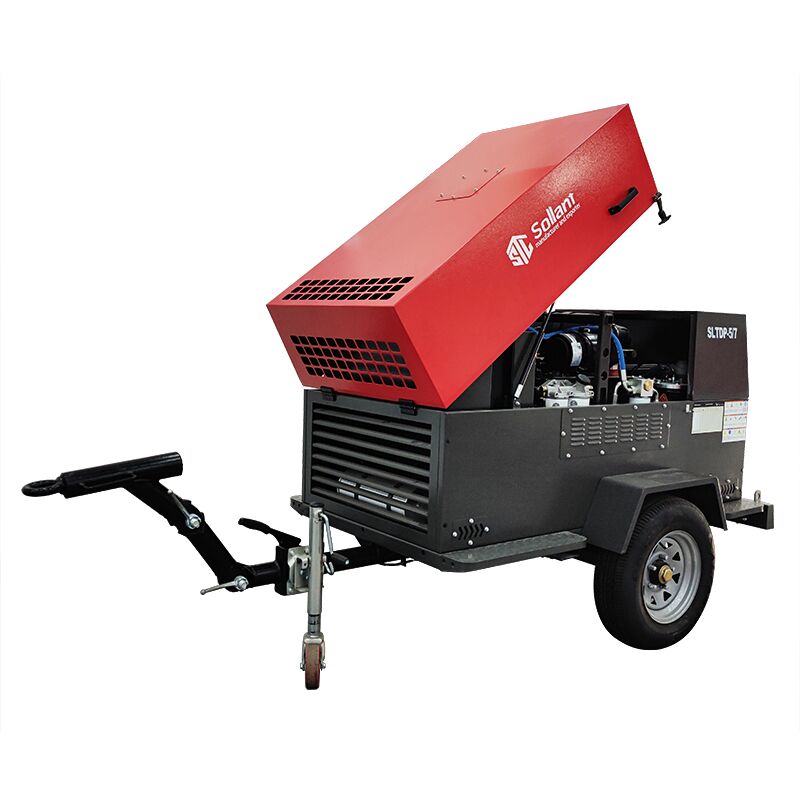
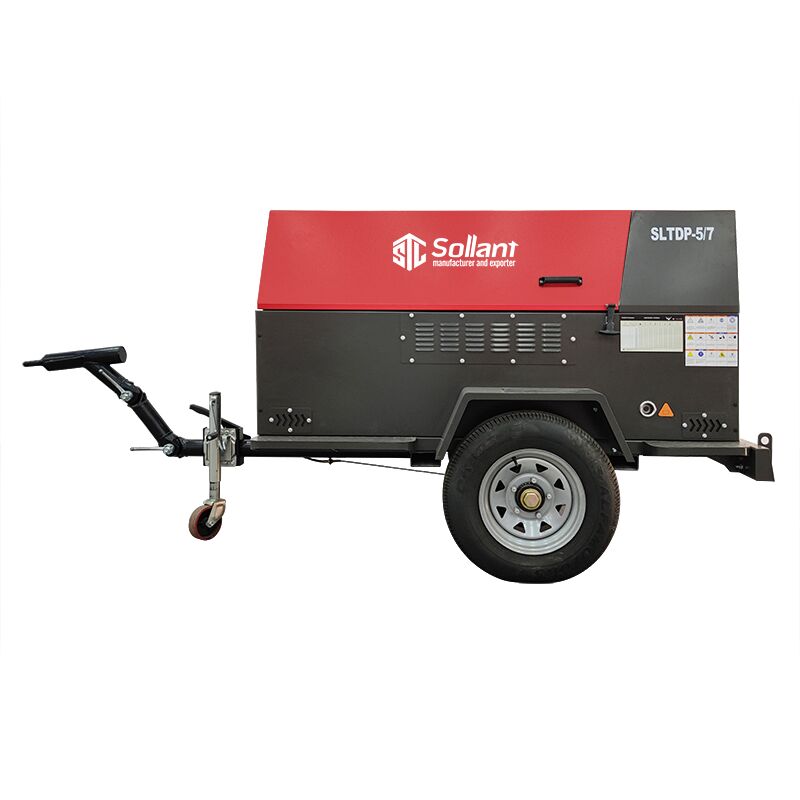
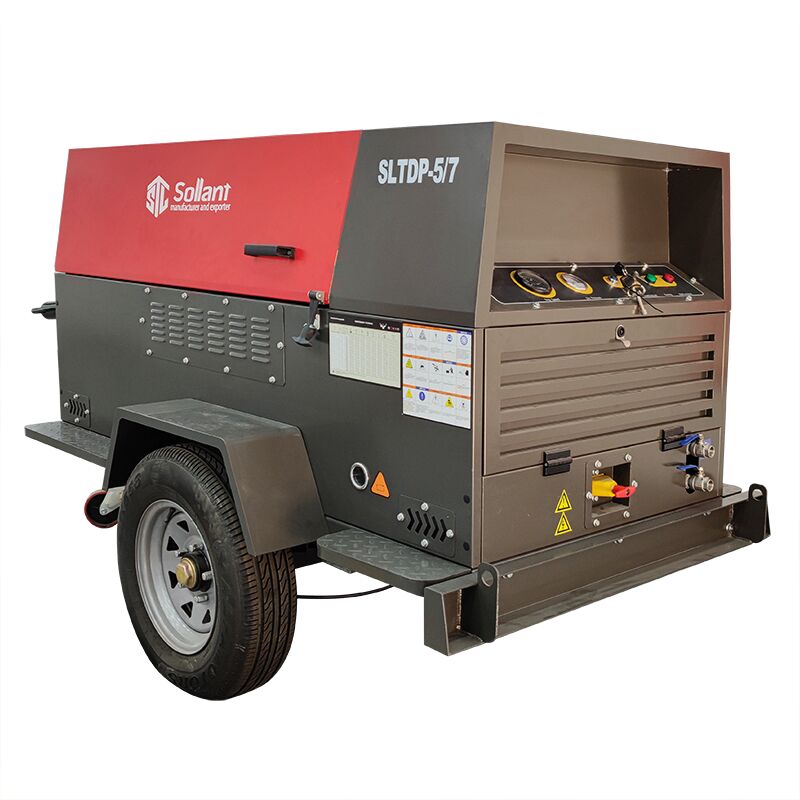
  • Diesel Portable Compressor
  • Gas Compressor
  • Specialty Compressor
  • Air Treatment
ISO 9001 Certified
24-Month Warranty
OEM & ODM Support
Factory Direct Price
All products→
Compressed Air Demand Calculation
Technical Guide

Compressed Air Demand Calculation

Technical Article
10 min read
System Sizing

Compressed Air Demand Calculation

Q_total = Σ(Qi × ni × Ki) × Ks × Kf

Q_total, total system air demand in CFM. Qi, consumption per unit. ni, number of units. Ki, Ks, Kf are three correction coefficients for operating state, simultaneity, and pipe losses respectively.

Ki

This is where the calculation either means something or turns into a fiction that happens to have numbers in it.

Continuous equipment, pneumatic conveying, pumps, anything that stays on and does not cycle: Ki 0.9 to 1.0. Nothing else to say about those.

Intermittent equipment. Reference books say 0.3 to 0.5 and leave it at that, which is about as useful as saying a car gets "somewhere between 15 and 40 miles per gallon." A pneumatic clamp with a 2-inch bore, 0.8-inch stroke, single action eats about 0.0014 cubic feet at 90 psi. Production cycle 10 seconds, clamp and release once per cycle, that is 12 actions per minute, roughly 0.017 CFM. The nameplate on that same clamp says "air consumption 10 CFM." Where does 10 CFM come from? The cylinder running full speed nonstop reciprocation, which never happens in production. So the clamp is consuming about 1% of nameplate. Ki is 0.016. Not 0.4. Not 0.3. 0.016. If each clamp cycles every 15 seconds, two actions per cycle, 0.002 cubic feet per action, consumption is about 0.014 CFM. Ki becomes 0.0013. With 12 sets across multiple stations running at who knows what individual rates, 0.4 as a blanket number is conservative, and that conservatism goes straight into the compressor price tag and the electricity bill for the next decade.

Nobody is going to do this math for every single clamp and cylinder on a shop floor. Fine. At minimum, figure out how often the thing fires. A press line running 4-second cycles has pneumatics banging away constantly. An assembly station with a 30-second manual load step barely uses any air. Writing 0.4 for both is lazy and the compressor selection will reflect that laziness, either too big or too small.

Air guns and pneumatic wrenches, Ki 0.1 to 0.3. Same gun, hand it to two different guys, one of them uses twice the air. If nobody has observed the operators and timed their usage, go with the higher number because underestimating random tool use causes pressure drops that piss off everyone on the floor.

Ks and Kf

Ks, simultaneity. Under 5 machines 0.9, five to ten 0.8, ten to twenty 0.75, over twenty 0.7. If machines are on a transfer line or PLC-sequenced, push toward 0.9 or higher because linked equipment peaks together.

Kf, leakage plus expansion reserve. 1.1 to 1.3. New systems toward the low end, old systems with decades of fittings that have been bumped by forklifts and never leak-tested toward the high end. Do not get creative with Kf. A maintenance manager who says "just go big so we never have problems" has never looked at the power bill.

Calculation Example

Machining shop. CNC machining centers, 4 units, 28 CFM each, continuous operation. Pneumatic clamps, 12 sets, 10 CFM each, intermittent. Air guns, 6 units, 18 CFM each, random use.

CNC centers, continuous, Ki 0.95:
28 × 4 × 0.95 = 106.4 CFM

Pneumatic clamps, medium cycle, Ki 0.4:
10 × 12 × 0.4 = 48 CFM

Air guns, random, Ki 0.2:
18 × 6 × 0.2 = 21.6 CFM

Total: 176 CFM.

22 pieces of equipment, Ks = 0.7. New system, moderate expansion planned, Kf = 1.2.

Q_total = 176 × 0.7 × 1.2 = 148 CFM
148 CFM
Calculated Demand
10-15%
Selection Margin
160-175 CFM
Compressor Size

Add 10% to 15% for compressor selection margin. Target a machine rated 160 to 175 CFM.

That Ki of 0.4 on the clamps is doing a lot of heavy lifting in this number. The 48 CFM from clamps is a third of the subtotal, and if the clamps are closer to Ki 0.05 based on observed cycle times, that 48 drops to 6, and Q_total drops from 148 to about 90. The compressor goes from a 75 kW machine to a 45 kW machine. This is not an academic difference. It is tens of thousands of dollars in equipment and years of electricity bills at different rates.

Variable Load

148 CFM, day shift, everything running.

Night shift the same shop has two CNCs on unattended roughing, four clamp stations, one guy with a gun. Around 63 CFM. Weekends, maintenance proving out a program on one machine, maybe 31.

A Kaeser CSD 75 at a plant in Indiana was eating inlet valve kits every fourteen months. Manual says 8,000 hours. Plant ran about 6,200 hours a year. Should have been fine. Someone pulled the data logger. Second shift: load eleven seconds, unload thirty-eight, load eleven, unload thirty-eight, all night, five nights. 57 CFM of demand against 178 CFM of compressor. Over 900 load/unload cycles per shift. Kit was $1,100 each time. The compressor worked fine on day shift. Nobody had calculated second shift. Nobody had even asked about it.

The inlet valve is a wear item. It is supposed to last. What kills it is not running time, it is transitions. Every load event slams the valve open. Every unload event lets it close. A compressor at 90% load with a 10 psi deadband might cycle once every few minutes. The same compressor at 30% load cycles every forty or fifty seconds. The total number of transitions per year can be five or ten times higher on light-load shifts even though the compressor runs fewer hours.

The fix at that plant was a CSD 45 fixed-speed, about 80 CFM, paired with an SFC 55 VSD at about 100 CFM. Day shift both run, VSD trims. Second shift the Sigma Air Manager drops the fixed-speed and the VSD carries it near 60% speed. Weekends, VSD alone near its floor. Two years, no valve kit on either machine. Second shift power draw dropped enough that it stopped coming up at budget meetings.

VSD compressors modulate motor RPM to match demand. The energy savings are all over the map depending on installation details. At that one Indiana plant, power monitoring on the SFC 55 at 60% output showed about 63% of full-load amps. The old CSD 75 at the same average output on load/unload was 78%. That is one data point at one site. The manufacturer brochures will show better numbers. Those numbers come from a test cell, not from a plant running in August in a compressor room where the ventilation louvers are half blocked by a pallet of boxes someone shoved in front of them.

Every VSD has a turndown floor, typically around 25% of rated capacity. Below that the drive shuts the motor off and restarts on a pressure signal. If weekend demand is 31 CFM and the VSD is rated 178 CFM, 31 is 17% of rating. Below the floor. The machine cycles. The drive premium, $15,000 to $20,000 over fixed-speed on that frame size, buys nothing at that operating point.

This is also why a single VSD sized for peak does not solve the multi-shift problem. Peak 148 CFM, buy a 160 CFM VSD. Day shift 92% load, fine. Weekend 19% load, below the floor, cycling. The two-compressor configuration costs more on the purchase order. It costs less over five years of electricity. This keeps being true every time someone runs the comparison.

Demand profiling comes down to listing every shift and seasonal pattern and running Q_total for each one. Automotive tier-one suppliers have seasonal ramps because OEMs move launch dates around. Food and beverage plants spike before holidays. These swings should be on paper before anyone talks to a compressor salesman.

Receiver Tank

3 to 5 gallons of storage per CFM of compressor output. 175 CFM system gets a 660-gallon vertical ASME tank, which is a standard catalog item that every distributor stocks. For steady-load plants this is adequate and there is not much else to discuss about it.

Intermittent loads are a different conversation, and one that usually does not happen until the pressure complaints start. A 200-ton stamping press with pneumatic die cushions and blowoff pulls 30 to 40 CFM during the stroke, maybe two seconds, then nothing for four seconds, then another stroke. Average press demand is 10 or 12 CFM. The compressor covers the average. During the two-second stroke, the press wants more than the compressor has uncommitted. The shortfall comes out of the receiver. If the receiver is small, the pressure sags every stroke. The gauge shows a sawtooth. Downstream regulators start hunting.

V = (C × T × Pa) / (P1 − P2)

V is volume in cubic feet, C is spike demand above compressor surplus in CFM, T is spike duration in minutes, Pa is atmospheric at 14.7 psia, P1 upper pressure, P2 lowest acceptable pressure. Most people look this formula up when they need it and forget it immediately afterward.

One press, maybe 10 CFM net spike for 2 seconds across a 5 psi tolerance band: about 7 gallons. The main receiver does not notice. Four presses, a transfer conveyor blowoff, a palletizer with sixteen suction cups cycling every few seconds, the aggregate spike is a different story. The formula should be run for the worst-case simultaneous event. Mostly it is not. Mostly someone installs the standard 660-gallon tank, pressure complaints start three months later, and then the troubleshooting begins with pipe sizing and regulator adjustments when the pipe and the regulators were never the problem.

A secondary receiver at the point of use fixes this. 120-gallon tank on the wall next to the press line, short pipe run off the header, dedicated to that cell. The press draws from the local tank. It refills between strokes from header pressure. The pressure disturbance stays local. The CNC machines on the other end of the building do not see it.

VSD systems need receiver volume to cover the two to four seconds the drive takes to ramp motor speed. One plant assumed a VSD meant less storage was needed. Discharge pressure was dipping 9 psi every time a bank of solenoids fired on a welding cell. A 240-gallon secondary receiver at the cell stopped it. The main receiver was still undersized and eventually got replaced six months later after budget came through. The secondary tank held things together in the meantime.

Pressure

P_source = P_end + ΔP_pipe + ΔP_dryer + ΔP_filter + ΔP_margin

P_end is whatever the equipment spec sheet says. Pipe, dryer, filters, margin, they all add up. For the machining shop with CNC machines needing 90 psi at the tool:

Compressed air system piping
P_source = 90 + 4 + 4 + 6 + 7 = 111 psi

Pick a 115 psi compressor.

Calculate the filter drop assuming the element is halfway to clogged because nobody changes filter elements on schedule. If the plant has 600-plus feet of main header with branches running off to every corner and someone decided to save money with undersized pipe twenty years ago, do a pressure drop calculation instead of guessing 4 psi. Machines at the far end of a long undersized header end up at 75 psi and operators complain their tools are sluggish. They will be right.

Equipment Data

Manufacturer documents first. If those are gone, lost, or never existed, put a flow meter on the equipment and measure. Spend more time watching the process cycle and calculating Ki from observed behavior than hunting through reference tables. A Ki derived from watching the machine run for two hours holds up. A Ki pulled from a table in a textbook written in 1987 might not.

Footer Component - SOLLANT
滚动至顶部