Our Products
Compressed Air Solutions
  • Screw Air Compressor
  • Oil Free Compressor
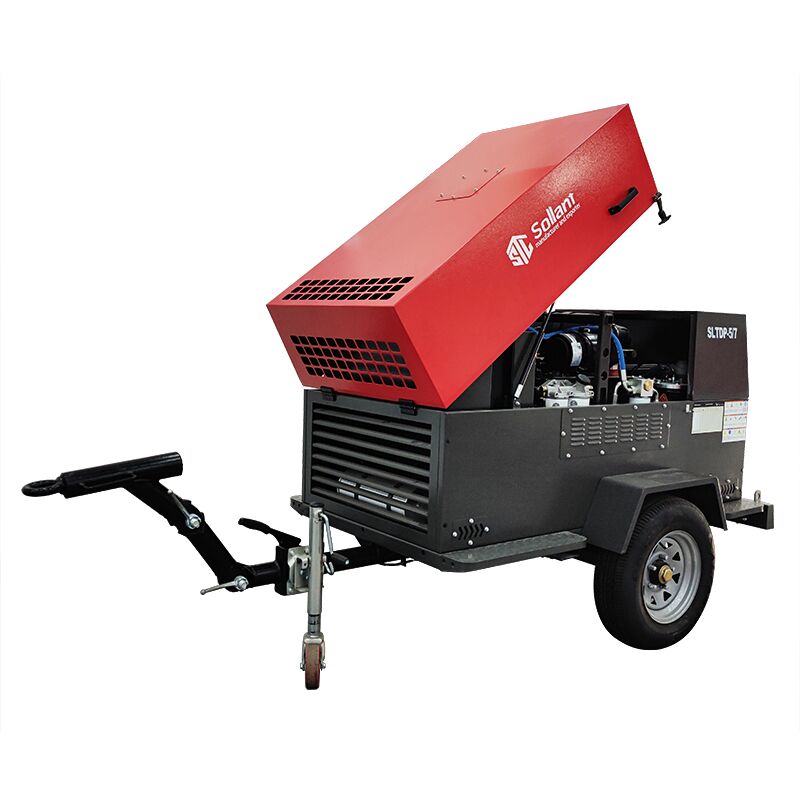
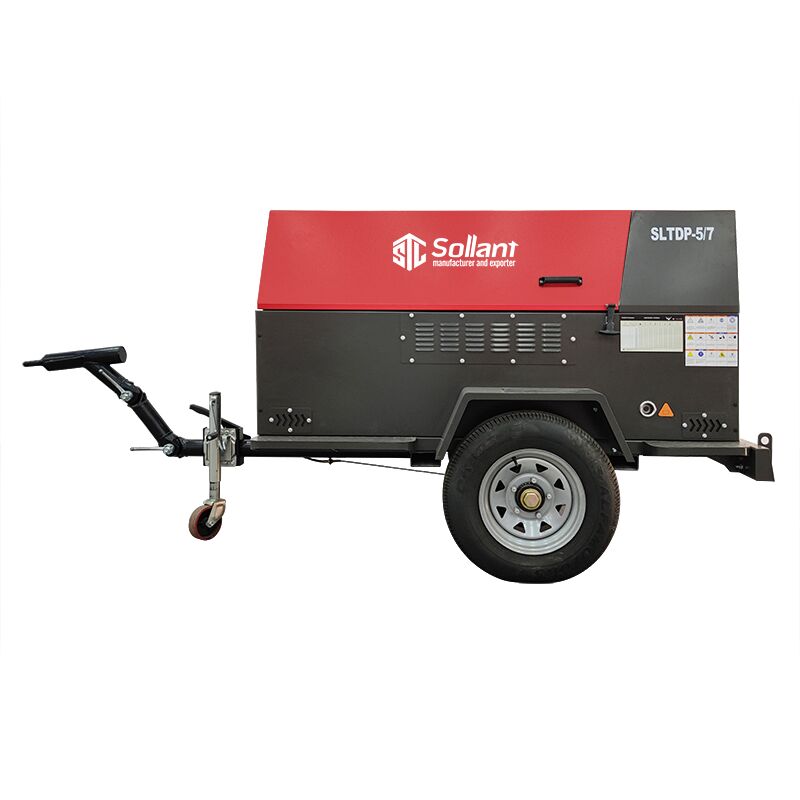
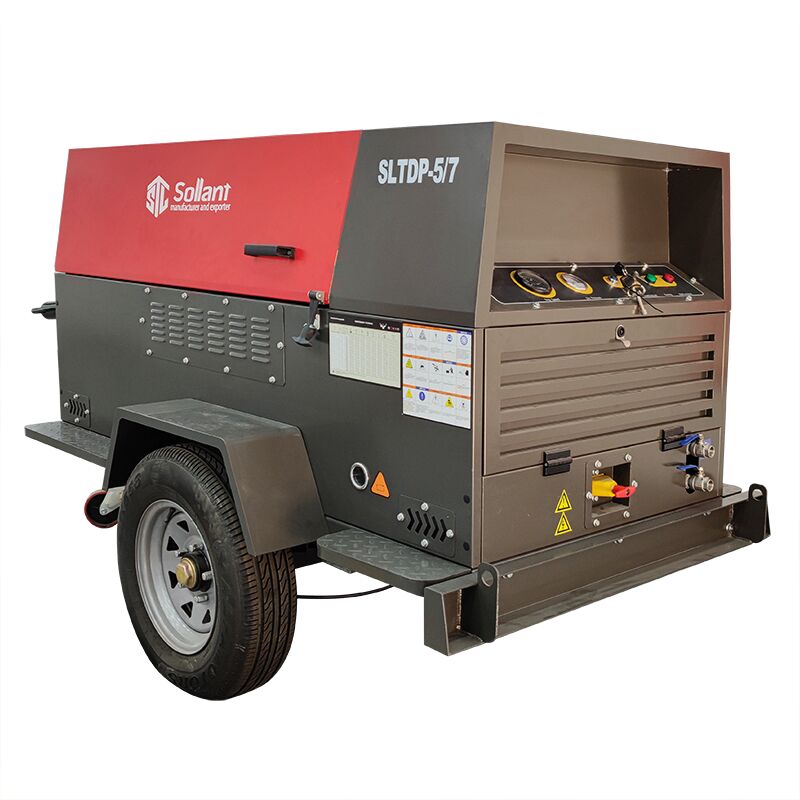
  • Diesel Portable Compressor
  • Gas Compressor
  • Specialty Compressor
  • Air Treatment
ISO 9001 Certified
24-Month Warranty
OEM & ODM Support
Factory Direct Price
All products→
Compressed Air System Audit
Technical Guide

Compressed Air System Audit

Technical Article
20 min read
Energy Audit

ISO 11011:2013 "Compressed Air Energy Efficiency Assessment" provides an international framework for system audits. There's considerable distance between the standard text and what happens on the ground.

Step 1

Baseline Data Collection

Equipment list looks simple, doing it is a hassle.

Machines sitting in the compressor room, model, power, output capacity, all on the nameplate. Nameplate data and field performance often don't match. A machine rated 350 CFM that's been running twelve years, output might only be 275-280 CFM. Record purchase year. Equipment from 2010-2013 has noticeable efficiency gap, related to technical iteration in screw rotor machining precision and the IE2-to-IE3 motor class transition that was happening in that window.

Collect 12 months of electricity bills. Bills from finance department usually only have total amount, need to get meter reading records from electrician or request usage details from power company. Peak-valley price difference in some regions approaches 3x, this info is needed later for economic analysis.

Maintenance record quality varies wildly. Well-managed factories have complete equipment ledgers, every oil and filter change has signature records. Most factories' maintenance records are just a few handwritten papers, scribbled writing, fuzzy dates, "changed filters" three words covering everything. Run into the latter situation, can only ask maintenance workers on site, their verbal descriptions are often way more detailed than written records.

Production shifts and air-using equipment list go together. Three-shift factories have relatively flat load curves. Single-shift factories have obvious start-stop fluctuations at 8am and 6pm. Equipment list takes the most time. Big factory with hundreds of use points, spray guns, cylinders, pneumatic valves scattered in every corner, surveying once might take two or three days.

Step 2

Supply-Side Measurement

Clamp-on ammeter measurement

Clamp-on ammeter reads current, compare to nameplate current, roughly know load rate. 100 hp motor full load current around 135A, measures 90A, means this machine isn't eating full.

Just looking at current isn't enough. Gotta squat next to the machine and time it. Load, unload, load, unload. Stopwatch records duration of each state. Thirty minutes minimum, sometimes gotta squat over an hour to see the pattern. Some machines load four minutes unload two minutes, some load one minute unload seven or eight minutes. Latter means serious oversizing. Fixed speed machine in unloaded state is idling, electricity still burning, no air produced.

Discharge pressure and temperature are routine items. Factory's original pressure gauge drifting a few psi is normal, bring a calibrated reference. Temperature, shoot the outlet with IR gun. Air-cooled machine normal discharge temp is 20 to 25°F above ambient. Over 35°F above, time to check the cooler.

Aftertreatment equipment pressure drop. This one. Refrigerated dryer, filters, oil-water separators, gas passes through one checkpoint and loses a bit of pressure. Looking at each device separately 2-3 psi doesn't seem like much. String them together, total exceeds 8-10 psi. Kaeser published a technical bulletin with the number, roughly 1% energy penalty per 2 psi of pressure elevation that the compressor has to compensate. Nobody reads that bulletin. Maintenance team doesn't know about it. Management doesn't know about it.

The compressor just quietly works harder and the electricity bill quietly gets bigger and everybody's looking at other line items trying to figure out why energy costs went up. Meanwhile the aftertreatment chain is sitting there eating 9-10 psi and nobody has checked the differential pressure across those filters in, what, ever? The filter housings on some of these older installations don't even have ports for differential pressure gauges. So unless someone deliberately installs tapping points upstream and downstream of each element, this loss is invisible. It sits there year after year.

Plants that do annual filter element changes based on calendar schedule might be changing elements that still have life, or more commonly, running elements that should have been changed three months ago. A clogged coalescing filter can add 5-6 psi by itself on top of the 2-3 psi it drops when clean. That single filter is now costing more in electricity than the replacement element costs. The economics are absurd when you lay them out, yet this is standard operating condition in most plants.

Step 3

Demand-Side Measurement

Main header end pressure. From compressor station outlet, follow the pipe all the way to the farthest shop. Compressor station outlet 100 psi, shop end 85 psi. Pipe too small, too many elbows, valve half-open, pipe inner wall scaled.

Branch line pressures need to be marked on a diagram. Shop A end 90 psi, Shop B 80 psi, Shop C 72 psi. Shop C operators might have been complaining about not enough air for a while, equipment running slow.

Flow measurement is more troublesome. FLEXIM meter is over $15,000. The calibration procedure is fiddly. Pipe surface prep has to be done right or phantom readings will waste an hour. Small and medium enterprises usually won't buy this equipment for one audit. Either rent, or hire third-party testing agency to bring equipment. Can do audit without flow data too, just less precision, more assumptions needed in later energy calculations.

Step 4

Leak Detection and Evaluation

This is where all the money is. Everything else in the audit is preparation for this section and the energy calculation that follows it.

Find a production downtime window. Weekend, lunch break, or holiday works. Shut off all air-using equipment, leave only the pipe network pressurized. Start compressor, observe load-unload cycle. Under zero load condition, air the machine produces during loading is all going to replenish leaks. Loading 3 minutes unloading 7 minutes, leak rate 30%. Nearly one-third of compressed air escaping through fittings, hose connections, corroded joints, quick-connects that weren't seated right.

Compressed Air Challenge Best Practices manual puts North American factory average around 25%. That number seems low. Domestic factories are generally higher. The Pearl River Delta factories that get audited tend to run 30-40%. Under 10% counts as well-managed. A couple of Japanese-owned plants manage it because they run weekly leak patrols with dedicated crews, fixed headcount, fixed route, fixed checklist. That level of discipline is unusual. Over 20% needs attention. Over 30% is an emergency that's been quietly running for years.

Locating leak points uses ultrasonic leak detector. SDT 340. That's the unit. Sensitive, lightweight, parabolic attachment works in noisy environments where other detectors just pick up background machine noise and become useless. The gain adjustment range is wide enough to work in a quiet compressor room and also on a stamping press floor. Battery life is solid for a full day of surveying. The carrying case is mediocre, the foam insert starts falling apart after a year, not a big deal but annoying. CTRL makes a unit, UL101, lower price point, fine for quiet environments with large obvious leaks. Fluke has an acoustic imaging camera, ii910, north of $30,000, not worth discussing for most audit budgets.

A 90,000 square foot shop's first comprehensive survey, finding two or three hundred leak points is common. Tag and number them, record locations, grade by leak volume. DOE compressed air tip sheet has an orifice table, 1/8" hole at 100 psi leaks around 50-something CFM. Fix big leaks first. Go after the top 20% of leak points by volume. The remaining small weeps can wait for next pass.

Here's what doesn't get discussed enough in the standard audit literature: leak recurrence rate. Fix 200 leak points in January. By June, 60-80 of them are leaking again. Not the same fittings necessarily, though some of them yes. Vibration loosens threaded connections. Hoses age and crack. Quick-connects wear. New equipment gets installed with new fittings that weren't tightened properly. The pipe network is a living thing that generates new leaks continuously.

Any audit report that presents leak repair as a one-time project with a clean ROI number and then moves on is doing the client a disservice. The ROI number is correct for the first six months. After that, without a maintenance program, leak rate drifts back toward pre-repair levels. Within 18 months, most of the savings are gone. This pattern has repeated at enough plants that it should be considered the default outcome when there's no ongoing leak management program. The audit should not just recommend "repair leaks" as a line item. The audit should recommend establishing a permanent leak management program: monthly spot-check of known problem areas (thread sealant joints on galvanized pipe, rubber hose connections, FRL units on production equipment, all quick-disconnect points), quarterly recheck of previously repaired points with the ultrasonic detector, annual comprehensive survey of the full facility. Without this structure, leak repair is a temporary fix with a temporary benefit, and the money spent on the next audit two years later will reveal the same problems again.

Step 5

Energy Consumption Calculation

Core metric is specific power: kWh consumed to produce one cubic meter of air. Total compressor station electricity consumption divided by effective air supply. Effective air supply has to subtract leak losses, so leak testing comes first.

What specific power is good? Manufacturers quote 0.10-0.11 kWh/m³ for modern VFD screw machines under rated conditions. Field numbers are different. 0.13-0.17 kWh/m³ is the range that shows up over and over across different plants, different machine brands, different piping layouts. The spread within that range depends more on system configuration than on the compressor itself. Two identical 75 kW machines, one feeding a ring main with 8% leaks, the other feeding a dead-end layout with 35% leaks, completely different specific power numbers from the same hardware.

Calculate specific power 0.14 kWh/m³, benchmark against 0.11, gap is 21%. Annual consumption 1.2 million kWh, theoretical saving potential 250,000 kWh. At $0.10/kWh, that's $25,000 per year on paper. No project delivers 100% of theoretical savings. 70-80% capture rate is a good outcome.

Step 6

Improvement Plans

Pressure optimization costs almost nothing, just adjusting setpoints. Many factories sit at 110 psi or even 115 psi, 95% of pneumatic equipment works fine at 90 psi. Execution resistance is bigger than the technical difficulty. Maintenance staff worry about equipment problems if pressure drops, prefer conservative high settings. Individual stations that do need high pressure should get local boosters, not a system-wide pressure increase.

VFD retrofit is bigger investment. One 100 hp VFD screw machine landed price around $50,000. Energy saving effect depends on how bad the original situation was. Replacing a severely oversized fixed-speed machine that sits at 40% average load, payback under two years is achievable. If the original system was already sized reasonably and average load factor is above 75%, VFD benefit is marginal and payback stretches past five years.

There's an overselling problem with VFD in the compressed air industry right now. Equipment distributors push VFD retrofit as the universal solution because it's a $50,000 sale versus a $3,000 leak repair project. The number of plants that have spent $50,000-80,000 on a VFD machine and then never bothered to fix their 30% leak rate is not small. That VFD machine is now efficiently producing compressed air, 30% of which immediately escapes through holes in the pipe. The correct sequence is fix leaks first, optimize pressure second, then reassess whether VFD is still justified. Often after the first two steps, the existing fixed-speed machine runs at a much better load factor and the economic case for VFD weakens considerably. Sometimes it still makes sense. Sometimes it doesn't. The audit report should present the analysis honestly either way, not default to recommending VFD because it's the most impressive-looking capital project.

Improvement planning

Leak repair, covered extensively above. Material cost few hundred dollars, labor by hours. $3,000-5,000 can complete one comprehensive repair, payback usually under six months. Not going to repeat the argument for ongoing leak management here.

Heat recovery. Compression heat accounts for about 90% of input energy, that's thermodynamics. Air-cooled machine hot air, water-cooled machine hot water can both be recovered. Winter shop heating, process preheating, domestic hot water supply are all uses. The seasonal mismatch problem kills most projects. Factory in southern China running compressors 12 months, heating demand 3 months. Equipment and piping cost $20,000-30,000. Savings concentrated in winter months maybe $4,000-6,000 per year. Payback five to seven years on mechanical equipment that needs its own maintenance. Different story for food processing, textile dyeing, any operation with year-round process hot water demand where recovered heat displaces gas-fired or electric heating continuously. In those cases the math works. For everyone else, heat recovery is the recommendation that sounds impressive in the audit report and then sits there unimplemented because procurement can't justify the spend, and that's the correct decision.

Step 7

Tracking and Verification

Same testing methods done again after completing changes. Leak rate dropped from 28% to how much, specific power dropped from 0.14 to how much, end pressure stable at how many psi. Data comparison goes in the report. This is both closing out this round of audit and leaving baseline for next round. Continuous tracking is more valuable than one-time audit. Establish monthly inspection routine. Do focused area recheck every quarter. Do comprehensive leak detection annually. Make these actions part of the maintenance schedule with assigned responsibility, or they won't happen.

Footer Component - SOLLANT
滚动至顶部