Our Products
Compressed Air Solutions
  • Screw Air Compressor
  • Oil Free Compressor
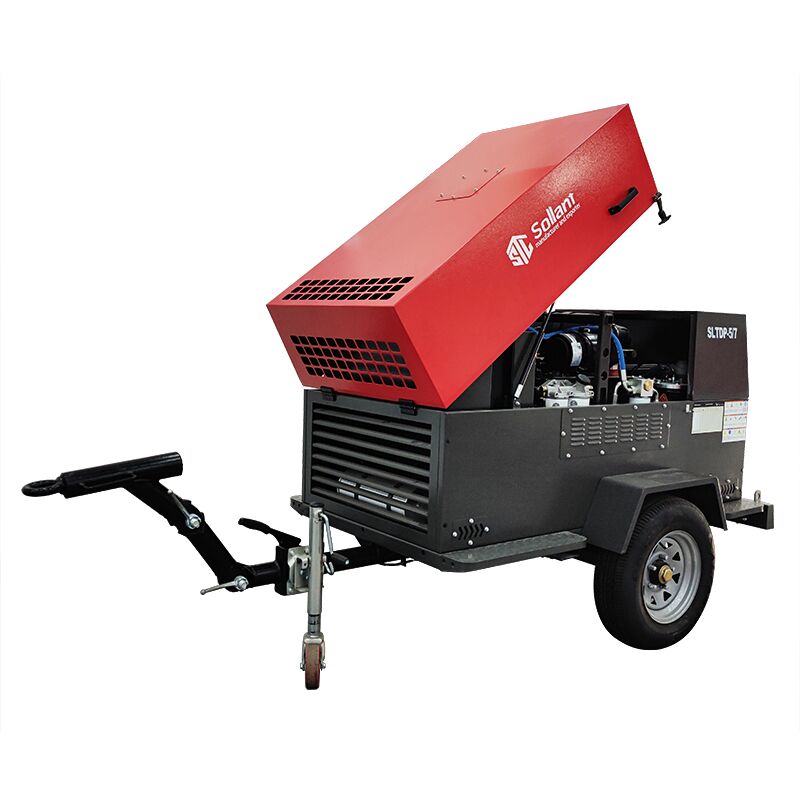
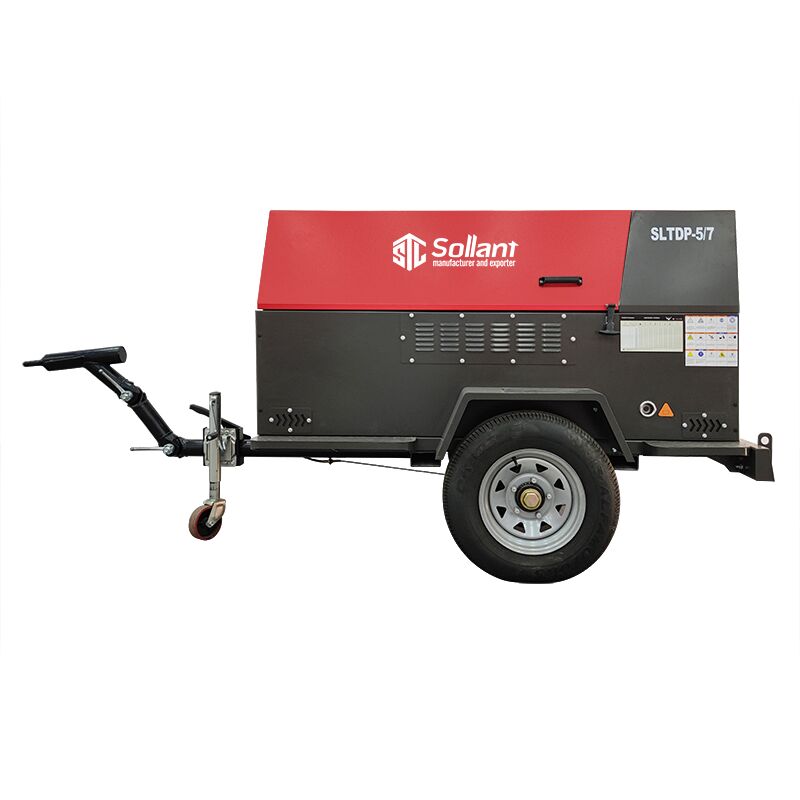
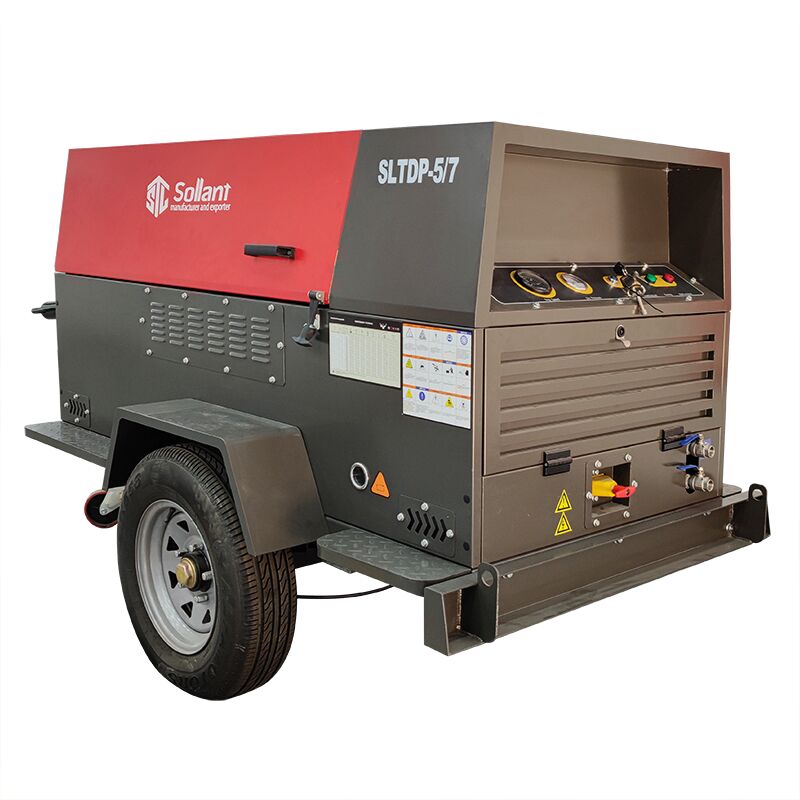
  • Diesel Portable Compressor
  • Gas Compressor
  • Specialty Compressor
  • Air Treatment
ISO 9001 Certified
24-Month Warranty
OEM & ODM Support
Factory Direct Price
All products→
Can Ingersoll Rand's 72x P/E Hold Up?
Investment Analysis

Can Ingersoll Rand's 72x P/E Hold Up?

2026.02.06
27 min read

Next Thursday (February 12) after the bell, Ingersoll Rand (NYSE: IR) reports Q4 earnings. Wall Street's expectations are $0.91 per share and $2.04 billion in revenue.

I've spent quite a bit of time recently going through this company's SEC filings, patent database, earnings call transcripts, and Glassdoor employee reviews, and found some things. The short version is: the market is valuing Ingersoll Rand at 72x PE, buying it like it's the next Danaher, but the company's return on invested capital (ROIC) is actually only 8.2%, below its own cost of capital of 11.2%. In other words, every additional dollar this company earns is theoretically losing money for shareholders.

Industrial manufacturing equipment
From a 154-year-old Gardner Denver to a $38.4 billion Ingersoll Rand

How Ingersoll Rand got to where it is today starts with KKR paying $3.9 billion for Gardner Denver in 2013. At the time Gardner Denver was already 154 years old, with core customers concentrated in oil and gas, and then shale oil prices crashed and the whole company was a mess. KKR's Peter Stavros turned it into a testing ground for his "employee ownership" philosophy, and in 2016 brought in Vicente Reynal as CEO.

Reynal's background is key. Born in Puerto Rico, mechanical engineering undergrad at Georgia Tech, dual master's from MIT, then 11 years at Danaher. I don't need to explain what Danaher's DBS lean management system means in the industrial world. Reynal came over carrying that exact playbook.

When Gardner Denver re-IPO'd in May 2017, they pulled a move that's been cited over and over since: they gave 6,100 non-management employees stock grants equivalent to about 40% of each person's annual salary, $100 million total, effective immediately. No vesting period, no strings attached. According to Stavros, factory workers in India called home on the spot to say they'd become shareholders of a U.S. public company. Many people genuinely changed their work attitude because of it. Over the next two years the company cut 30% of management and reduced net working capital as a percentage of revenue by 30%.

In February 2020, Gardner Denver merged with the industrial segment of old Ingersoll Rand through a reverse Morris Trust. The new company took the name Ingersoll Rand (IR), with Reynal continuing as CEO. Old Ingersoll Rand's HVAC and transport refrigeration businesses were spun off into what is now Trane Technologies (TT). KKR fully exited in 2021, making $4 billion.

As of now, Ingersoll Rand has a market cap of $38.4 billion, TTM revenue of about $7.46 billion, and two segments: Industrial Technologies & Services (ITS: air compressors, vacuum pumps, blowers, power tools) and Precision & Science Technologies (P&ST: precision pumps, fluid management, life sciences).

• • •

There's been some action on the compressor side lately.

In January this year Ingersoll Rand launched the RSbn Nirvana series in India, 7 to 250 kilowatts, with built-in VFD plus IE5 permanent magnet motors. IE5 is the highest efficiency class under IEC, and this series features automatic shutdown at zero load. It targets textiles, general manufacturing, and other scenarios where load fluctuation ranges between 30% and 90%. Around the same time they also updated the R-Series in the 90 to 160 kilowatt range, equipped with V-Shield technology (PTFE stainless steel braided oil lines with O-ring face seals, claiming zero-leak design), PAC adaptive control, and the Helix IIoT platform. Variable frequency models use IE5 motors with hybrid reluctance motor (HRM) technology, claiming 18% efficiency improvement over the previous generation.

The launch event stuff is out there for everyone to see. What I care about more is what they've been doing at the USPTO.

I went through recently granted patents under Ingersoll-Rand Industrial U.S., Inc. on Justia Patents, and there's something pretty interesting in there.

Patent 12480530 — Centrifugal Acceleration Stabilization Ring

A patent granted last December (12480530) puts a "centrifugal acceleration stabilization ring" in the vaneless space of a centrifugal compressor diffuser, forcibly redirecting the high-velocity circumferential flow thrown off the impeller into radial flow before feeding it into the vaned diffuser. Sounds like a minor tweak, but for centrifugal machines even a few points of stage efficiency improvement is significant, because a large centrifugal compressor's annual electricity bill can run into the millions of dollars. If this thing can be applied to the MSG series, that's going straight at Atlas Copco's ZH/ZR product line.

There's also a set of patents on internal cooling of screw rotors, running cooling channels inside the rotor grooves with structural ribs to maintain rigidity. I asked a friend who does compressor design, and he said the concept isn't new but has always been very hard to engineer because of rotor machining precision and sealing issues. Ingersoll Rand filing a patent doesn't mean they can mass-produce it, but it at least shows they're seriously investing in this direction. If rotor temperature can be controlled under high pressure ratio conditions, specific power consumption drops quite a bit.

There's also a smaller one: patent 12468321, granted last November, uses the system's own compressed air and vacuum to drive the inlet valve and unloader valve. Eliminates the solenoid valve, one fewer failure point. This kind of thing looks unremarkable on its own, but for aftermarket service, a lower failure rate is real money saved.

Zooming out, these patents taken together show where their R&D is heading: centrifugal efficiency, screw machine thermal management, system simplification. Probably still one to two years from actually becoming products.

• • •

The life sciences side is a lot more complicated than compressors.

P&ST Segment Q3 2025

Adjusted EBITDA margin hit 30.8%. Q3 orders were up 11% year-over-year, book-to-bill 1.01.

ILC Dover Acquisition

Bought in February 2024 for $2.325 billion, at 17x estimated 2024 EBITDA. Life sciences ~75% of revenue, plus aerospace (NASA spacesuits since Apollo).

On January 5, 2026 they also acquired Scinomix, a lab automation company doing tube labeling, barcode scanning, cap tightening. Roughly 10x EBITDA. The logic is bundling it with existing precision pumps and fluid management products into an end-to-end lab solution.

There's another number a lot of people haven't noticed: in its 2023 annual report, Ingersoll Rand set a target of $1 billion in recurring revenue by 2027. The 2023 base was only $200 million. (Source: Durable Value Creators analysis of Ingersoll Rand's annual report) This $1 billion includes IIoT platform subscriptions, maintenance contracts, ILC Dover consumables, and SaaS-type revenue. If they actually pull it off, recurring revenue share jumps from under 3% to over 10%, and the valuation logic changes fundamentally.

Then ILC Dover ran into trouble.

Aerospace and space technology
ILC Dover has made spacesuits for NASA since the Apollo era

In Q2 2025 (reported July 31), Ingersoll Rand disclosed a non-cash impairment. I went through the entire Q2 earnings call transcript. CFO Vikram Kini essentially said the impairment was driven by two main things: the high-pressure solutions business (a minority stake retained after selling majority ownership in 2021, written down due to declining upstream oil and gas demand) and ILC Dover.

ILC Dover got cut three ways.

The aerospace and defense business lost a major customer. Analysts pressed on the call to find out who exactly, and Reynal eventually said: it was a next-generation International Space Station program, funding had been approved in the "big beautiful bill" but delivery timelines were pushed back severely. Then the biopharma segment's goodwill was also impaired. Management said long-term forecasts "remain robust," but higher discount rates plus contracting peer valuation multiples meant book value couldn't hold up. ILC Dover's brand name was also written down by some amount.

The most intriguing part was this line. Kini said: "In the ILC Dover transaction, representations and warranties were backed by insurance, and we have filed a claim under that policy."

That sentence carries way too much information. Ingersoll Rand is implying that certain conditions at ILC Dover at the time of acquisition may not have matched what was disclosed during due diligence, so they filed a claim with the transaction insurance carrier. A $2.325 billion flagship acquisition, less than two years after buying it and you're already going to insurance. This is not common in industrial M&A.

• • •

The ROIC numbers make me even more uneasy than the ILC Dover story.

GuruFocus data shows Ingersoll Rand's mid-2024 ROIC at roughly 8.15% to 8.23%, with WACC around 11.21% over the same period. What ROIC below WACC means, anyone in finance knows: the company is destroying value.

Why ROIC Is So Low

Goodwill and intangible assets account for 70% of total assets, roughly $12.5 billion. (Source: Panabee analysis of Q4 2024 earnings) In 2024 alone Ingersoll Rand spent roughly $3 billion on acquisitions. All those premiums went into goodwill, the denominator got inflated, and ROIC naturally comes down.

Ingersoll Rand management's response to this is: give us three years. In a June 2024 press release they committed to achieving mid-teens ROIC three years post-acquisition. For those smaller companies bought at 9 to 10x EBITDA, this is probably doable by using the IRX lean system to push margins up 5 to 10 percentage points. But ILC Dover was bought at 17x EBITDA. Getting to mid-teens ROIC in three years requires both revenue and profit to grow substantially, and the reality is the spacesuit customer was lost, goodwill was impaired, and the insurance claim was filed.

I found that June 3, 2024 press release on Ingersoll Rand's IR news page. It contains the line "Demonstrates company's commitment to capital allocation and achievement of mid-teens return on invested capital (ROIC) three years-post acquisition for three different acquisitions." Note this is talking about three different acquisitions and doesn't explicitly say ILC Dover will also get there within three years. Management's wording is very subtle.

• • •

Whether ROIC can come back ultimately depends on how fast the acquisitions are being digested.

Ingersoll Rand did 29 acquisitions in 2025. On the Q3 earnings call they revealed that 14 closed deals year-to-date had an average pre-synergy multiple of 9.5x EBITDA, with another 9 at the LOI stage.

9.5x is cheap for industrial M&A. PE fund competitive bids usually go for 12 to 18x, and strategic deals between public companies 15 to 25x. Ingersoll Rand can get this price because a large share of deals come through non-public channels, directly approaching founders and family business owners, locking them down before investment banks bring them to market. Reynal kept saying "proprietary sourcing" on the call.

The problem is volume. 29 deals a year means on average less than two weeks per closing. Even if each one is small, integration bandwidth is finite.

The IRX operating system is Ingersoll Rand's integration tool. According to a Stevie Awards nomination document, when the merger happened in 2020 IRX covered only 65 processes, and by year-end had expanded to over 200. The core mechanisms are Policy Deployment (executing annual plans across more than 100 P&L-level operating units) and IMPACT Daily Management (daily operational cadence for self-directed work teams). When Ingersoll Rand acquired the Roots blower business they explicitly said: through IRX deployment, adjusted EBITDA margin would exceed 30% within three years.

This system works. The P&ST segment's 30.8% margin is proof. But based on Glassdoor (more detail later), IRX at the frontline level may not be quite as elegant as management describes it.

• • •

I want to mention the November 2025 acquisition of Transvac Systems. I think this one is underappreciated.

Transvac is a company in Alfreton, England that makes ejectors. Ejectors use high-pressure fluid to generate vacuum or mix fluids, can eliminate gas flaring, and are growing fast in desalination and water reuse. Acquisition multiple was "high single-digit" EBITDA.

Ejectors and compressors are natural complements. Transvac's technology can be combined with Ingersoll Rand's product portfolio into hybrid systems covering energy recovery, wastewater treatment, and decarbonization. These markets are policy-driven, with structurally more certain growth than the core compressor business.

• • •

Q3 numbers on the surface had nothing wrong with them. Revenue of $1.96 billion was up 5.1% year-over-year, adjusted EPS of $0.86 squeaked past. But management cut full-year EPS guidance from $3.40 to $3.28. This 3.5% cut directly tanked the stock, down 8.6% within a month.

The sharpest exchange on the earnings call was about tariffs. Vertical Research's Jeffrey Sprague kept chasing the number, and Kini finally gave it: over $100 million now. Last quarter it was still around $80 million, another $20-plus million added in one quarter. The company is already raising prices, but working through backlog takes time, and price pass-through won't fully land until 2026. Barclays' Mitchell came at it from another angle, asking why incremental EBITDA margins looked so ugly. Kini's answer stacked three things together: tariff dilution, insufficient organic volume leverage, and low initial margins from newly acquired targets. If all three of these don't improve simultaneously in 2026, margin pressure will persist. By region, Americas mid-single-digit growth, China low-single-digit (not bad given the current macro), rest of Asia-Pacific mid-double-digit. Reynal added that tariff policy uncertainty is the biggest obstacle and that quite a few customers are waiting on the sidelines.

There's another number buried in the Q&A that's easy to miss but actually very important: backlog was up "high double digits" year-over-year. Demand is actually accelerating, it's just that delivery pace can't keep up and revenue recognition lags. This time gap between orders and revenue is exactly where the biggest disagreement between bulls and bears sits right now.

Where the money goes also tells a story. Q3 alone saw $249 million on acquisitions and $193 million on buybacks (about 2.5 million shares), with year-to-date buybacks totaling $703.3 million. Total liquidity $3.8 billion, total debt $4.79 billion, cash $1.18 billion. Dividends are practically nonexistent, just two cents per share. Management has very clearly chosen to pile money into acquisitions and buybacks instead of dividends. Levering up for acquisitions while simultaneously buying back stock at scale, if you want to be generous you call it confidence in cash flow, if you want to be less generous you call it too aggressive when rates still haven't come down.

Stock market data and financial charts
CEO Reynal sold 191,000 shares on January 16, 2026
• • •

Reynal himself has been selling stock though.

On January 16, 2026, Reynal sold 191,000 shares at an average price of $88.12, cashing out $16.83 million. Direct holdings dropped 49.72%, leaving him with 193,186 shares.

The CEO selling half his stock, timed less than a month before the Q4 earnings report. You can say this is normal portfolio diversification behavior for an executive, or you can say this is a signal that management isn't too confident about near-term performance. Both interpretations work. The February 12 numbers will give the answer.

Meanwhile, on December 17, 2025, Ingersoll Rand announced the appointment of former Tesla President Jerome Guillen to the board of directors (effective January 1, 2026), placed on the compensation committee and the sustainability committee. Guillen led the production ramp of the Model S and Semi truck at Tesla, and also has a resume at Daimler and McKinsey. The sustainability committee placement is an interesting arrangement, possibly preparing at the governance level for ESG-themed fund allocations.

• • •

The Glassdoor reviews are quite far from management's narrative.

Ingersoll Rand's external narrative is "employee ownership culture," with over 25,000 people having received equity grants. But the 1,146 reviews on Glassdoor tell a different story.

Overall rating 3.6/5, down 3% over the past 12 months. 67% of employees would recommend to a friend, but only 57% are optimistic about the company's future.

One 2025 review is very direct (source: Glassdoor employee review): it essentially says the recent short reviews look suspicious because HR has interns writing positive reviews and also encourages current employees to post favorable ones. The real score is probably around 2.5. This review also says turnover is the highest this person has seen in 20 years in manufacturing, with large-scale restructurings every late summer and early fall where titles change, departments change, market focus changes, budgets change.

Another review (Glassdoor culture reviews) goes even harder: after acquisitions the company shifts local supply chains to low-cost countries and uses that plus price increases to boost margins. Engineers who actually design products are almost gone, quality control has been drastically cut, and in many cases the company doesn't even know whether parts meet spec.

I can't independently verify the accuracy of these anonymous reviews. But 3.6 is a low score for a company that positions itself as a cultural benchmark. The manufacturing industry average is 3.5. Ingersoll Rand is right at the average line. If "employee ownership" really runs as deep as management says, this score shouldn't be only 0.1 points above the industry average.

• • •

A comparison with Atlas Copco shows just how outrageous Ingersoll Rand's valuation is right now.

Atlas Copco's full-year 2025 revenue was about SEK 177 billion, roughly $18.3 billion, more than double Ingersoll Rand. Q4 compressor technology organic growth was 7%, and they also did 29 acquisitions for the full year. But the two companies are heading in different directions: Atlas Copco sticks to its four pillars (compressed air, vacuum, industrial tools, power technique) and doesn't extend into life sciences; Ingersoll Rand is running a "industrial fluid plus life sciences" dual track. Atlas Copco trades at roughly 35x PE, Ingersoll Rand 72x. That valuation gap is the price the market is paying for the "life sciences transformation narrative."

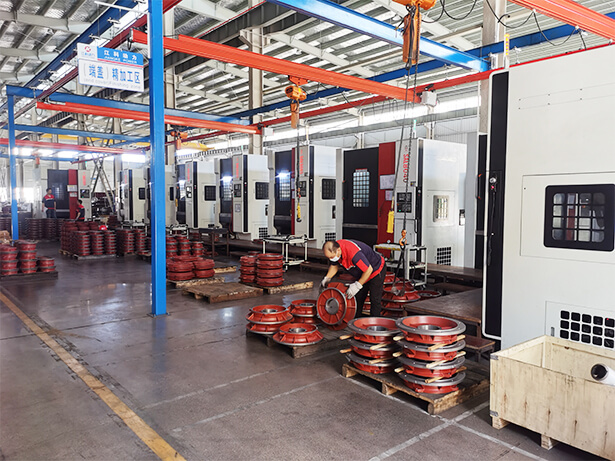
Industrial manufacturing facility in Asia
Domestic Chinese brands have crossed 60% market share — the invisible airend moat is eroding

Competitive pressure in China is changing fast. I've been tracking domestic air compressor progress through earlier industry coverage, and the landscape now looks completely different from three years ago. Kaishan Group is working on magnetic levitation centrifugal compressors. Dong Ya Machinery at this year's sales conference straight-up showed magnetic levitation, dry oil-free screw, two-stage compression, and centrifugal machines as a full product line. Every single one of these used to be something only Atlas Copco and Ingersoll Rand could make. Domestic brands' market share should already be above 60%, VFD penetration has crossed 50%, and IoT plus Equipment-as-a-Service (EaaS) models are also rolling out fast. Also the new national standard GB/T 16665-2025 taking effect May 1 expands energy efficiency evaluation from single machines to entire station systems, meaning going forward you can't just sell the compressor unit, you have to sell system solutions. For foreign brands this is both opportunity and threat.

The Hidden OEM Airend Business

There's one business that's rarely mentioned: Ingersoll Rand's GHH RAND (Germany) and Tamrotor (Finland) do OEM airend supply. (Source: Ingersoll Rand OEM Solutions) Meaning Ingersoll Rand doesn't just sell complete machines, it also sells core components to third-party compressor assemblers. Customers include Champion, Sandvik, Normet, and others. GHH RAND invented the first dry oil-free screw airend in the 1950s. The strategic significance of this business is that even when domestic Chinese brands sell complete machines at half the price of Ingersoll Rand, the airend inside might still be from GHH RAND or Tamrotor. But Chinese manufacturers are accelerating in-house airend development, especially in magnetic levitation and permanent magnet VFD, and this invisible moat will erode over the long term.

• • •

For the Q4 earnings next week, what I most want to hear about is actually ILC Dover. Where has the insurance claim gotten to? Any new updates on funding for that ISS spacesuit program? Is biopharma consumables organic growth accelerating or flattening? Was this $2.3 billion deal bought right but just early, or was it genuinely overpaid? If Q4 keeps producing bad news, the life sciences premium baked into that 72x PE probably can't hold.

Another topic that can't be avoided is ROIC. 8.2% versus 11.2%, a three-percentage-point gap. There's no way management won't get chased down by analysts on this. "Give me three years" has been the line from 2024 until now, and on February 12 they need to bring out something more concrete than that. Will the acquisition pace slow down? Where is the IRX margin improvement curve at? 29 deals in a year, can they actually digest all that?

2026 organic growth guidance also matters, but honestly this number is too influenced by macro and not entirely in management's hands. High-double-digit backlog growth shows the demand foundation is there. The key is for tariffs not to get worse. The procurement shifts and supply chain rerouting Kini talked about should start showing some results in 2026.

• • •

Having written all this I have to give my own take.

Ingersoll Rand's base business of air compressors, vacuum pumps, blowers plus aftermarket service is a good business. Installed base is large enough, customer switching costs are high, if it breaks and doesn't get fixed the factory shuts down. These attributes are real and don't rely on narrative.

The Bull Case

It's not impossible for all these conditions to be met simultaneously. Core business quality is real. Backlog is accelerating. Proprietary deal sourcing at 9.5x keeps the flywheel turning.

The Bear Case

If two or three preconditions go wrong — ILC Dover, ROIC, China, tariffs — the current valuation can't hold. The market has already priced in five years of success ahead of time.

What makes me hesitate is the set of preconditions behind that 72x PE. ILC Dover integration needs to go smoothly, ROIC needs to climb from 8.2% back above WACC, 29 acquisitions need to be digestible, tariffs need to be passed through via pricing, and domestic substitution in China can't accelerate to the point of eroding the airend-level moat. It's not impossible for all these conditions to be met simultaneously, but if two or three of them go wrong, the current valuation can't hold. Reynal selling half his holdings before the Q4 earnings report is something I still can't feel comfortable about.

So if you ask me whether I'd buy at this price, I wouldn't. But if the stock gets hammered down to the low 60s because Q4 numbers don't look good, that would be worth re-running the math. The core business quality is there. The problem is the market has already priced in five years of success ahead of time, and anything goes wrong in between and there's no cushion.

February 12 will tell.

Based on SEC filings, USPTO patent database, corporate earnings call transcripts, Glassdoor employee reviews, and publicly available market data. Does not constitute investment advice.

Footer Component - SOLLANT
滚动至顶部