Our Products
Compressed Air Solutions
  • Screw Air Compressor
  • Oil Free Compressor
  • Diesel Portable Compressor
  • Gas Compressor
  • Specialty Compressor
  • Air Treatment
ISO 9001 Certified
24-Month Warranty
OEM & ODM Support
Factory Direct Price
All products→
How to Design a Compressed Air System for Manufacturing Plants
Technical Guide

How to Design a Compressed Air System for Manufacturing Plants

25 min read
System Design

What most facilities have is a collection of equipment purchased over fifteen or twenty years, each piece bought to solve whatever problem was loudest that month. A new production line went in, pressure dropped, somebody ordered another compressor. The pipes were routed by a pipefitter who had a week. The dryer came bundled in a package deal with the compressor and nobody checked whether it was the right type.

This is expensive. The U.S. Department of Energy's compressed air sourcebook (energy.gov/eere/iep/compressed-air-systems) puts the average system at 10–15% efficiency from electrical input to useful work at the point of use. That number is real. For every dollar of electricity fed into the compressor, somewhere between eighty-five and ninety cents becomes heat, or escapes through leaks, or gets burned off as pressure that no machine on the floor actually needed. At many plants, compressed air is the largest single electrical load, ahead of process equipment, ahead of HVAC.

10–15%
System Efficiency
85–90¢
Wasted per Dollar
30–50%
Efficiency Gap
15–25yr
Operational Life

The gap between a system that was designed and a system that accumulated is 30–50% of energy cost, compounded over the 15–25 year operational life of the equipment. That gap does not close on its own.

Everything downstream depends on demand data. The problem is that most plants do not have any.

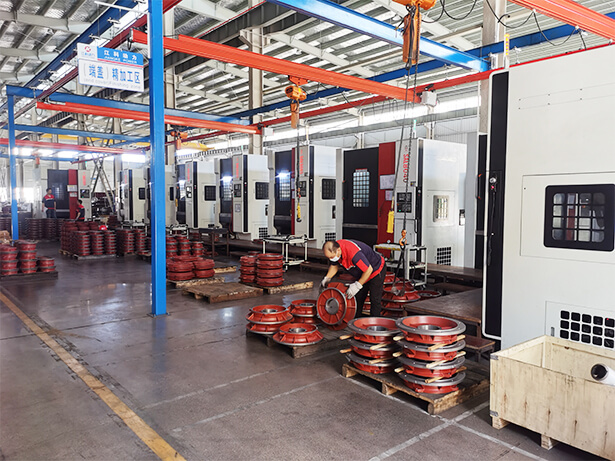
Manufacturing plant floor
Demand Analysis

Understanding What the Floor Actually Needs

What they have is a number someone calculated during the original plant design, possibly revised once during an expansion, and never checked against what actually happens on the floor. That number might be fifteen years old. The plant has changed since then. Machines have been added, lines reconfigured, shifts adjusted. The original demand estimate, even if it was good at the time, is not the current reality.

Manufacturers rate equipment for worst-case conditions, and nameplate CFM overstates real consumption by 20–40% in most applications.

So the work starts with a floor walk. Catalog every device that uses compressed air. For each one: what pressure does it need, what flow rate does it draw, and what fraction of the operating day does it actually run. Do not trust nameplate ratings for flow. Manufacturers rate equipment for worst-case conditions, and nameplate CFM overstates real consumption by 20–40% in most applications. A pneumatic cylinder rated at 8 CFM that fires every thirty seconds is not consuming 8 CFM continuously. Designing as though it does is how systems end up oversized.

Not everything runs at once. A diversity factor accounts for this, and the number varies more than people expect. A synchronized automotive line might sit at 0.85. A job shop with thirty CNC machines and twelve cutting at any moment might be 0.5 or lower. The Compressed Air and Gas Institute (cagi.org/resources) publishes guidance on estimation methods. The honest answer for any existing plant, though, is to rent a data logger and record flow on the main header for two full weeks across all shifts. Nothing else is as reliable.

A plant that hits 2,000 CFM on first shift, drops to 800 on second, and idles at 200 on weekends has a very different compressor need than a plant holding 1,500 around the clock.

Mapping demand over time matters as much as knowing the peak. A plant that hits 2,000 CFM on first shift, drops to 800 on second, and idles at 200 on weekends has a very different compressor need than a plant holding 1,500 around the clock. Buy one large fixed-speed compressor for the first plant and it will spend most of its life cycling at partial load, converting 15–30% of its electricity into nothing.

On future growth: if a specific expansion is planned, quantify the additional demand and include it. If nothing is planned, add 10% and stop. Padding by 30–50% "for growth" guarantees an oversized system that runs inefficiently for years. The extra compressor capacity is not sitting there for free. It consumes electricity every time the machine cycles on.

Each 2 PSI of unnecessary discharge pressure costs approximately 1% in additional energy. The DOE sourcebook has the math. On a 200 HP compressor running 8,000 hours a year at $0.10/kWh, 10 PSI of padding is about $7,000 annually. Per compressor. Most plants have multiple.

The cause is almost always the same. Nearly everything on the floor runs at 90 PSI, and then one station needs 120, so the whole system gets set to 125. The right fix is a booster or a small dedicated compressor for the outlier. What actually happens is someone turns up the regulator because that takes five minutes, and then it stays there for years.

Pressure control equipment

A pressure/flow controller downstream of the primary receiver can recover much of this waste. It holds plant pressure within ±1–2 PSI regardless of what the compressors are doing on the supply side. Installing one typically allows a 10–15 PSI reduction in compressor discharge pressure with no effect on production. Equipment vendors almost never propose these, because a device that makes the compressor work less is not a device that helps sell a bigger compressor.

For pressure drop through the distribution network: 3–5 PSI across treatment equipment, 3–5 PSI across piping. If the tools need 90 PSI, set the compressor at 100–105 PSI. Every PSI above that increases leak rates across the whole network, wears out components faster, and shows up in the electricity bill.

Rotary screw compressors own the 25–500 HP range and there is not much reason to argue. Continuous duty, reasonable footprint, every service company in the country knows how to work on them.

The low end gets neglected. For small operations or genuinely intermittent loads, a two-stage reciprocating compressor in the 5–25 HP range is sometimes the better machine. Simple parts, cheap maintenance, thirty-year life expectancy. The compressed air industry has pushed rotary screw into every application partly because the margins are better, and a small shop running one shift with long idle periods can end up with a machine that was sold to them rather than sized for them.

Rotary screw compressor
25–500 HP

Rotary Screw Compressors

Centrifugal compressor
Above 1,000 HP

Centrifugal Compressors

Above 1,000 HP, centrifugal compressors deliver excellent full-load efficiency. They have a narrow operating range and a hard surge limit, though, and they are a genuinely poor fit for plants with wide load swings. Running one into surge because demand dropped unexpectedly can damage the machine.

Oil-free compressors cost 30–50% more. They are not a premium upsell. ISO 8573-1 (iso.org/standard/70402.html) defines air quality classifications, and Class 0 and Class 1 oil limits cannot be reliably met by oil-flooded compressors with downstream filtration regardless of what the filter catalog says. Food processing, pharma, semiconductors, electronics: oil-free is the engineering requirement.

What matters more than any individual compressor is the system strategy. Pair a fixed-speed compressor sized for the minimum continuous load with a variable-speed drive (VSD) unit that modulates to cover demand above that baseline. The fixed-speed machine runs near full capacity, where it is most efficient. The VSD adjusts output in real time. The combination saves 15–35% compared to a single oversized fixed-speed machine running load/unload cycles all day.

There is a catch with VSD units that does not show up in vendor presentations. They have a minimum speed, usually around 20–25% of rated capacity. Below that speed they cannot modulate and start cycling like a fixed-speed machine. If the base-load compressor is too large, the VSD spends too much of the day below its minimum speed, and the efficiency advantage goes away. Getting the split right between the two machines requires the demand profile from the data logging work. There is no shortcut.

Redundancy means N+1 at minimum. Two compressors handle peak demand, buy three. Whether the third sits cold or runs at partial load with the other two is a straight comparison between the annual energy cost of running the extra machine and the hourly production loss if a compressor goes down and there is no spare.

80–93% of the electrical energy going into a compressor becomes heat. On a 200 HP unit running 6,000 hours a year, that is over 300,000 kWh of thermal energy available for recovery.

80–93% of the electrical energy going into a compressor becomes heat. On a 200 HP unit running 6,000 hours a year, that is over 300,000 kWh of thermal energy available for recovery. Heated coolant loops, plate heat exchangers on the oil circuit, warm exhaust air ducted into the plant for space heating in winter. All of these work, and all of them are dramatically cheaper to install during the original build than to retrofit into a running compressor room. The plumbing for heat recovery either goes in at construction or, in practice, it does not go in.

Aftercoolers are usually built into the compressor package and do not get much separate attention. They should get more. An aftercooler rated for 100°F ambient that sits in a compressor room reaching 115°F in summer will pass moisture that the dryer was never sized to handle, and the first sign of the problem will be water in the distribution piping and complaints from the floor.

Refrigerated dryers handle most general manufacturing at 35–39°F pressure dew point. Desiccant dryers go down to -40°F or lower for outdoor piping in freezing climates, instrument air, and painting operations.

Air treatment and drying equipment
Air Quality

Treatment, Drying, and Filtration

The cost difference between desiccant dryer regeneration types is large enough to be worth examining in detail. Heatless desiccant dryers use 15–18% of their rated flow as purge air. On a 1,000 CFM unit, that is 150–180 CFM of air that was compressed at full energy cost, run through the entire treatment chain, and then dumped to atmosphere to regenerate the desiccant bed. It happens continuously. Heated regeneration drops purge to 5–7%. Blower purge drops it below 2%. The capital cost difference between a heatless and a blower purge dryer is real. For anything above about 500 CFM running continuously, though, the energy savings pay off the premium in under two years. Below 500 CFM, or for intermittent operation, heatless designs are often fine and the simpler mechanism has its own value.

Filter sizing is straightforward: coalescing pre-filter before the dryer, particulate after-filter after, activated carbon if oil-free air is required. There is a tendency, however, to buy the smallest filter housing that meets the flow rating, and this causes problems over time. A filter element loads during its service life and pressure drop increases as it does. An undersized housing that starts at 2 PSI drop will be at 5–8 PSI within weeks, and many plants do not change elements until the pressure complaints get loud enough. A larger housing gives a slower pressure rise, longer element life, and lower average energy cost. The capital difference between one filter size and the next is negligible compared to the cumulative pressure drop penalty.

Automatic drains at every low point, receiver, and filter bowl. Zero-loss demand type, not timer, not manual. Manual drains do not get opened. This has been true at every plant that has ever had manual drains. Timer drains waste compressed air every cycle whether condensate is present or not. Zero-loss drains open only when there is something to drain. The cost per unit is modest, and the savings across twenty or thirty drain points in a medium-sized system add up.

A ring main layout allows air to reach any point of use from two directions. This halves velocity in the pipe and cuts pressure drop by roughly 75% compared to a dead-end branch of the same diameter. Where a full loop is not possible, cross-connect the major branches.

Pipe sizing is about velocity, not just flow capacity. Below 20 ft/s in the main header, below 30 ft/s in branches. Pressure drop goes as the square of velocity: double the speed, quadruple the drop. Going up one nominal pipe diameter on the main header costs very little during installation and saves energy for the life of the building. Piping will outlast every compressor and dryer in the system. It should be sized accordingly.

Industrial piping system

Material: aluminum for new installations. No internal corrosion, fast installation, easy reconfiguration. Black iron corrodes from the inside and sheds scale into the air stream. Stainless for cleanroom pharmaceutical and semiconductor work. PVC is prohibited by OSHA. Under sustained pressure it becomes brittle and shatters into fragments rather than splitting, which creates a shrapnel hazard.

Every fitting adds pressure drop and a potential leak point. A 90° elbow on 2" pipe creates the same drop as about 5 feet of straight pipe. Long-radius elbows cut that roughly in half. The fewer the fittings, the fewer the leaks and the less the drop. Route piping to minimize direction changes.

Slope horizontal runs 1–2% downward in the direction of airflow. Drip legs at every low point, dead end, and riser. Branch connections always from the top of the header. Condensate rides along the bottom of the pipe, and a branch connection taken from the bottom or side will pull that water into whatever equipment is at the end of the line.

Receiver tanks are the component that gets cut from projects most often during budget negotiations. This is a mistake that keeps costing money long after everyone has forgotten the budget meeting.

A primary (wet) receiver between the compressor and the dryer handles cooling, condensate separation, and pulsation damping. The standard starting point is 1 gallon per CFM of compressor capacity. Systems with VSD compressors or high demand variability should go larger. Bigger receivers give the sequencing controller room to absorb short demand spikes from stored air rather than starting another compressor every time there is a brief surge.

V = T × (C − S) × 14.7 / (P1 − P2). T in minutes, C and S in CFM, P1 and P2 in PSIA.

For sudden large draws at specific points of use, a local receiver near the machine matters more than the size of the central tank. Pressure drop in the pipe between a distant tank and the point of use eats into the stored energy. A 120-gallon receiver twenty feet from a blow mold outperforms a 500-gallon tank three hundred feet away during a short, heavy draw. Size local receivers with V = T × (C − S) × 14.7 / (P1 − P2). T in minutes, C and S in CFM, P1 and P2 in PSIA.

A sequencing controller turns multiple independent compressors into a coordinated system. Without one, compressors run on individual pressure bands and fight each other. One loads while another unloads. Two start on the same pressure dip. All three run at partial load when one at full load would cover demand. Sequencers fix this, and for any installation with more than two compressors, the energy savings pay for the controller inside a year.

Flow monitoring dashboard
Data

Flow Meters

Pressure monitoring
Analysis

Pressure Transducers

Power metering equipment
Efficiency

kW per 100 CFM

Flow meters at compressor discharge and at major branch points. Pressure transducers at several locations in the network. Power meters on each compressor to track kW per 100 CFM. Dew point sensors after the dryers. Trend all of it. The data catches what walkthroughs miss.

This gets its own section because it is the largest single waste category in the majority of plants and the cheapest to address, and because it almost never gets addressed.

20–30%
Avg Leak Rate
~100CFM
¼″ Hole @ 100 PSI
$12K+
Annual Cost per Leak

The DOE puts leak rates at 20–30% of total compressor output for plants that have never run a systematic detection program. Older plants with galvanized or iron piping are often worse. A quarter-inch hole at 100 PSI bleeds about 100 CFM and costs over $12,000 a year in electricity.

Ultrasonic leak detection

An ultrasonic detector costs $3,000–$5,000 and finds leaks during production without shutting anything down. A quarterly tag-and-repair cycle is the minimum program worth running. Tag the leak, estimate the flow, fix it, record it. The fixes are usually mundane: tightening a fitting, replacing a worn quick-connect, swapping a failed hose. The first time a plant does this systematically, the compressed air energy bill drops within the quarter.

Compressed air leaks leave no trace. No drip, no puddle, no stain, no smell. The waste is invisible in a way that a water leak or an oil leak never is, and invisible waste does not generate maintenance work orders.

The reason it goes undone is that compressed air leaks leave no trace. No drip, no puddle, no stain, no smell. The electricity bill goes up and gets attributed to production volume or rate increases. Nobody connects the rising bill to the hissing fitting behind a machine that nobody can hear over the production noise. The waste is invisible in a way that a water leak or an oil leak never is, and invisible waste does not generate maintenance work orders.

A 200 HP compressor puts approximately 500,000 BTU/hr of heat into the room. The DOE notes that each 10°F increase in inlet air temperature reduces compressor output about 2% and raises energy consumption about 1%. The room needs real ventilation: filtered outside air intake for the compressor inlet, separate exhaust to pull heat out. In cold climates, dampers on the exhaust ductwork can redirect warm air into the plant for heating in winter and dump it outside in summer, which is the lowest-cost form of heat recovery available if the ductwork is designed for it from the start.

Compressor room layout
Ventilation

Room Airflow Design

Service clearance
Maintenance

Service Access Clearance

Maintenance clearance matters in ways that are not obvious until the first major service event. Pulling an airend rotor, swapping a motor, servicing a dryer tower: these jobs need space. Some need overhead crane access. An 18-inch gap between machines is what happens when the room layout is driven by floor space efficiency rather than service access, and it guarantees deferred maintenance for the life of the equipment.

Noise runs 75–85 dBA at full load. Acoustic treatment during construction.

Condensate treatment: oil-water separator, piped to all drain points, part of the original room design. Oil-laden condensate is regulated discharge in most jurisdictions. If the separator is not in the original layout, experience says it does not get added later.

The reason compressed air systems waste so much energy is not that the individual components are bad. Compressor technology is mature. Dryers work. Aluminum piping is a good product. The waste comes from the spaces between the components: the pipe that is one size too small, the receiver that got cut from the budget, the sequencer that was never programmed properly, the leaks that nobody looks for because the air is invisible.

A high-efficiency compressor connected to leaking pipes wastes the saved energy through the leaks. A desiccant dryer sized for the rated flow gets overwhelmed if the aftercooler upstream cannot keep up in summer. A receiver tank does nothing useful if the sequencer does not know how to use the stored pressure band before starting another machine.

Start with demand data. Set pressure as low as the process allows. Match compressors to the load profile. Treat air to the quality the product actually needs. Pipe it through a properly sized loop in aluminum. Put receivers where the demand spikes occur. Run a sequencer. Fix leaks on a quarterly cycle.

Most plants never get a proper design because the compressor purchase is driven by a production emergency. A line goes down, pressure drops, and someone needs a compressor by next month. The system grows by one more piece of equipment selected to fix a symptom. That cycle repeats for twenty years, and by the end the electricity bill is twice what it would have been with a designed system, and a retrofit costs three times what the design would have cost. The pattern has been the same across manufacturing for decades. Compressed air vendors know it. Plant engineers know it. The purchase order goes out anyway because the production deadline does not wait for engineering.

Footer Component - SOLLANT
滚动至顶部