Our Products
Compressed Air Solutions
  • Screw Air Compressor
  • Oil Free Compressor
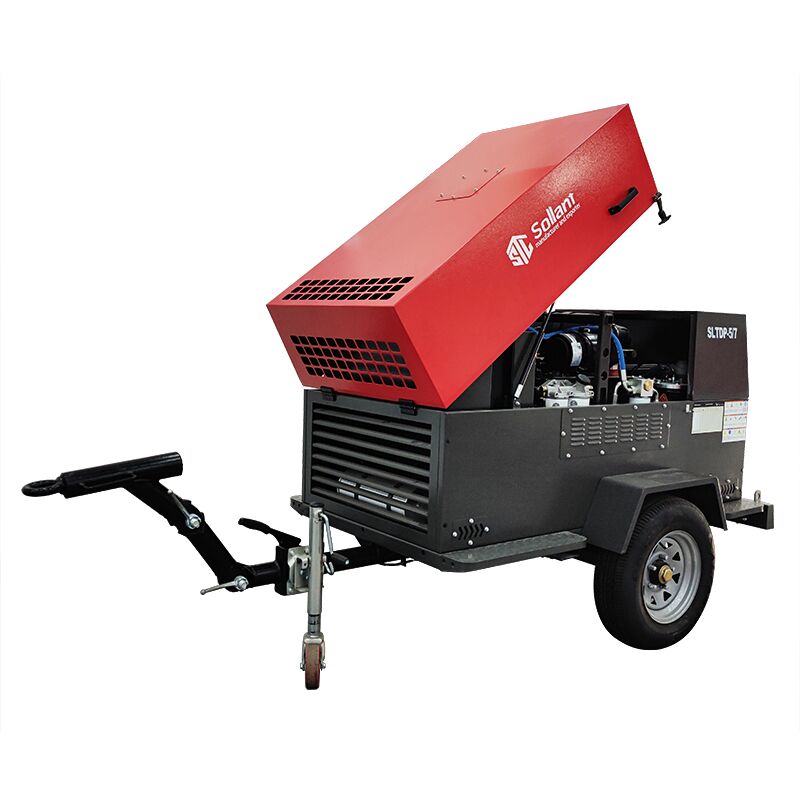
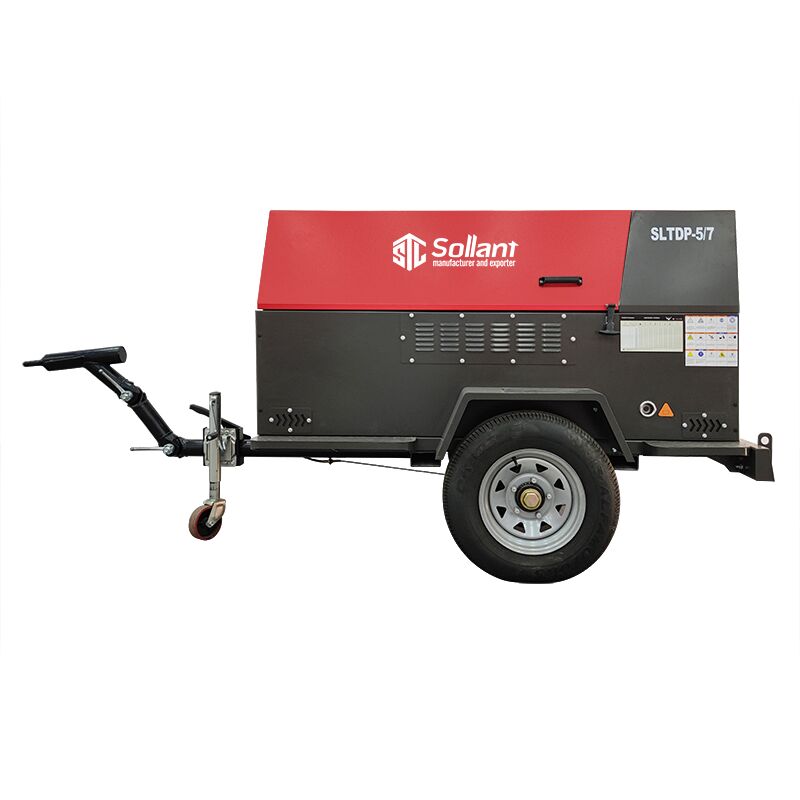
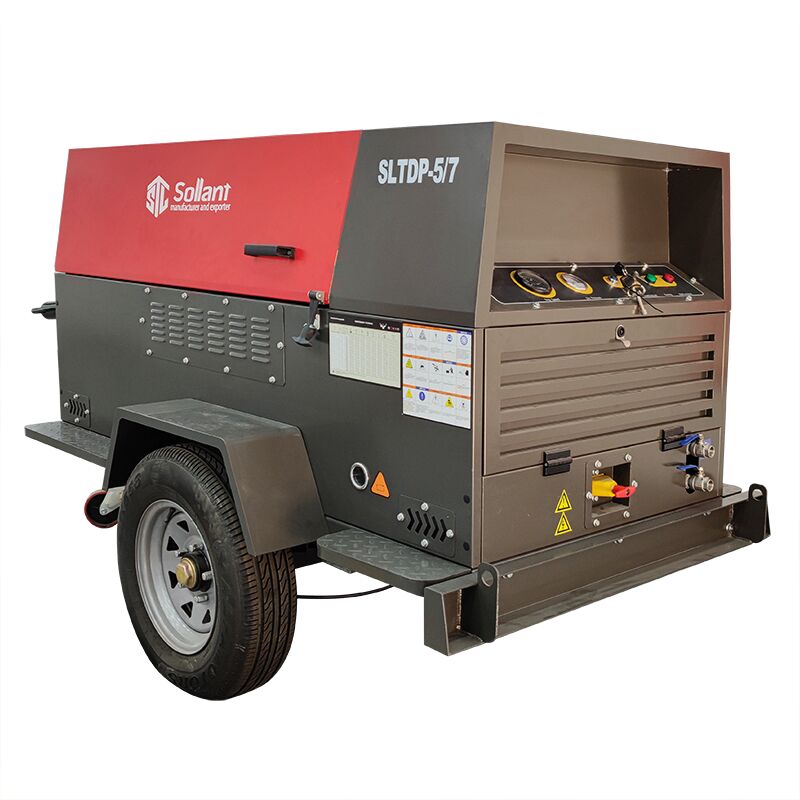
  • Diesel Portable Compressor
  • Gas Compressor
  • Specialty Compressor
  • Air Treatment
ISO 9001 Certified
24-Month Warranty
OEM & ODM Support
Factory Direct Price
All products→
Are Oil-Free Air Compressors Really Oil-Free?
Technical Guide

Air Compressors in Shipbuilding and Marine Applications

18 min read
Marine Industry

The label says "oil-free." The purchase order says "oil-free." The sales engineer said "oil-free" four times during the site visit. And yet the maintenance manual for the same machine includes a lubrication schedule, lists an approved oil grade, and specifies a gearbox oil capacity in liters. That contradiction sits at the center of a terminology problem that has dogged the compressed air industry for decades and, depending on the application, can have consequences ranging from a failed audit to a destroyed product batch.

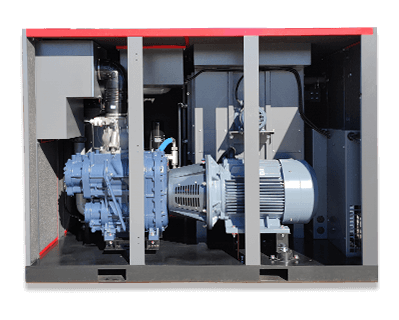
Oil-free compressor internals

What "oil-free" describes is the compression chamber. No oil touches the air during the compression cycle. The rotors in a dry screw design are synchronized by external timing gears and separated from the housing by tight clearances rather than an oil film. In a scroll compressor, the orbiting and fixed scrolls trap and compress air without any lubricant present, and these engineering distinctions carry performance implications that matter at the system level.

The gearbox that drives those rotors still needs lubrication, and so do the bearings. In some designs, oil circulates through cooling jackets wrapped around the compression stage. Carbon ring seals, helical-grooved bronze seals, and visco-seals form the barrier between these oil-wetted zones and the compression chamber. When seals are fresh and thermal conditions are within design limits, the barrier works well.

Seal replacement intervals in oil-free screw compressors fall in the range of 2,000 to 8,000 operating hours depending on severity of service and choice of seal material. That lower number amounts to less than three months of continuous duty, and the primary reason intervals are so short is thermal cycling. Discharge temperatures in dry oil-free machines run 80 to 100°C above inlet temperature because there is no oil mass absorbing compression heat the way there is in an oil-injected machine, and the repeated expansion and contraction hardens and cracks the seal material over time. When one finally lets go, gearbox oil migrates into the compression chamber, and a machine sold as "oil-free" starts introducing lubricant into the air stream without any oil separation system to catch it. One compressed air treatment paper from Parker Hannifin flags this pathway explicitly: oil can enter the air stream from degraded shaft seals and from crankcase vapor emissions.

The only compressor architecture that eliminates oil from every subsystem is water-injected compression, where water replaces oil as the bearing lubricant, coolant, and sealing medium. Atlas Copco's AQ series is the most visible example, with an entirely oil-free fluid path achieved through stainless steel internals, a closed-loop water treatment circuit, and the corrosion management headaches that come with running water through precision machinery at elevated temperatures.

The air going in

Compressor rooms are not clean rooms. They sit near loading docks, machine shops, paint lines, parking structures. The ambient air feeding into the compressor intake carries hydrocarbon vapor from vehicle exhaust, metalworking fluid mist, solvent fumes, and volatile organic compounds off-gassing from coatings and adhesives.

0.14 mg/m³
Semi-Rural Ambient
0.67 mg/m³
Urban Roadside
0.01 mg/m³
ISO Class 1 Limit

UK DEFRA monitoring data compiled in a Parker Hannifin white paper measured ambient hydrocarbon concentrations at 29 sampling points across varied environments. Semi-rural locations came in around 0.14 mg/m³. Roadside urban monitors registered 0.67 mg/m³. Industrial zones typically fall somewhere in the 0.05 to 0.5 mg/m³ band, depending on neighboring activity.

Compression amplifies whatever is in the inlet air proportionally to the pressure ratio. A compressor delivering 7 bar gauge is working at roughly 8:1 absolute. Inlet air carrying 0.1 mg/m³ of hydrocarbon vapor produces compressed air at 0.8 mg/m³. ISO 8573-1 Class 1, which is the tightest fixed limit in the standard, allows no more than 0.01 mg/m³ of total oil in compressed air.

A perfectly functioning oil-free compressor, adding zero contamination from its own systems, can still discharge air at 80 times the Class 1 limit from what it inhaled, because the compressor has no mechanism for removing hydrocarbons that entered with the intake air.

Oil-free compressors cannot deliver oil-free air, and downstream filtration for liquid oil, aerosols, and vapor is not optional. For any application where the compressed air contacts product, the pitch that an oil-free compressor eliminates the need for downstream air treatment equipment creates contamination exposure.

ISO 8573-1 and the politics of Class 0

Class 0, the designation that appears on more compressed air specifications every year, carries no fixed numerical limit. Procurement engineers and quality managers who write "Class 0" on a requirements document often assume it means zero contamination, or something close to it, but the standard defines it only as a framework: the compressor supplier and the end user must negotiate and document a specific contamination ceiling tighter than the 0.01 mg/m³ allowed under Class 1. Without that negotiated number, a Class 0 specification is, as Blackhawk Equipment put it in a 2025 analysis of the issue, technically meaningless and unenforceable. Specification writers drop "Class 0" onto procurement documents regularly without filling in the actual number, and the standard permits this omission in the sense that it does not prevent it.

Compressed air filtration system

Class 0 was added in the 2001 revision. The earlier 1991 edition topped out at Class 1, which specified total oil at or below 0.01 mg/m³. That threshold happened to match what premium coalescing and activated carbon filtration could reliably deliver at the time. Atlas Copco's compressed air blog once described the original standard as having been "made by and made for" filter manufacturers. The characterization may be reductive, but the alignment between the standard's ceiling and the filter industry's capability was convenient.

A later revision in 2010 tightened the measurement methodology rather than the purity limits. Claiming any ISO 8573 oil classification now requires testing under both Part 2 (aerosols and liquids) and Part 5 (vapors). Two test methods exist for the aerosol/liquid portion. B2, the partial-flow method, samples only the center of the air stream. B1, the full-flow method, captures the entire pipe cross-section, including oil that adheres to pipe walls rather than staying suspended in the air column. Most manufacturers still certify against B2. Atlas Copco tested the Z-series oil-free compressors under B1, with results showing zero detectable oil, though their test facility's ambient hydrocarbon concentration measured 0.003 mg/m³, a figure far below what any operating industrial site would show. The certification is legitimate, but its transferability to a factory floor in Guangzhou or Chennai or Houston, where ambient hydrocarbon concentrations may run 20 to 100 times higher, is a separate question that the certification document does not address.

Even Quincy Compressor, an oil-free machine manufacturer, has acknowledged the problem publicly: many manufacturers wrongly claim Class 0 compliance, and discrepancies between lab results and field results are common because manufacturers test in controlled environments with minimal ambient contamination.

What happens to coatings over 30,000 hours

The rotor coating is what makes a dry oil-free screw compressor possible. PTFE blended with graphite powder covers both rotors in a double layer, with the graphite serving to reduce friction while the layered application allows the coating to compress and conform during the first several hundred hours of operation, a designed-in run-in phase that tightens rotor-to-housing clearance beyond what machining alone achieves. Atlas Copco holds tolerances measured in fractions of a human hair diameter on the Z compressor elements. For high-temperature service, some designs substitute MoS₂, which tolerates higher thermal loads but performs poorly in humid conditions. Geography and climate often dictate the choice as much as pressure requirements do.

Two-stage designs reduce the pressure ratio per stage to roughly 3.5:1, which brings discharge temperatures down from the single-stage extreme. Both stages still run substantially hotter than oil-injected equivalents because there is no liquid oil absorbing and carrying away the heat of compression.

PTFE begins to degrade near 200°C. A single-stage dry oil-free screw element's discharge temperature sits in the 160 to 180°C range under normal load. In equatorial or desert climates where intake air temperatures reach 40°C or higher, that margin compresses to almost nothing.

Moisture infiltrating micro-cracks in thinning PTFE triggers spot corrosion on the steel substrate, and once a corroded patch roughens the rotor surface, local friction and local temperature both climb, which thins the coating faster in that same spot and invites more moisture into the widening cracks. What makes this failure mode particularly costly is not the mechanism itself but the absence of any external indication. Internal leakage increases across the rotors over weeks and months, the machine draws more power to deliver the same volume of air, and discharge pressure drifts downward, but the compressor is still running, still producing air, just less of it, at higher energy cost, and the control panel shows nothing unusual. Specific power tracking (kW per m³/min) will reveal the trend. Fault code monitoring will not, because no fault code exists for "coating wearing thin."

When the coating is spent, the airend must be replaced. According to Atlas Copco's element replacement documentation, the rotor coating is core technology, the Teflon layer cannot be meaningfully repaired on-site, and replacement with a new OEM element is the recommended path. The tooling and process knowledge for recoating are held by the original manufacturer.

70%
Replacement vs. Purchase Cost
$126K
Airend Bill (200 kW Unit)
50K hrs
First Replacement Window

Replacement cost runs up to 70% of the original machine price (per FS-Elliott's published cost guidance, which covers screw technology). A 200 kW oil-free screw unit purchased for $180,000 may face a $126,000 airend bill within the first 50,000 operating hours.

Compressor maintenance

Third-party refurbishment has emerged as an alternative, and Atlas Copco has pushed back against it publicly. Their teardown analysis of non-OEM refurbished elements found recurring problems: reused wear components, single-layer Teflon without graphite, and tolerances that failed to meet original specifications. Their estimate: the initial savings from a non-OEM airend get erased within about 13 months by increased energy consumption alone, before accounting for reliability risk.

The commercial implication is a form of lock-in that procurement departments rarely model at the time of purchase. The coating chemistry, rotor profile, and application equipment are all proprietary to the OEM. Competitive bidding on airend replacement parts is, for practical purposes, not available. Whether that lock-in reflects genuine engineering complexity or a revenue strategy depends on which side of the transaction one sits.

The "technically oil-free" argument and where it breaks

The oil-injected compressor industry has a standard counterargument: pair a high-quality oil-flooded rotary screw machine with multi-stage coalescing filtration and activated carbon adsorption, and the resulting air quality can meet ISO 8573-1 Class 1 for oil content. The approach costs less upfront, sometimes half the price of an equivalent oil-free installation, and when the filtration train is working correctly, the air purity is demonstrably real. Whether the filtration train works correctly over years of continuous operation in varying ambient conditions is less certain than the sales literature suggests.

Activated carbon adsorption capacity drops exponentially with temperature. Published performance data from filter manufacturers rates carbon bed life at roughly 41 days at 20°C. At 38°C, that same bed may last 4 days.

Compressed air exits the aftercooler at 10 to 15°C above ambient temperature. Summer conditions in most industrialized regions push the air reaching the carbon filter well past the temperatures at which the rated service life was established. When carbon saturates, it stops removing oil vapor and passes it through to the downstream system without any alert or change in appearance.

Coalescing filters degrade with time and particulate loading. Under excessive differential pressure, the filter media can rupture, releasing accumulated oil back into the air stream in a concentrated burst.

Condensate adds a cost layer that advocates of the oil-injected-plus-filtration approach tend to skip over quickly in presentations. Oil-flooded compressors produce a water-oil condensate mixture. Disposing of it legally requires either an oil-water separator with regular maintenance and monitoring, or contracted hazardous waste removal. Published figures from FS-Elliott's total-cost-of-ownership analysis put annual condensate treatment costs as high as $50,000 for larger installations. Oil-free machines produce condensate too, but oil-free condensate can typically be drained to sewer without treatment.

Two incidents

Food production facility

A frozen dough manufacturer in the south of France, producing for European supermarket chains, used compressed air in direct contact with packaging materials. Customers began reporting off-odors from the plastic bags. Third-party testing traced the source to oil in the compressed air system, and the entire batch was pulled. Beyond the direct write-off, the supplier's standing with key retail accounts took damage that outlasted the incident itself. (This case was documented in a Minnuo Compressor application study published in 2025.)

Separately, a CDMO outside Bangkok operated an oil-injected compressor with five-stage downstream filtration. The system was designed to meet WHO GMP and EU GMP requirements. Compressed air sampling in the packaging area returned oil readings above 0.005 mg/m³. Auditors flagged the system as high-risk for cross-contamination. Filter and carbon replacement was costing over $25,000 per year, and the air quality was still inconsistent. After the audit findings, the facility switched to water-lubricated oil-free compression, maintenance costs dropped by $18,000 annually, and the contamination concerns cleared.

In both cases, nothing broke in any dramatic sense. The compressor was running, the filters were in place. The contamination accumulated through months of gradual drift: a seal losing a fraction of its sealing capacity, a carbon bed loading up faster than the replacement schedule accounted for, a discharge temperature creeping upward by a degree per quarter as the coating thinned. Compressed air contamination almost never looks like a ruptured oil line spraying into the compression chamber.

There are contamination pathways that sit outside either compressor type entirely. An oil-free machine installed on piping that previously served an oil-injected system will produce oil-contaminated air for months. The pipe walls carry residual oil film from years of prior service that slowly releases into the air stream as it is disturbed by pressure pulsations and flow velocity changes. In one documented case from a European pharmaceutical plant (cited in a BCAS Code of Practice guidance note), contamination levels at the point of use remained above Class 1 thresholds for over four months after an oil-free compressor was installed on legacy carbon steel piping. Rubber and nylon distribution hoses release hydrocarbon particulates that combine with condensed moisture. Shared headers between oil-injected and oil-free compressors allow cross-contamination through the distribution network. Changing the compressor without changing the plumbing buys a new nameplate, not clean air.

What to specify

No compression technology produces air that meets ISO 8573-1 Class 1 for oil without downstream treatment. The thermodynamics of pressure-ratio amplification of ambient hydrocarbons prevent it. An oil-free compressor removes the machine as a contamination source but not the atmosphere, the piping, or the filter maintenance schedule.

For direct-contact applications in pharmaceutical, food, semiconductor, and medical gas production, oil-free compression is the appropriate technology because it eliminates the largest single controllable variable, though post-compression air treatment remains a requirement regardless of the compressor type selected.

For general industrial service where trace oil in the air stream is tolerable, oil-injected compression with a properly maintained filtration train is a defensible and often more economical choice, though the maintenance requirements are more demanding than the phrase "properly maintained" implies. Activated carbon service life must be calculated from actual operating temperatures rather than catalog test conditions.

The compressed air industry has spent forty years allowing the phrase "oil-free compressor" to stand in for "oil-free air." Equipment manufacturers benefit from the confusion because selling a compressor is simpler than selling an integrated air treatment system, and procurement teams perpetuate it by writing specifications around compressor type rather than point-of-use air quality. The consequences of the misunderstanding are always delayed, which is part of why it survives. Contaminated product, failed audits, and avoidable cost show up months or years after the purchase order was signed, by which point the sales engineer who said "oil-free" has long since moved on to the next account.

Footer Component - SOLLANT
滚动至顶部